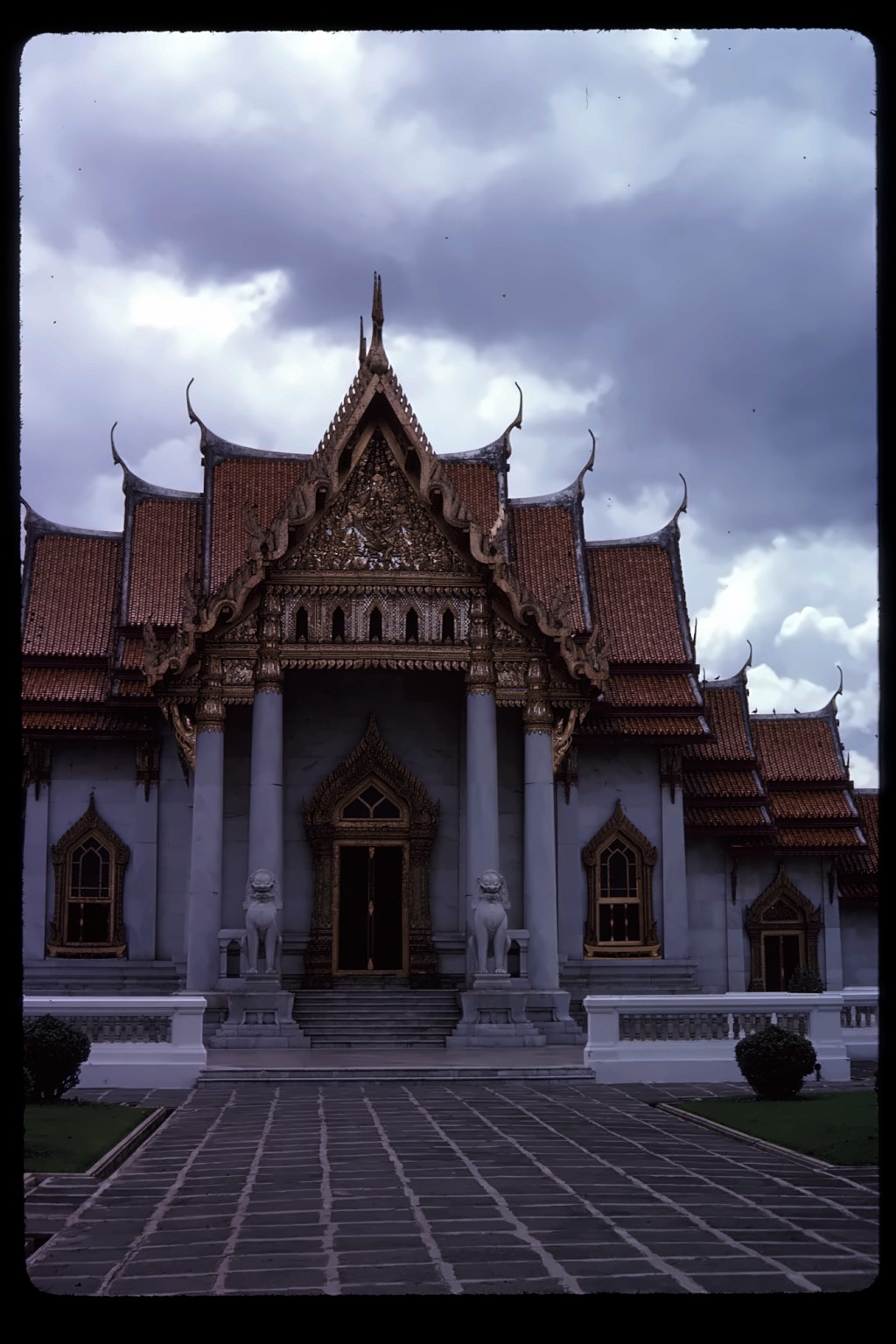
The white marble walls and tiered orange roof identify this as Wat Benchamabophit — the "Marble Temple" — in Bangkok's Dusit district.
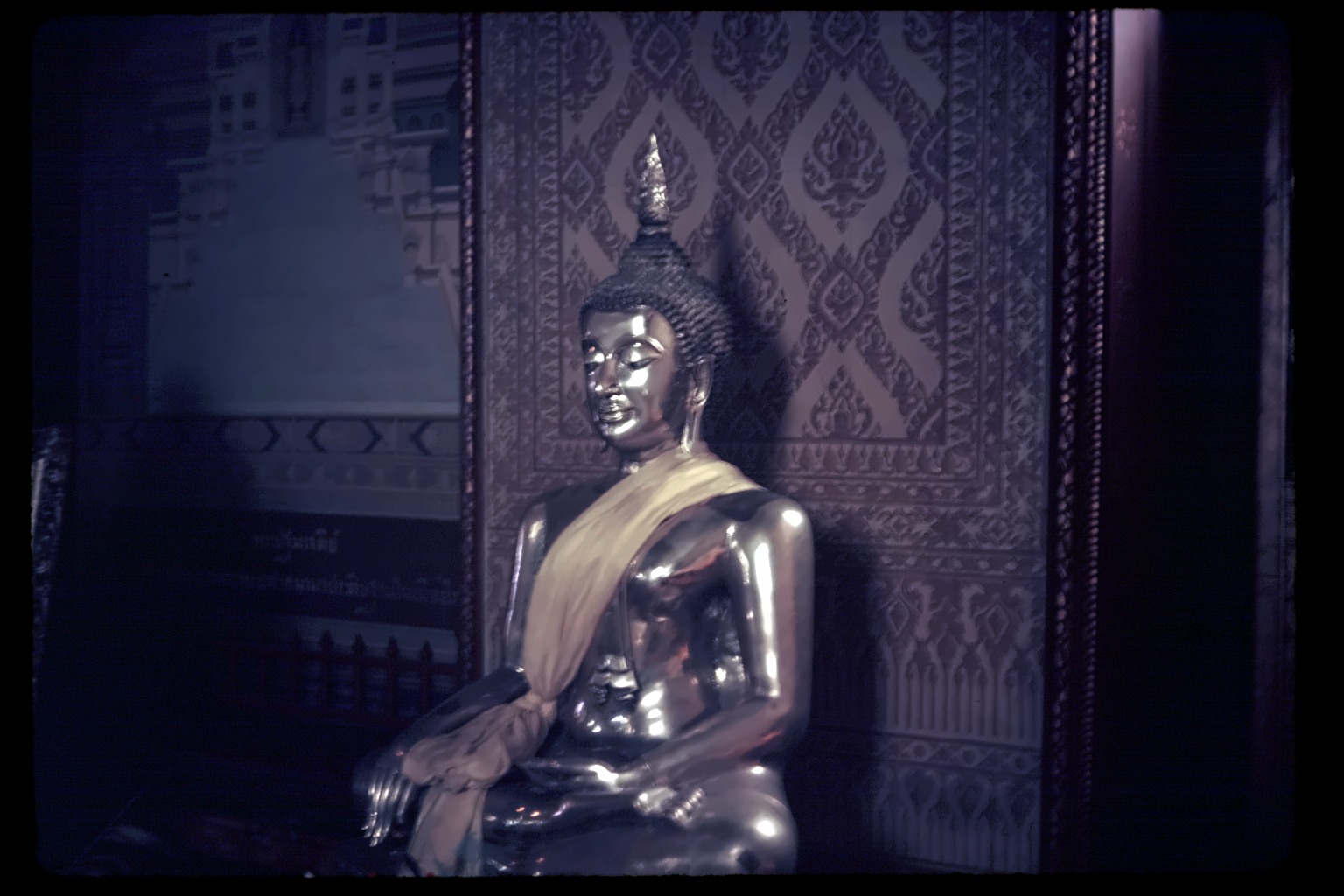
A gilded seated Buddha figure, ornate patterned backdrop, in the classic meditation posture — not standing.
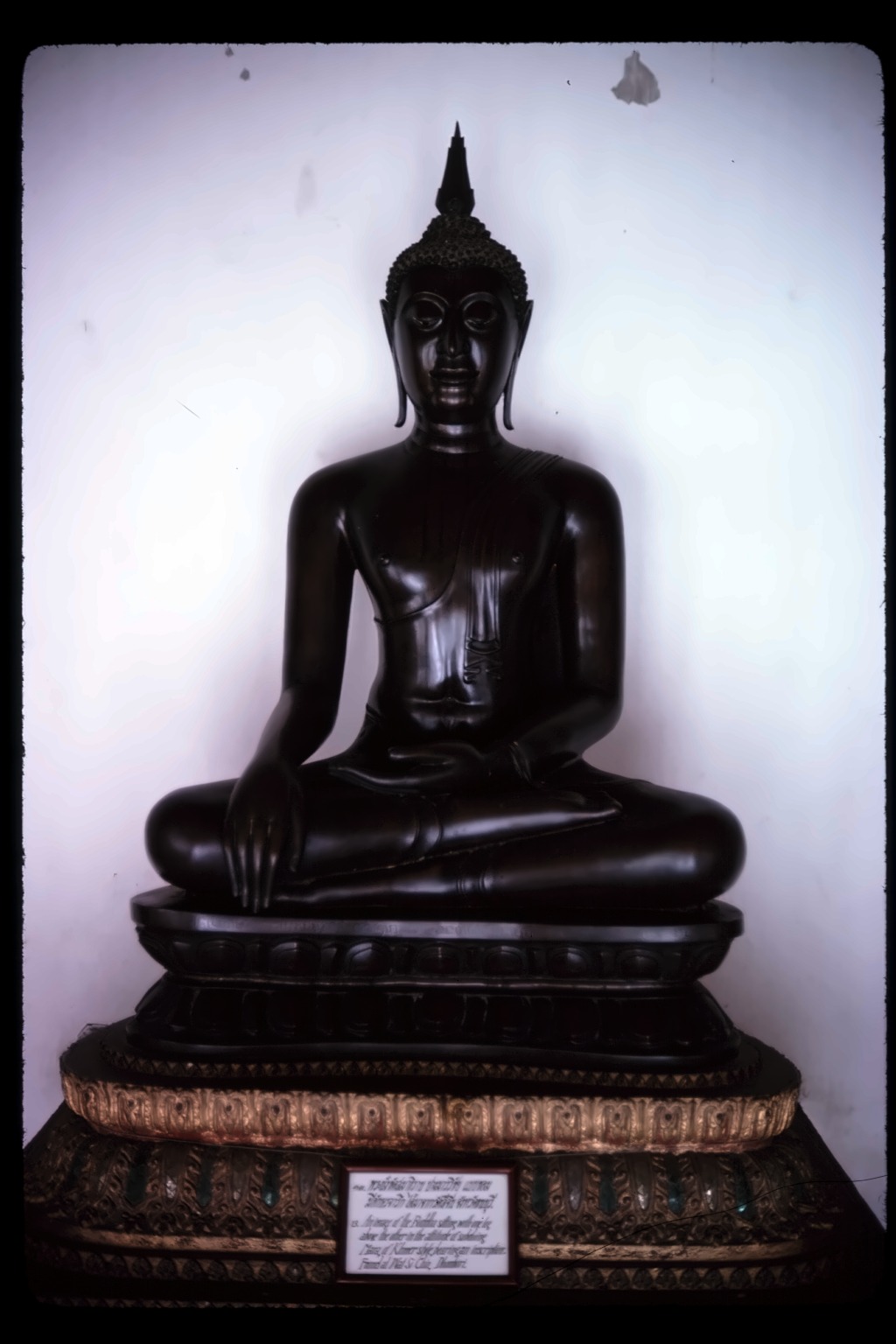
A dark bronze seated Buddha on an ornate gilded pedestal, a numbered museum-style label mounted below it (marked "13") with an English description — too blurry at this resolution to read in full, but confirms this is a specifically catalogued piece, not a generic shrine figure.
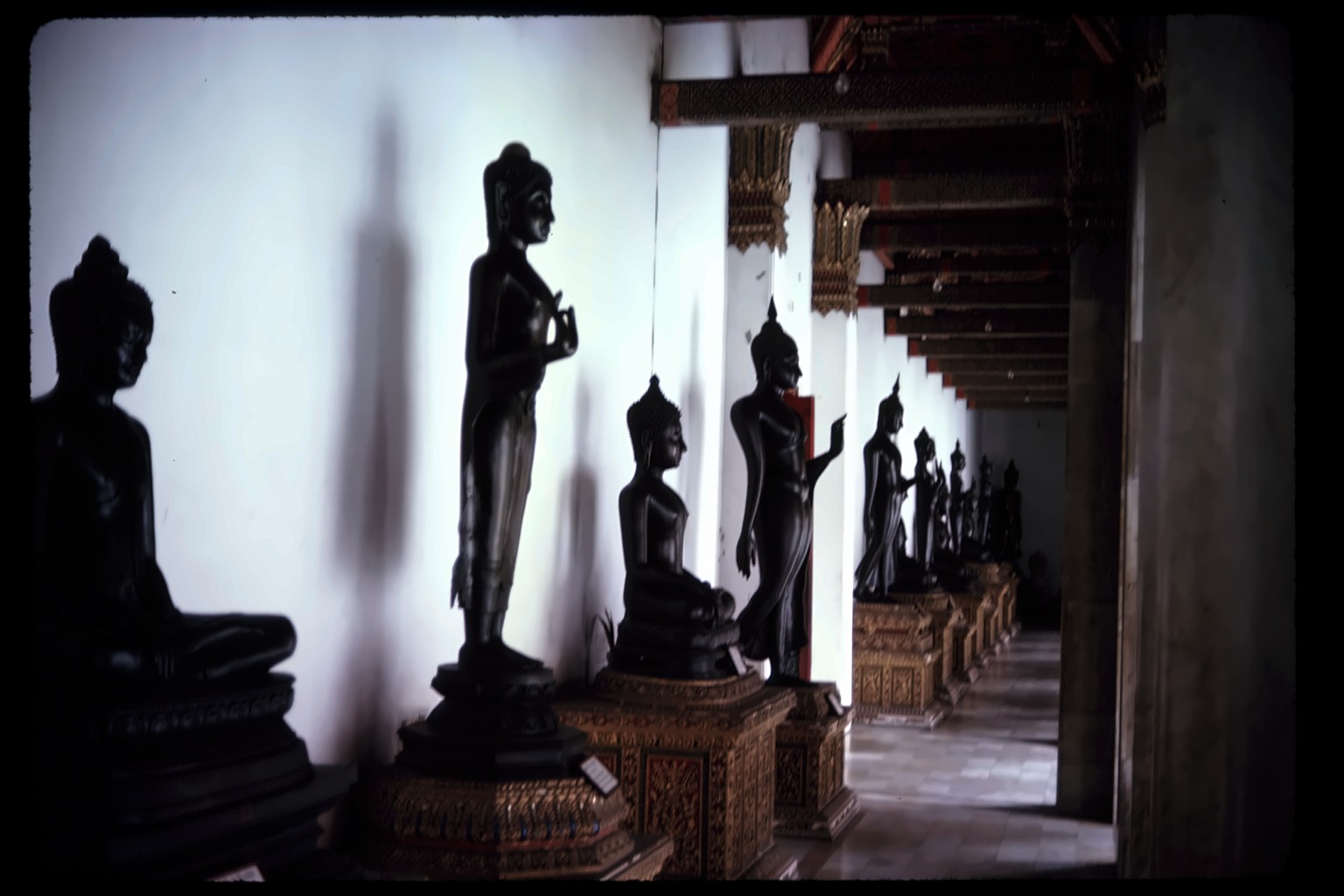
A row of seated Buddha statues along a covered gallery — this matches Wat Benchamabophit's well-documented cloister of 52 Buddha images, each in a different posture.
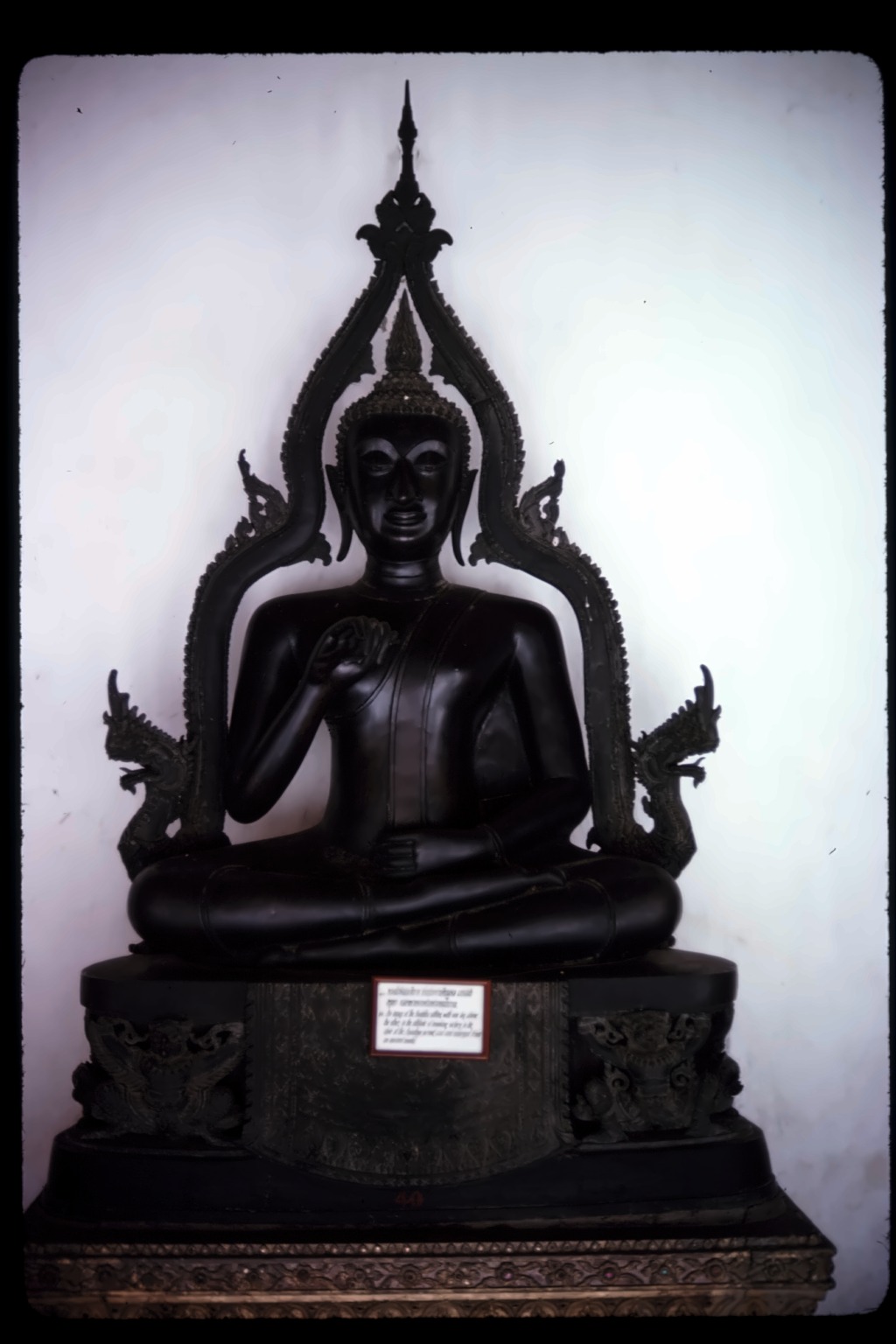
A bronze Buddha framed by a flame-shaped niche with naga serpents on either side, another numbered museum label mounted on the base (marked "40") — same catalogued-collection pattern as slide #3.
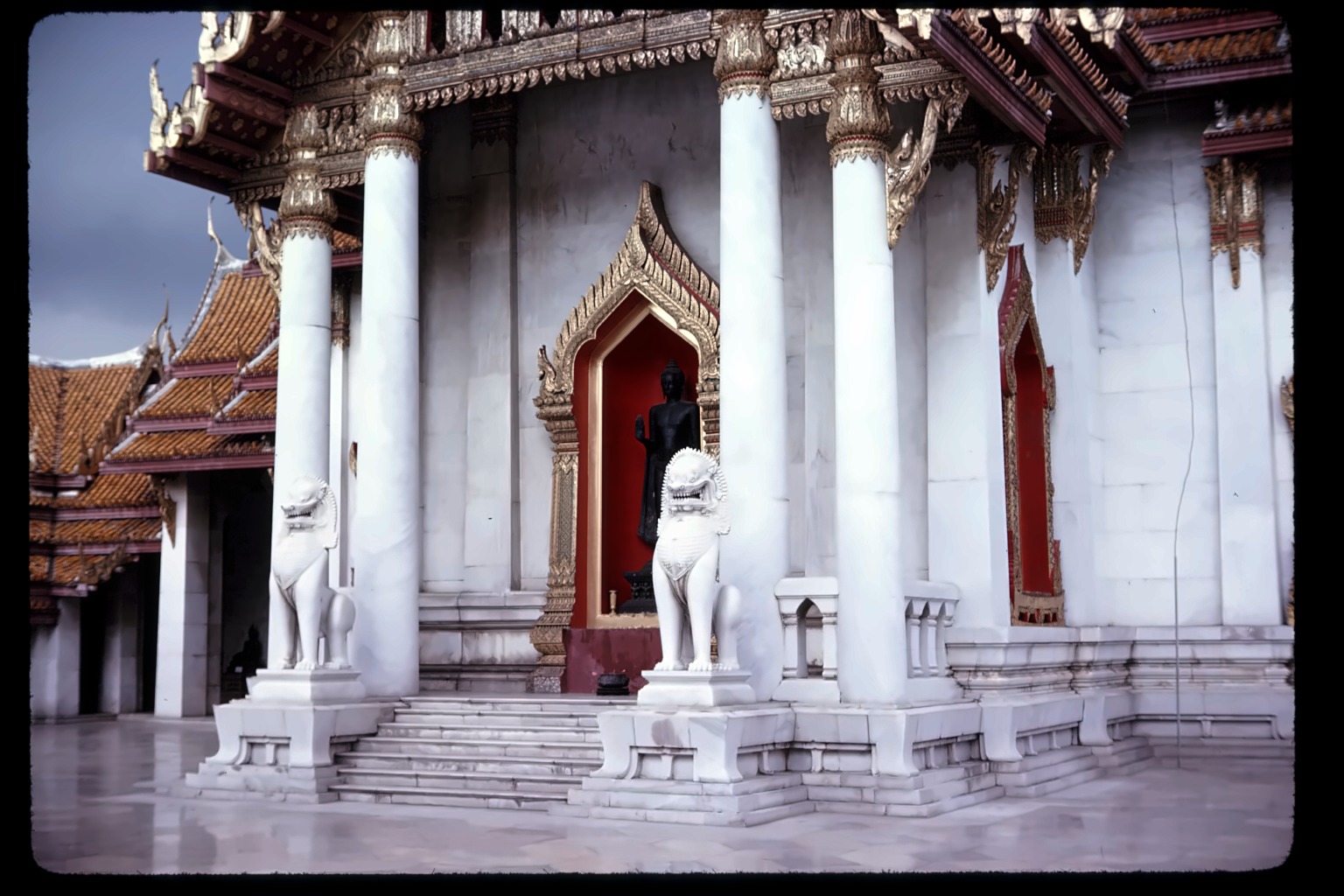
White marble columns and entrance, a standing black Buddha visible in a red-and-gold alcove, guardian lion statues flanking the steps — Wat Benchamabophit again, a different angle.
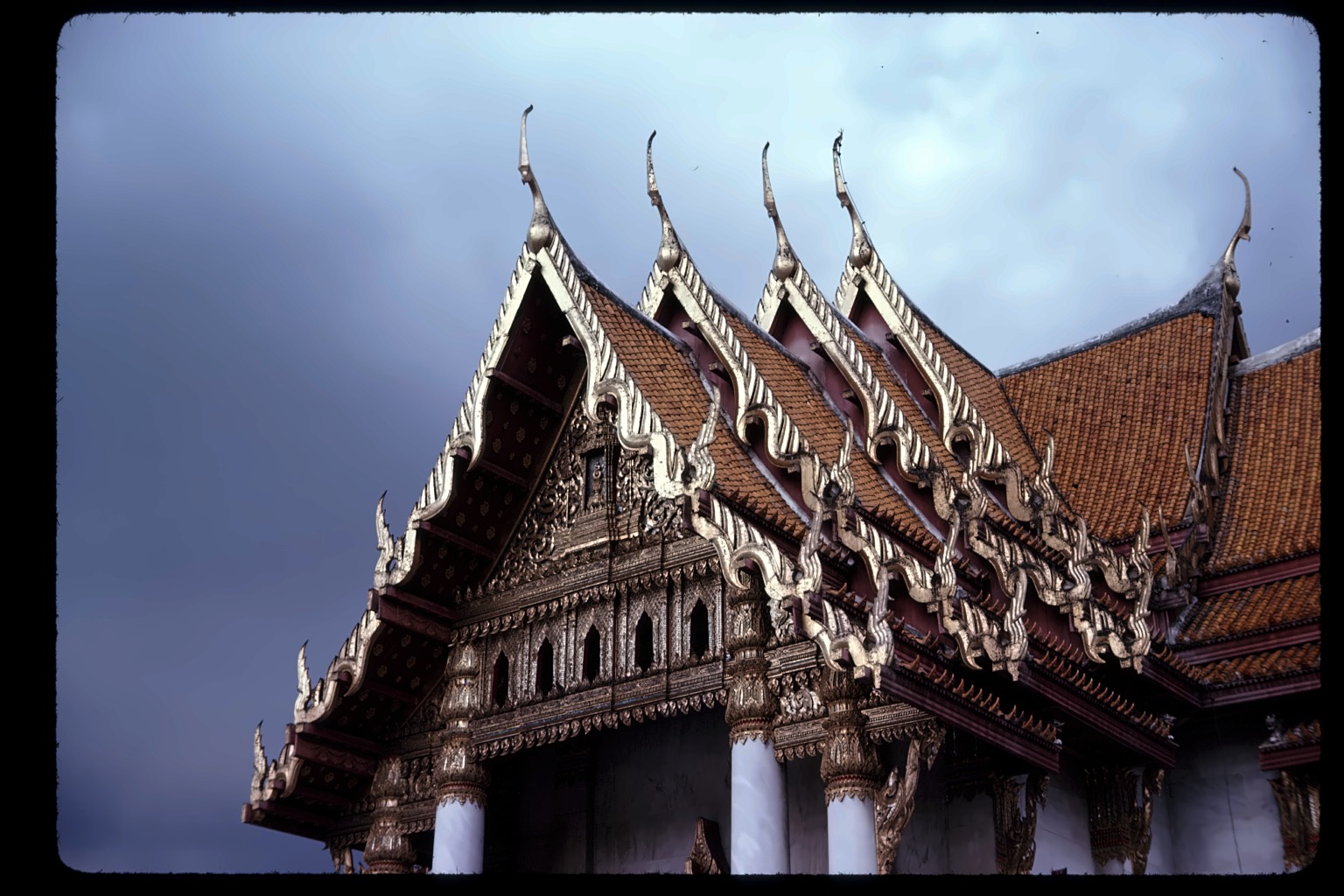
Close view of a tiered temple roof and gable, gold and orange decoration.
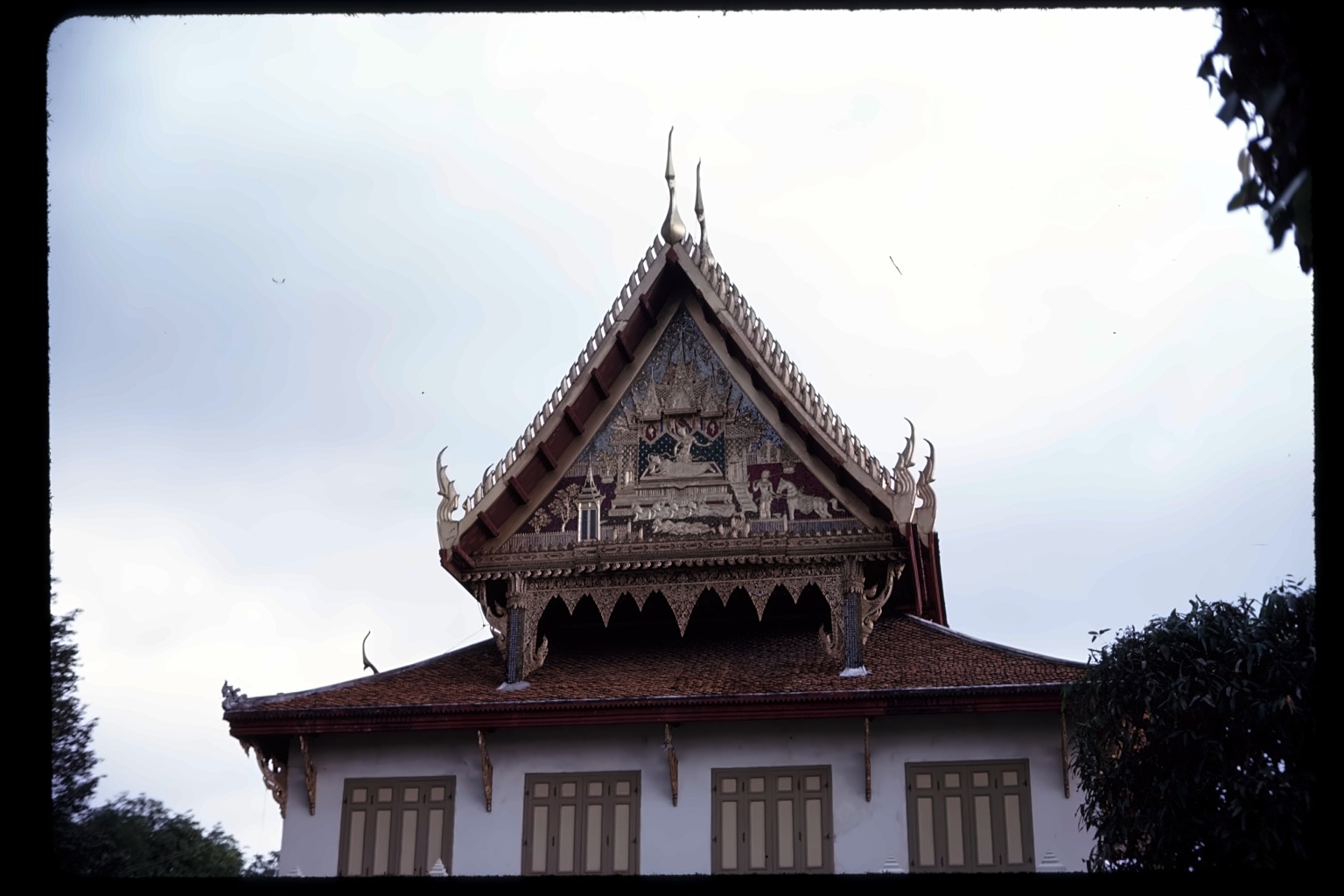
A separate temple structure — the gable itself carries a detailed narrative scene, figures and animals rendered in gold relief, with distinctive curved chofah roof finials.
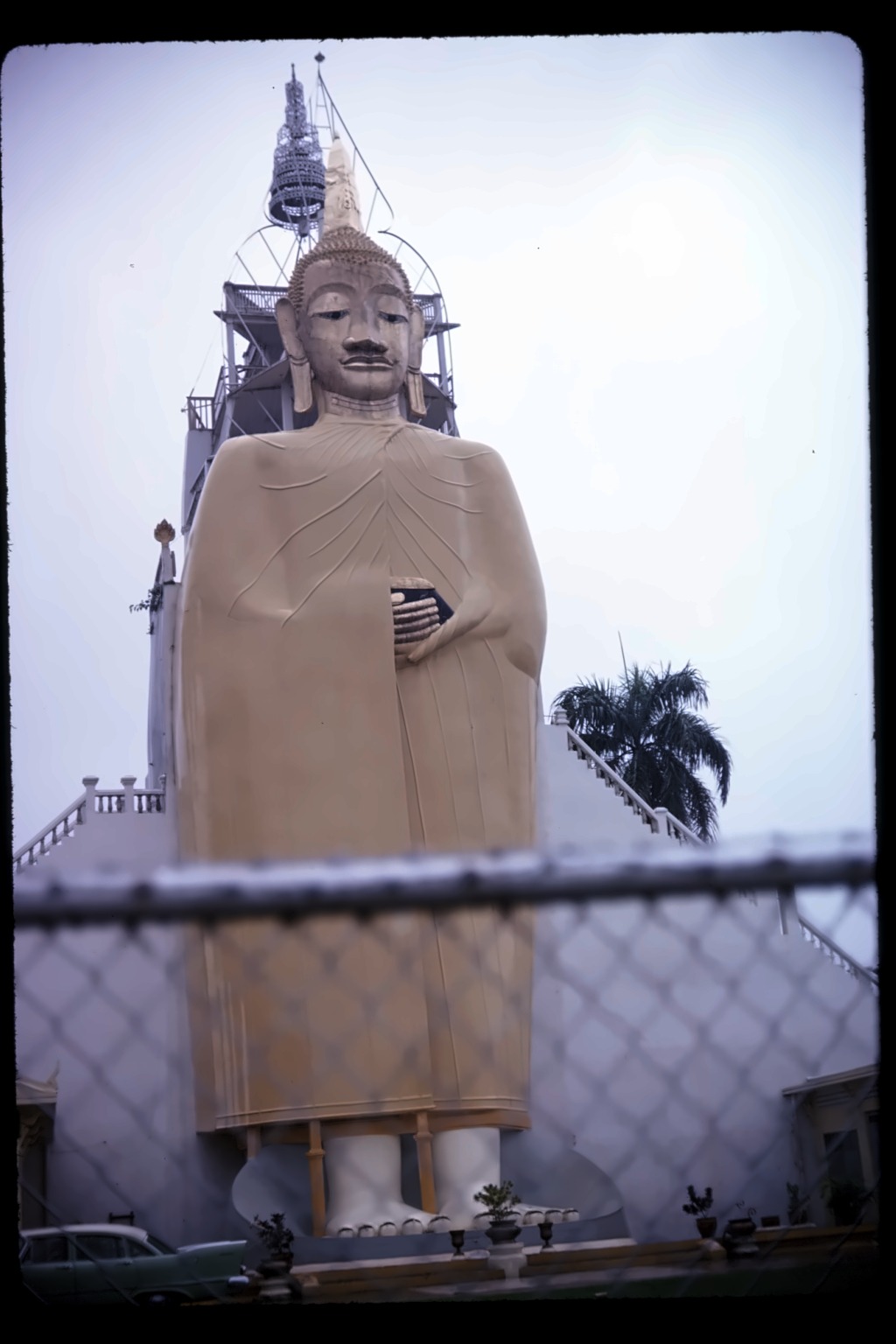
Not a stupa — this is a colossal standing Buddha statue, alms bowl held at the chest, ornate crown structure, scaffolding around the head from maintenance work. Strong match to Luang Pho To at Wat Intharawihan, Bangkok's famous 32-meter gilded standing Buddha — the statue itself was completed in 1927, so this scaffolding reflects later upkeep, not original construction.
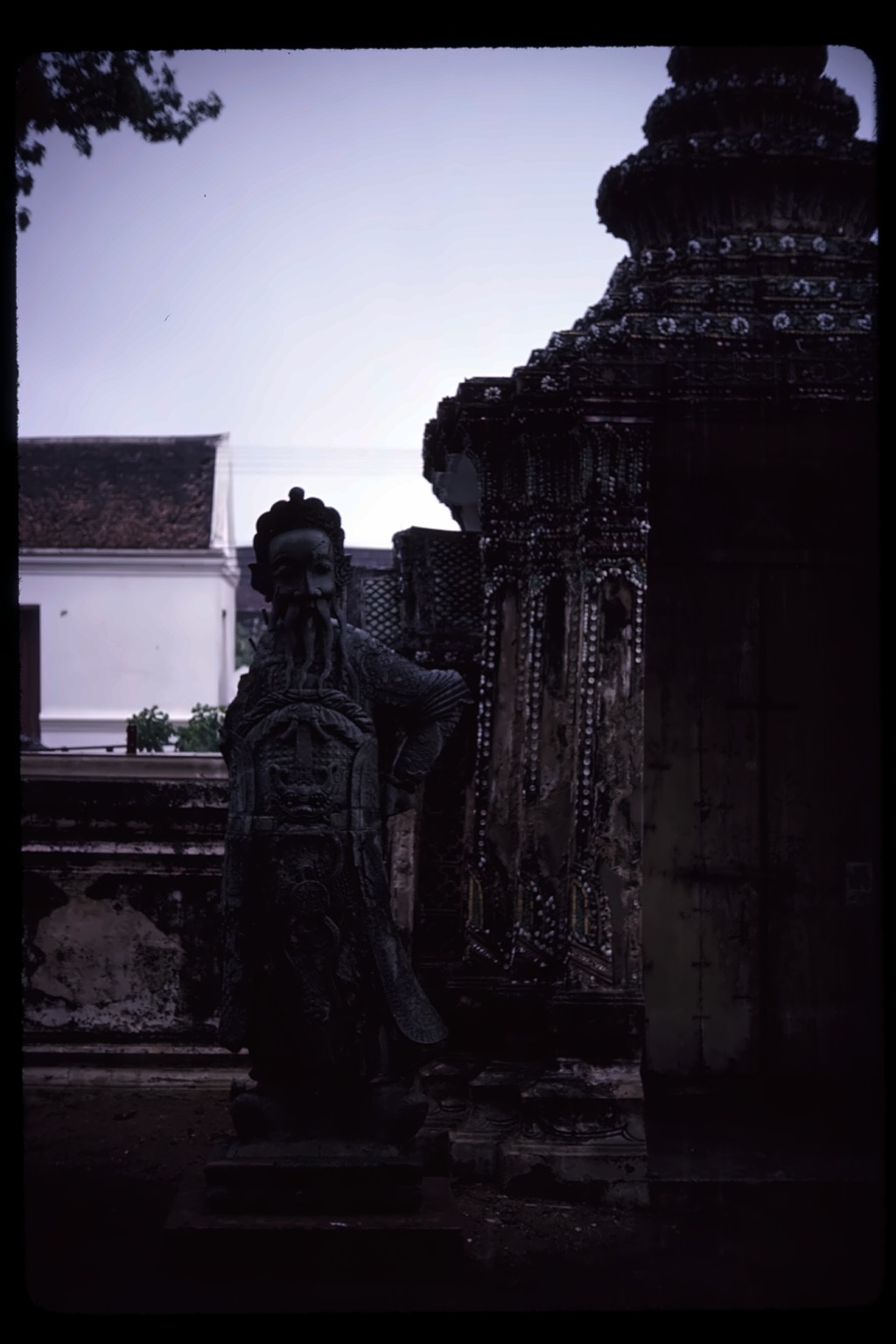
A bearded Chinese stone guardian figure beside a tower faced in mosaic porcelain — a specific, well-documented combination found at Wat Arun, the "Temple of Dawn." Its guardian statues arrived as ballast on Chinese trading ships; its prangs are famously clad in broken porcelain. A different temple from the Marble Temple photos elsewhere in this tray.
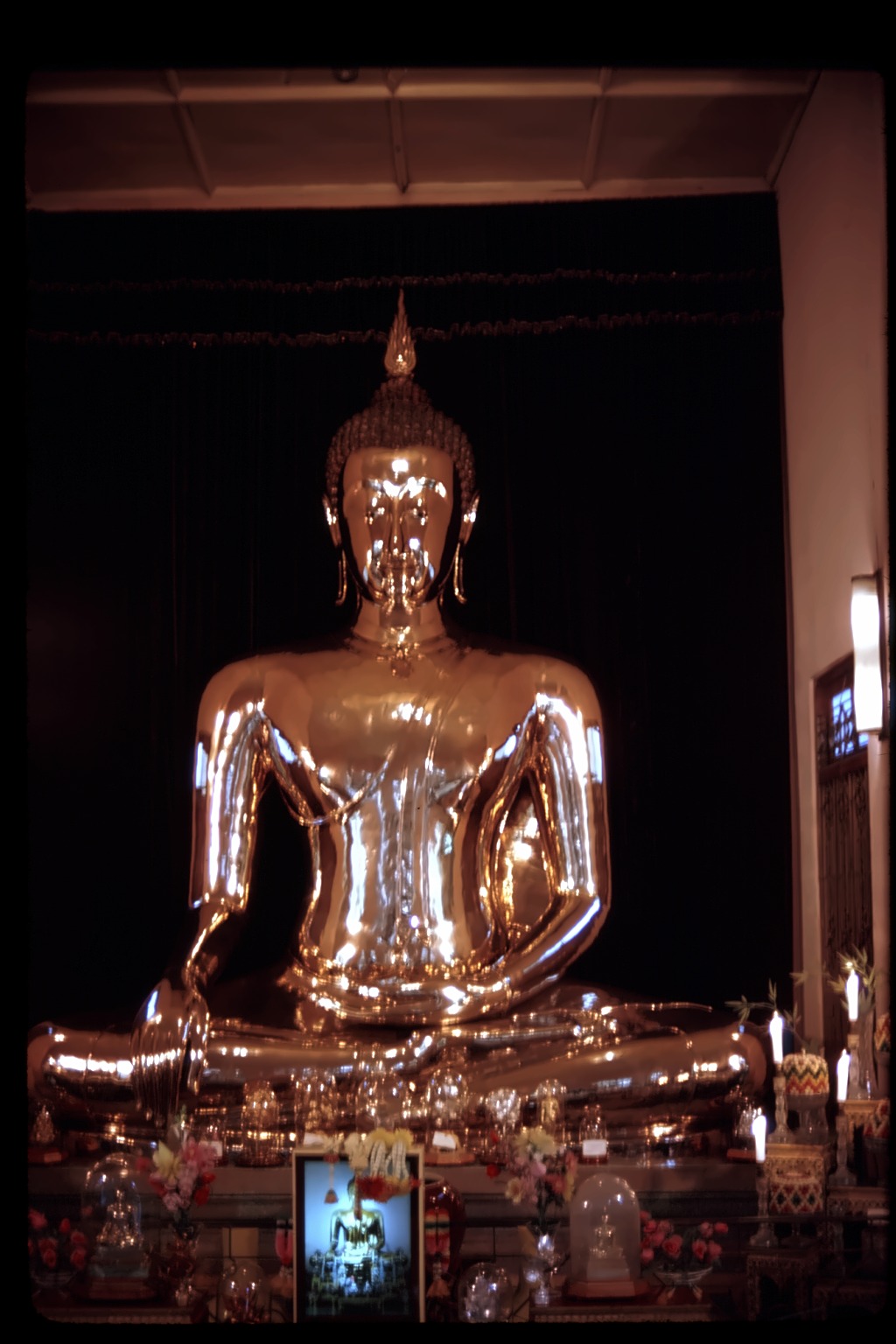
A confident match: the Golden Buddha at Wat Traimit, the world's largest solid-gold Buddha statue, 5.5 tons. Its true nature — solid gold under a plaster covering — was only discovered in 1955 when movers accidentally cracked the plaster. This photo, June 1964, is just nine years after that rediscovery, likely still in the simpler building the statue had before the current one was built in 2010.
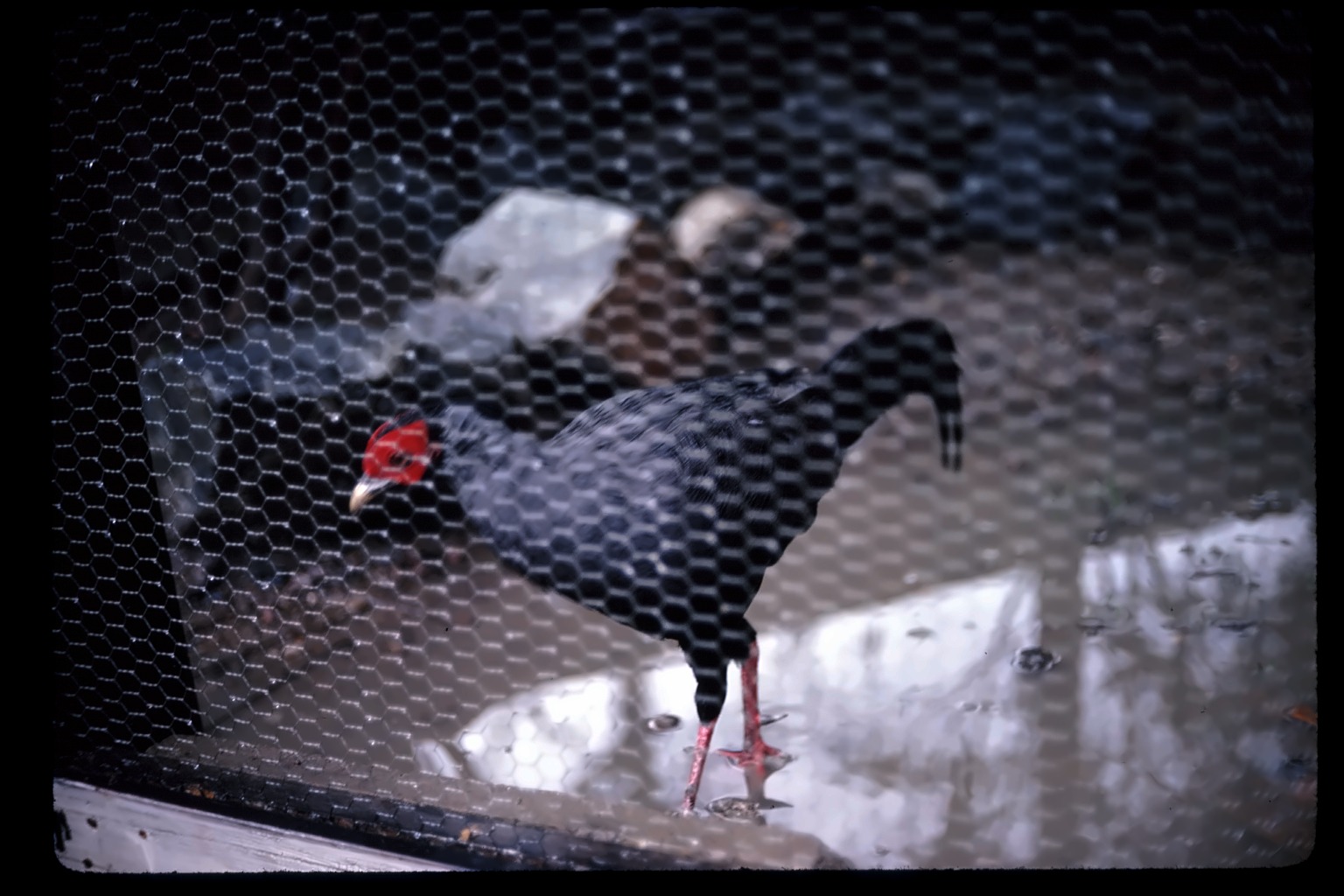
Not a pheasant — a red facial shield, dark plumage, and long red legs point to a swamphen or gallinule, a wetland bird common across Southeast Asia — in an enclosure, grounds of a temple or park.
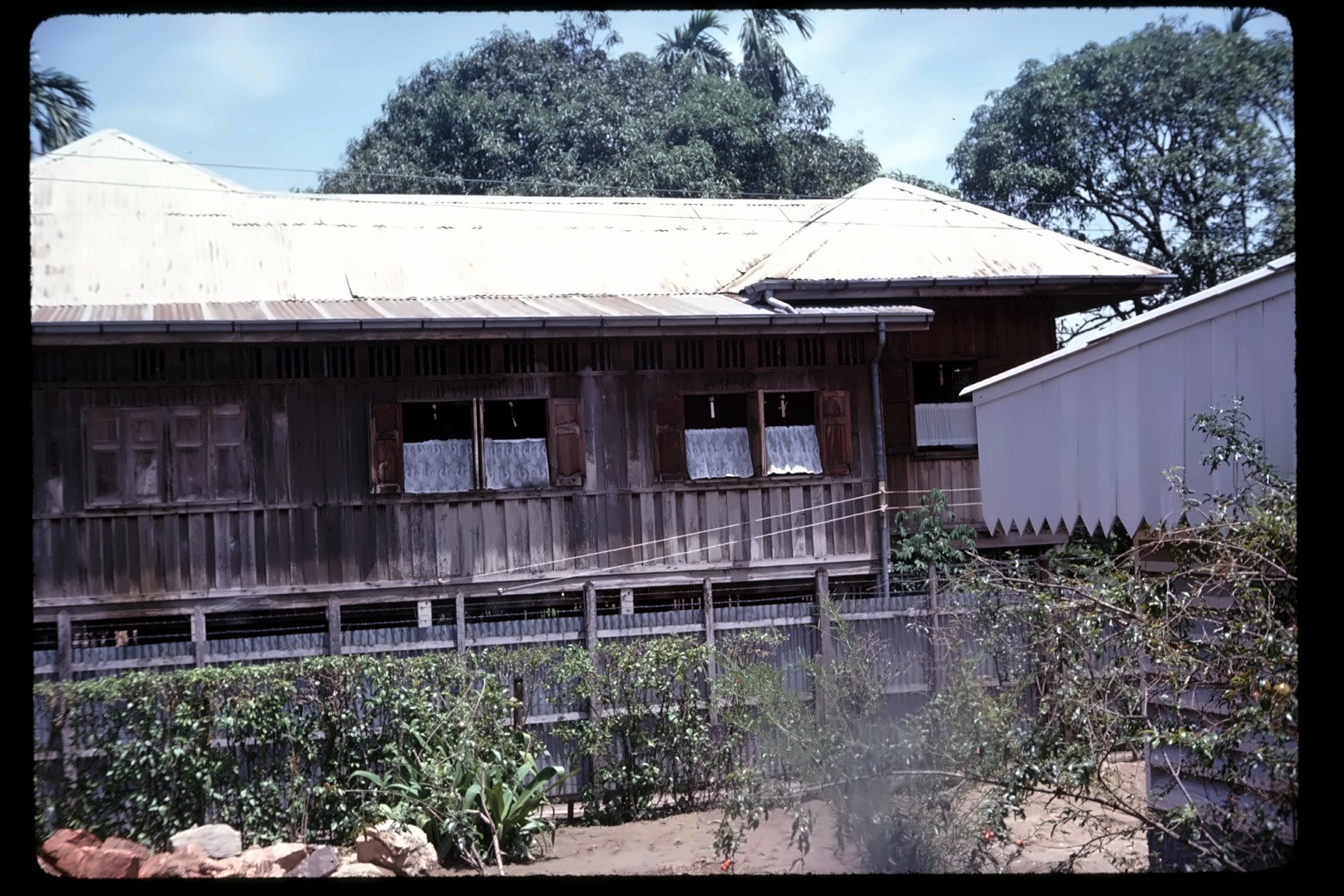
A traditional wooden house with a peaked roof and garden.
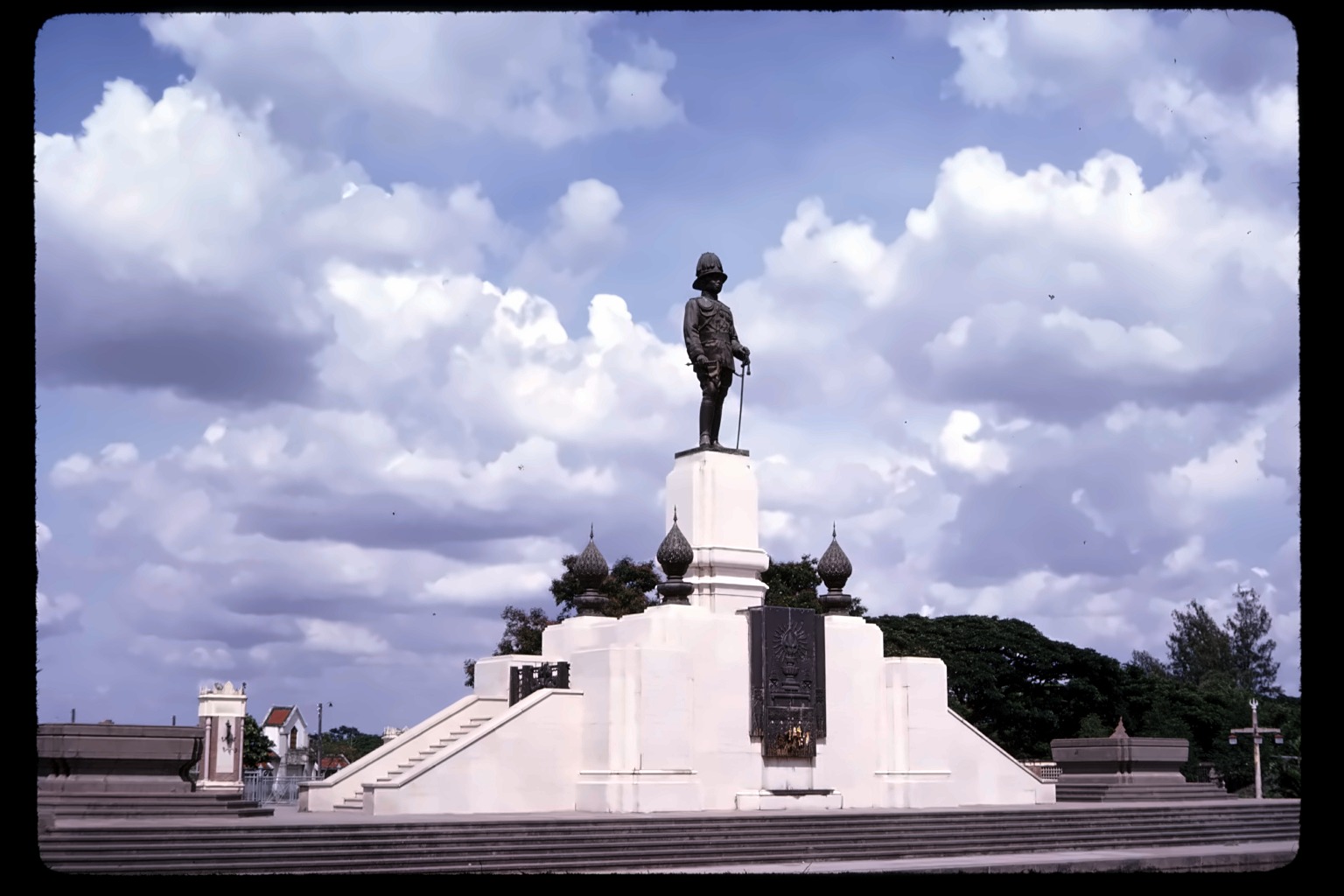
A standing figure — not equestrian — in a pith helmet and military dress on an ornate Thai royal-style pedestal, with a bronze sunburst emblem and actual floral offerings left at the base: a real, actively venerated monument. Who specifically isn't confirmed.
unidentified — who this figure is isn't confirmed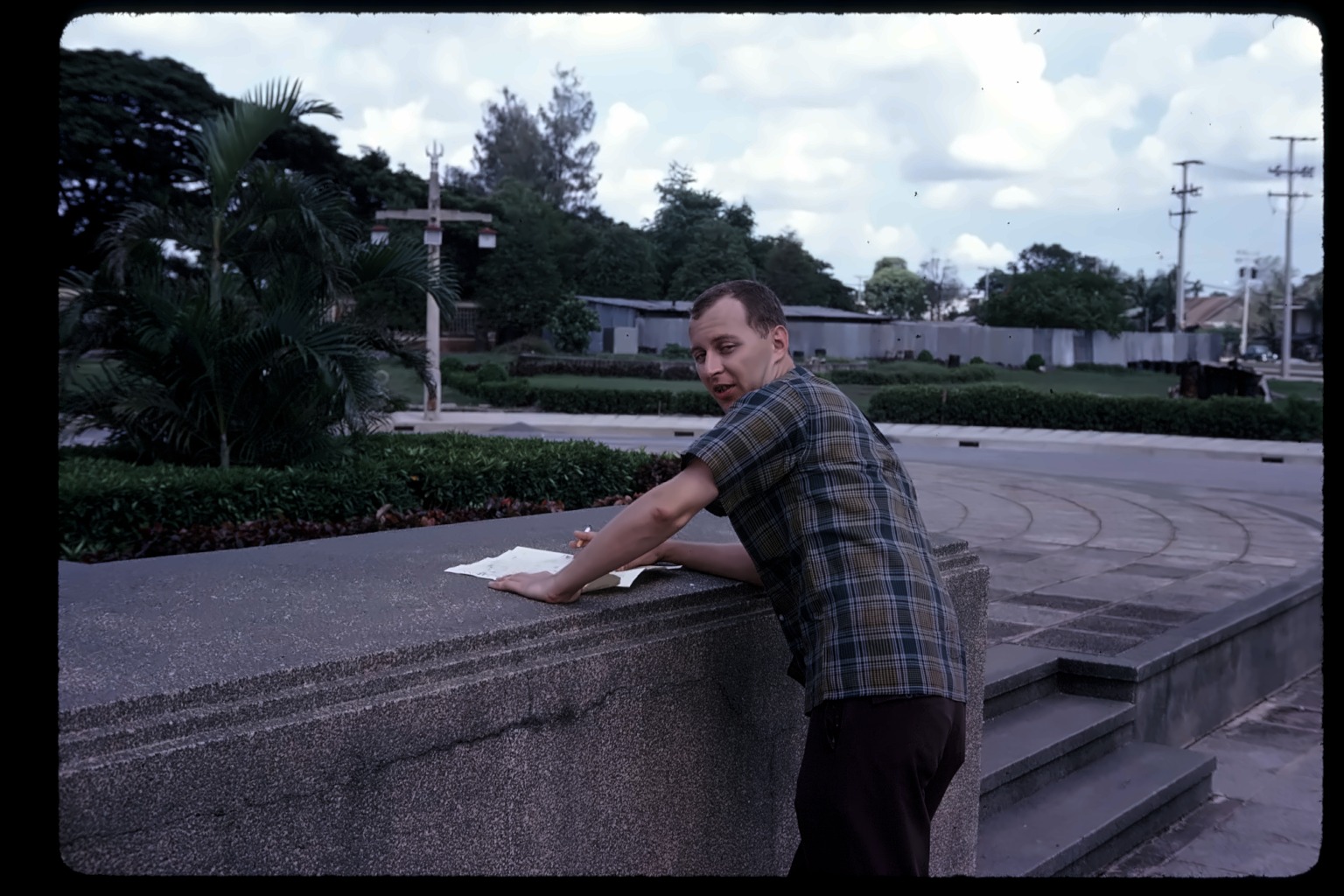
A man in a short-sleeve civilian shirt, leaning on a stone railing, writing something on a piece of paper — postcard or notes, mid-thought. Possibly Chubb from the Tan Son Nhut dispensary.
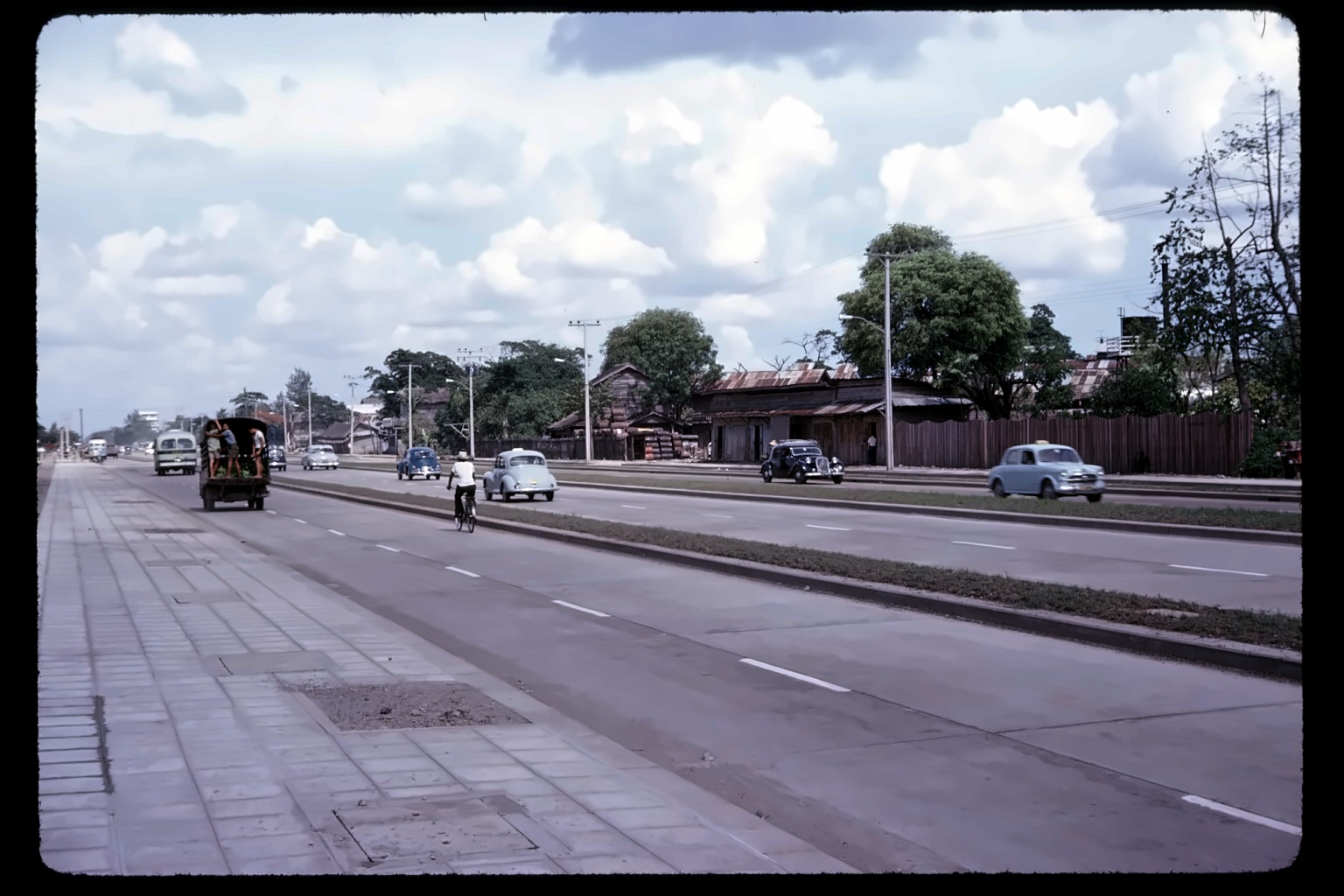
A wide, divided highway with a grassy median, no streetcar visible — a truck carrying people in the back, a cyclist, sedans of the era, wooden buildings along the roadside. Urban outskirts, consistent with Bangkok.
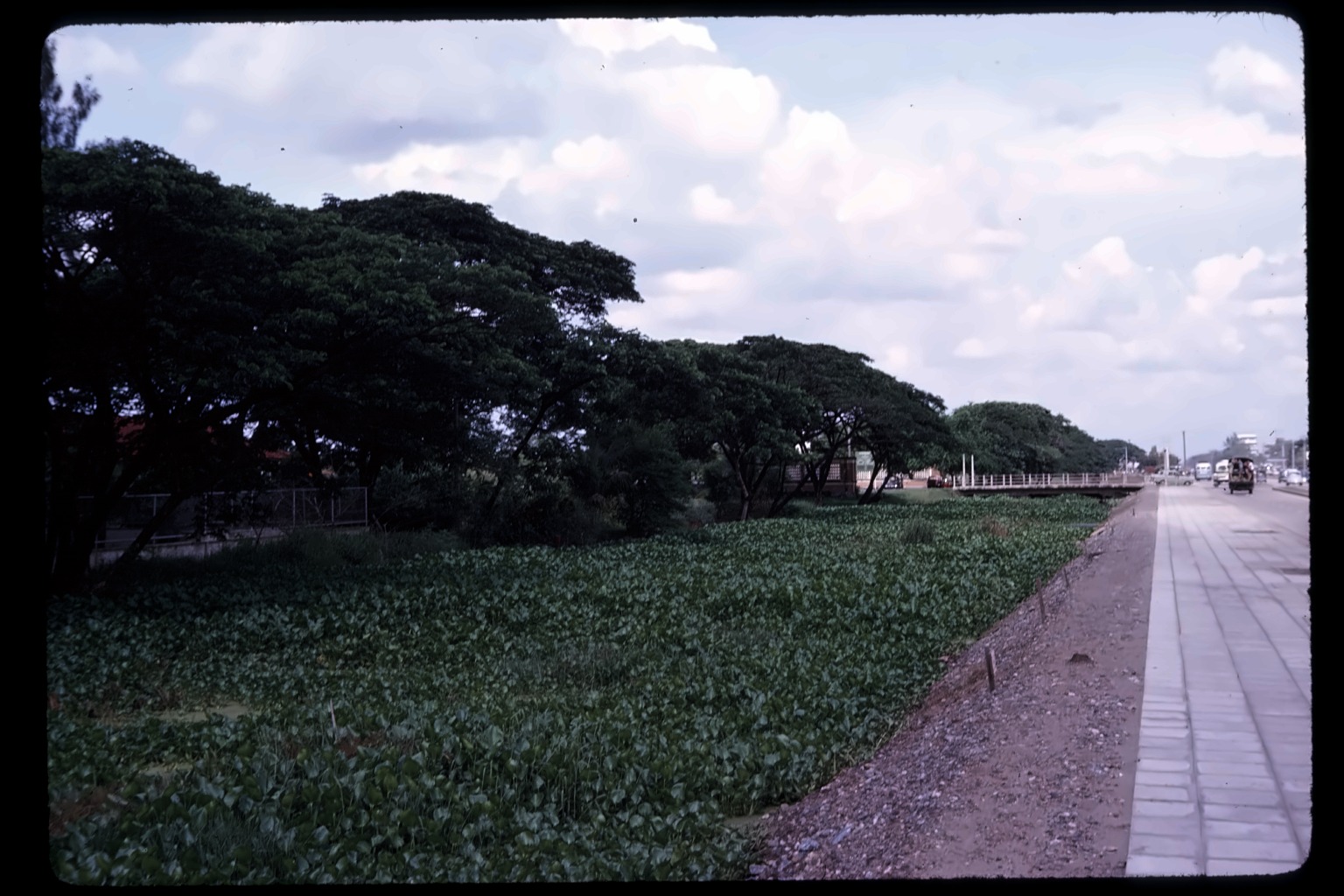
A path or median strip along a street.
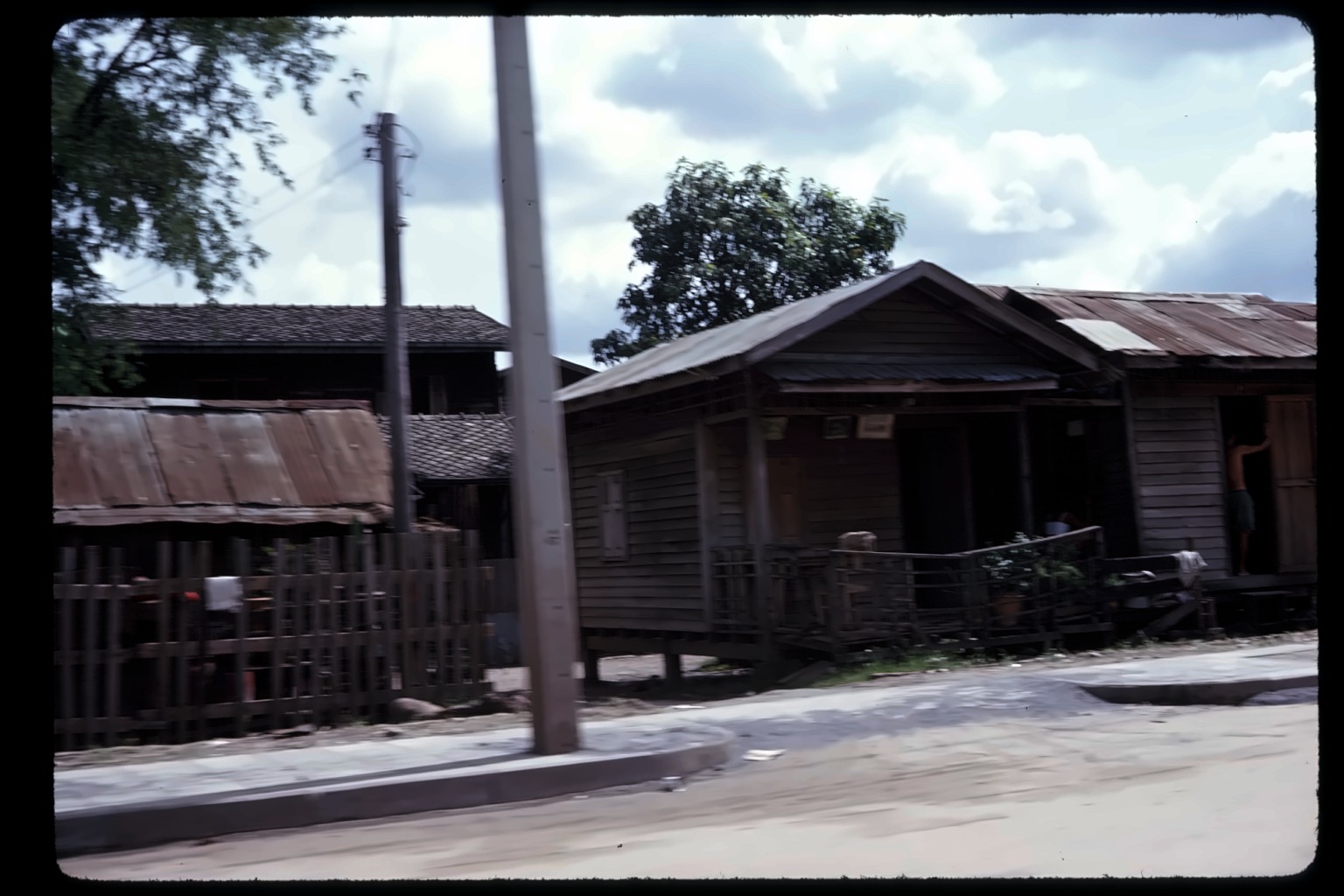
Wooden houses along a street, utility poles.
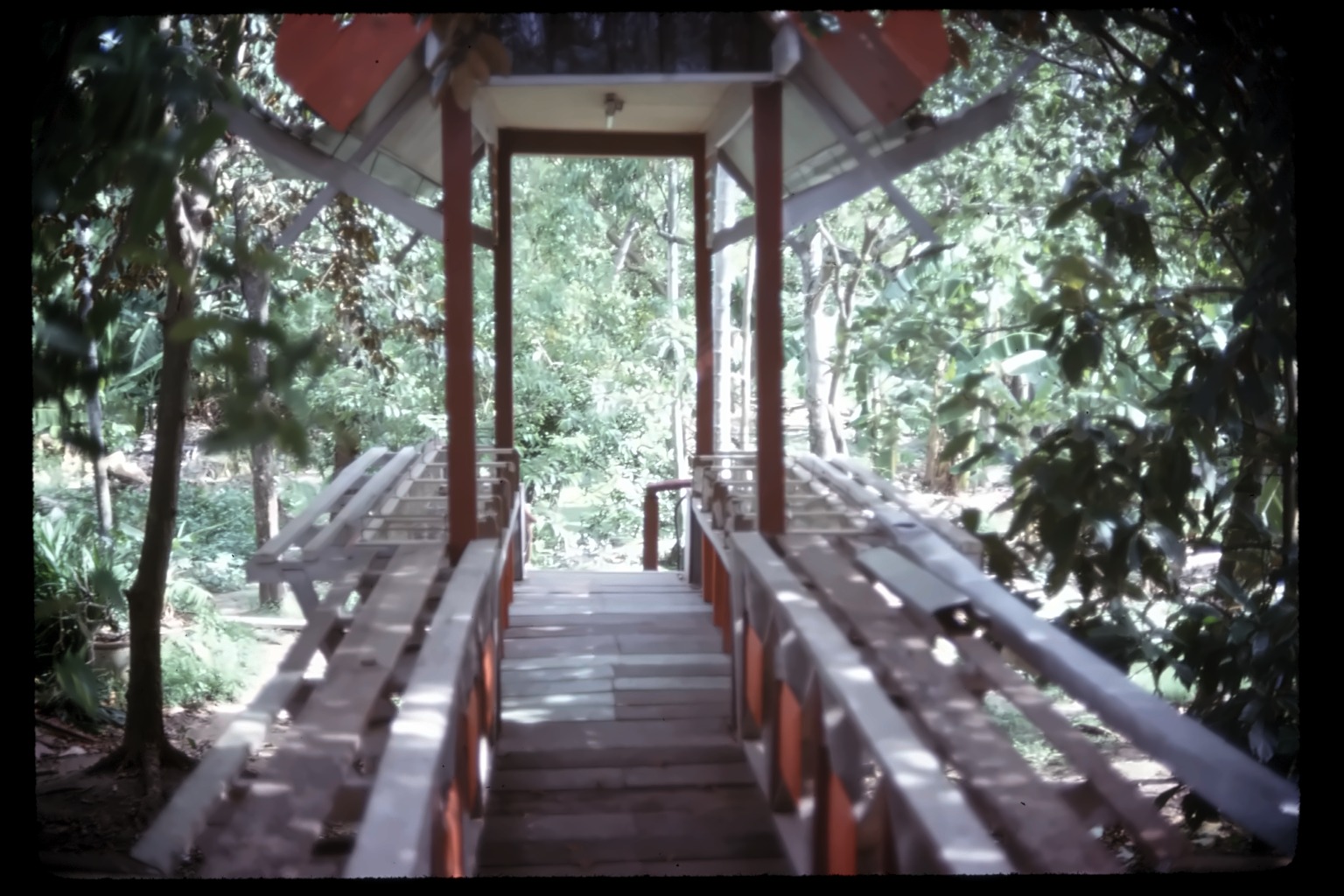
A wooden footbridge through trees, park-like setting.
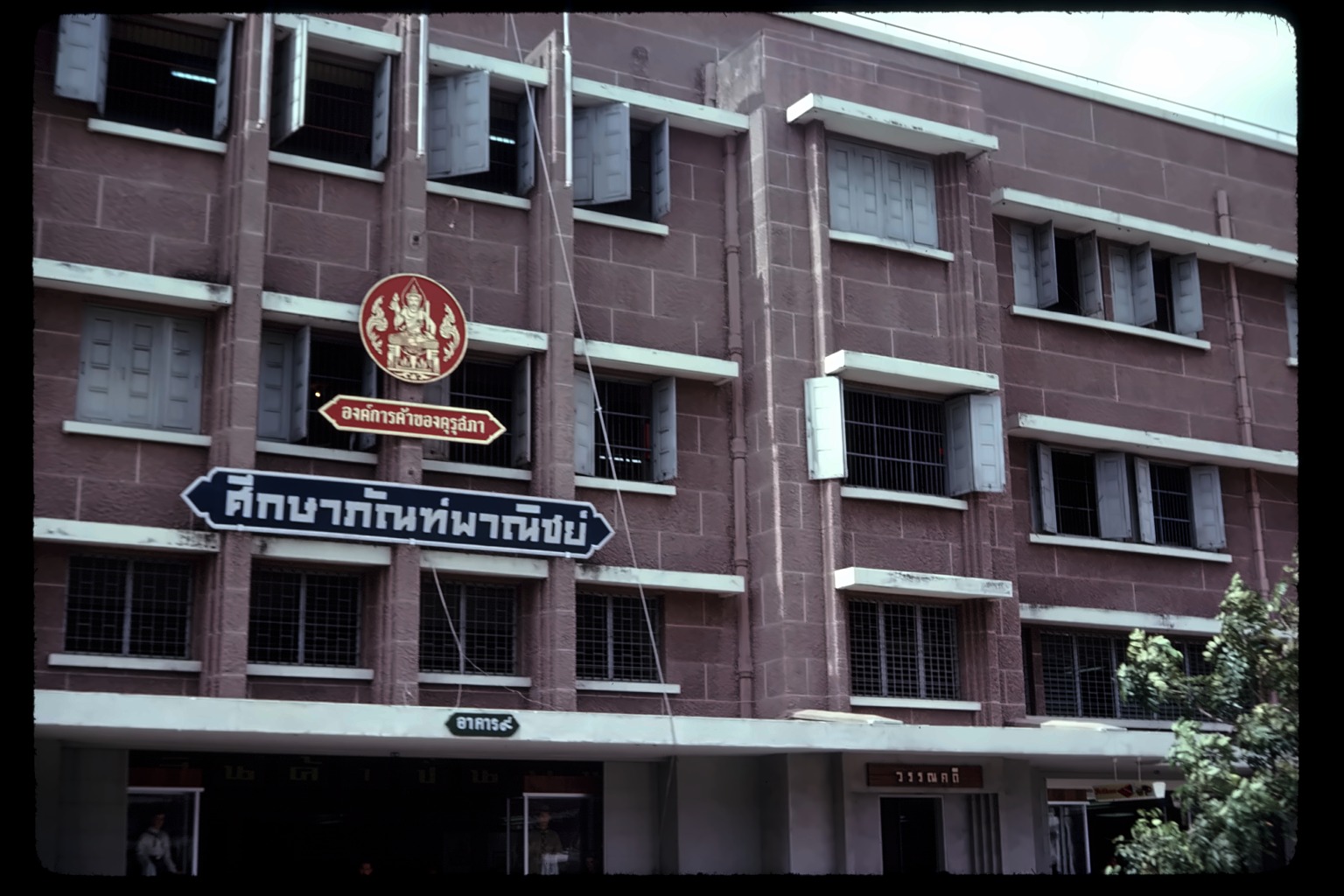
The signs are legible and translate directly: "Suksapan Panit," a schoolbook and educational-supplies retailer run by the Khurusapha Trading Organization — Thailand's Teachers' Council, under the Ministry of Education. Founded 1942, still operating today.
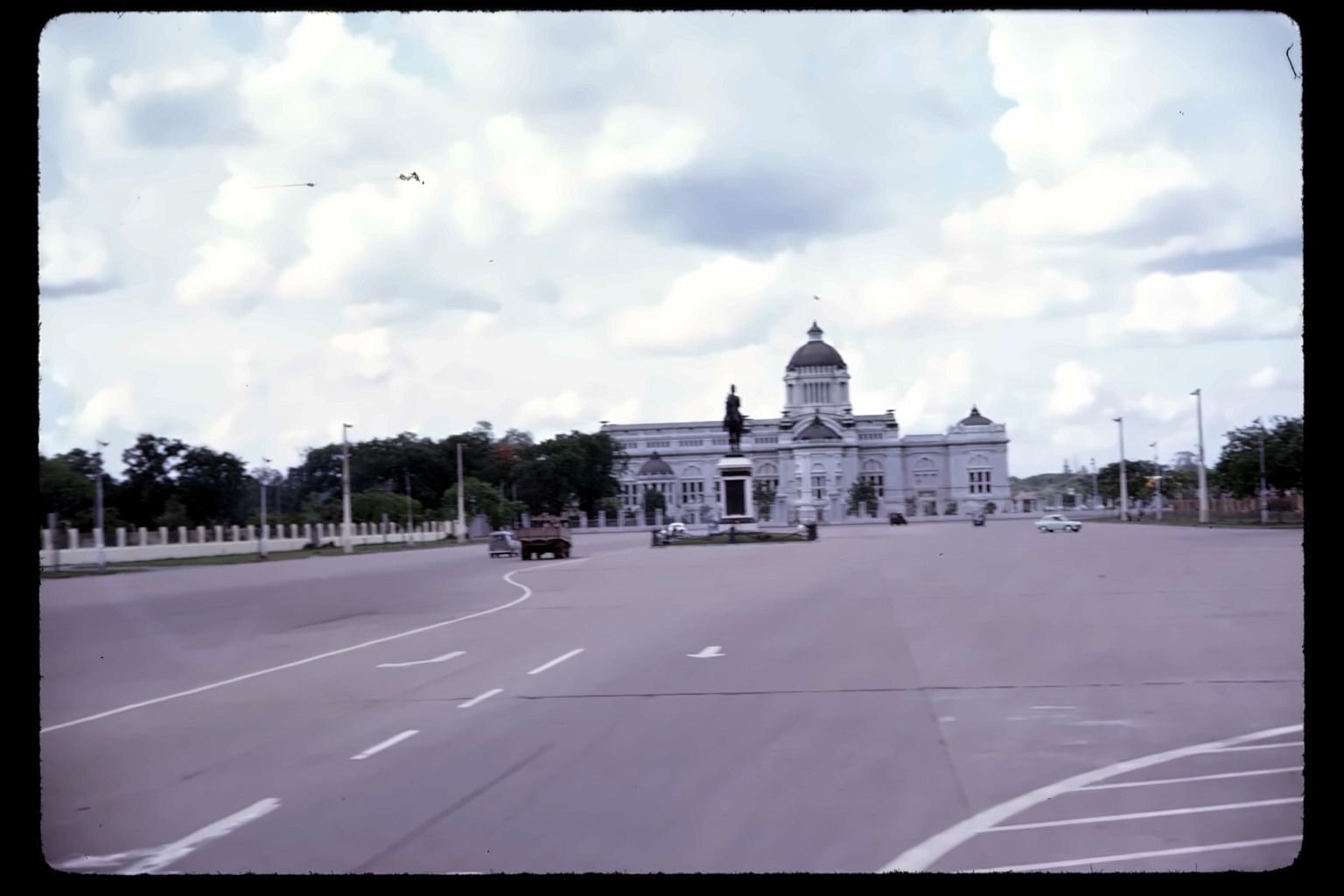
A domed white building at a wide plaza, an equestrian statue on a tall pedestal in front of it — that specific combination is Ananta Samakhom Throne Hall and the King Chulalongkorn Equestrian Statue at Bangkok's Royal Plaza. A stronger match than the standalone statue guessed at in slide #17.
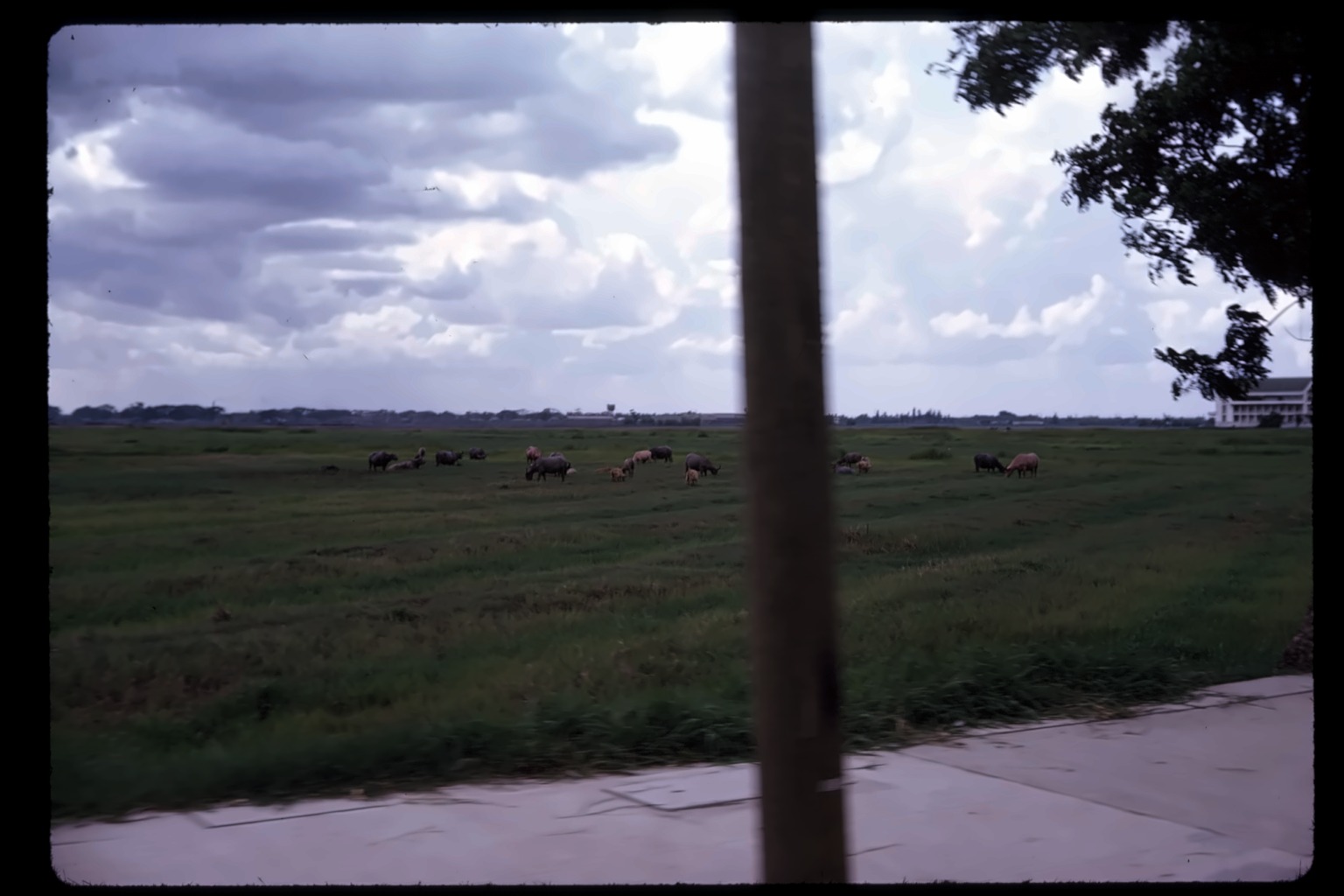
A genuinely large herd — over a dozen animals — grazing an open field, dark bodies and curved horns reading as water buffalo rather than cattle or horses. A quiet closing image, though this tray has no "Fin!" written anywhere.