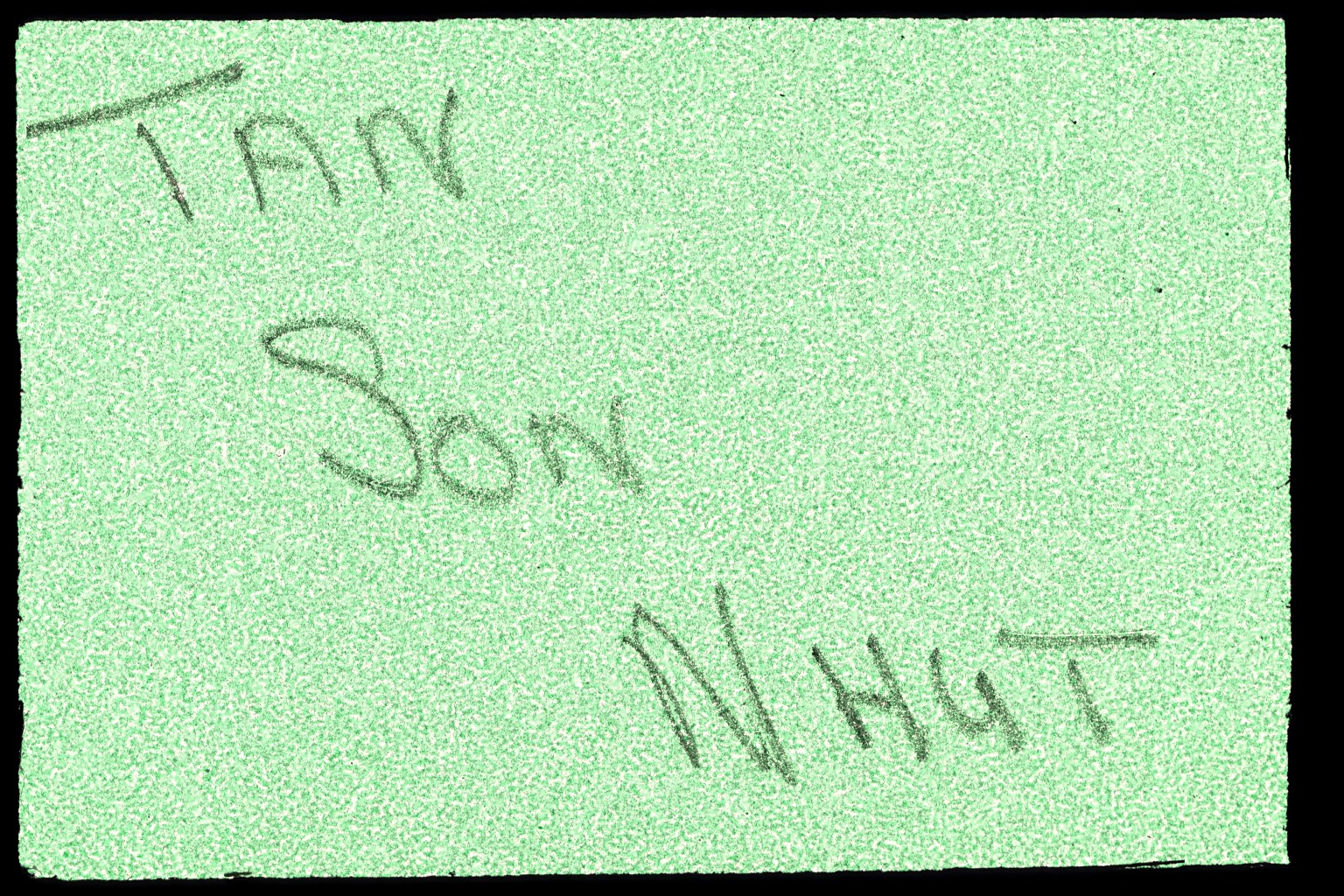
Opens the tray: "Tan Son Nhut." Handwritten, green ground. His home base.
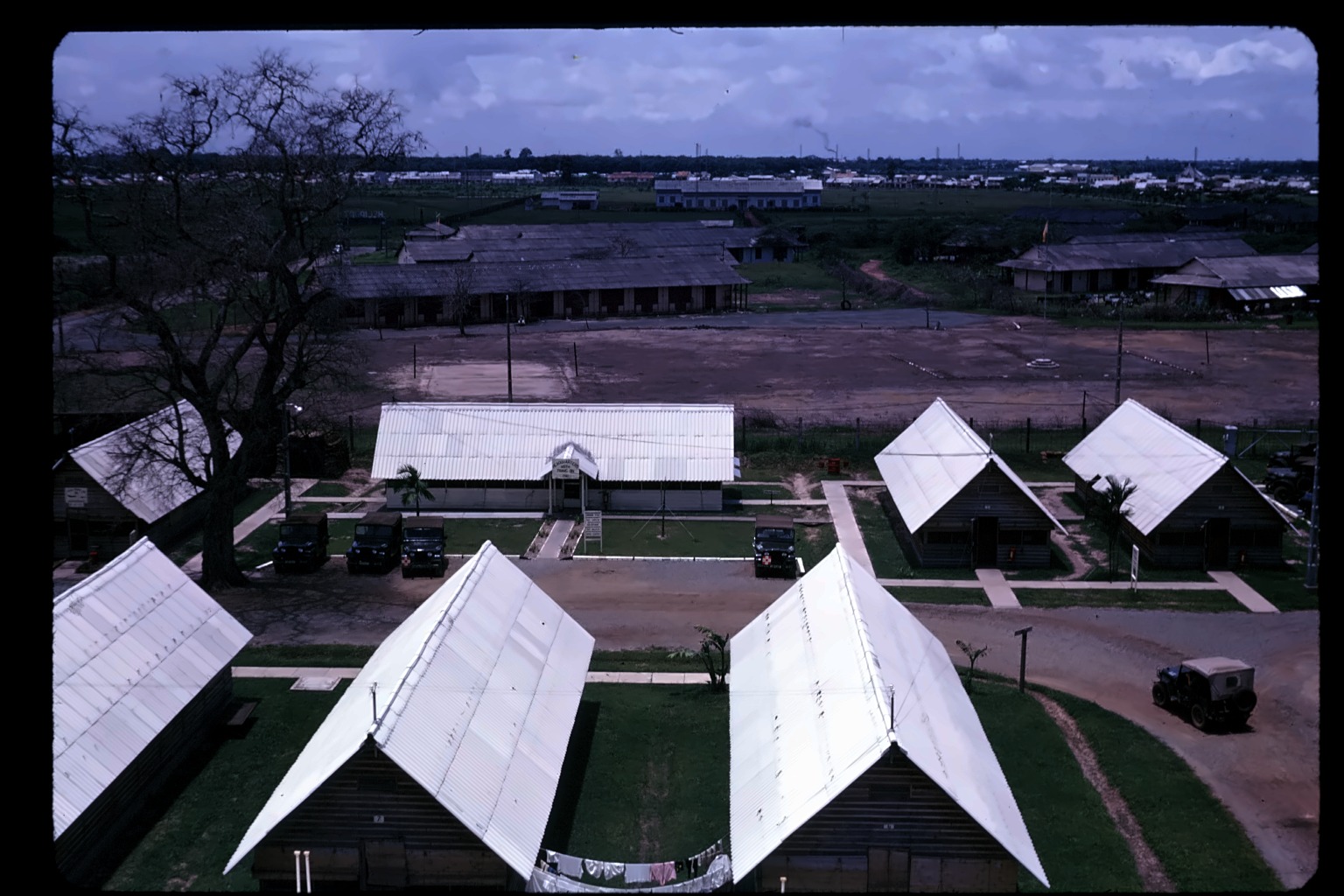
An elevated view over the camp, barracks in rows on both sides. Partially legible on the central building's sign: "...Headquarters, 45th Trans Bn" — the same building confirmed clearly in slide #3, seen here from farther away. "Aoni" in his own title was likely a mis-transcription of "Trans."
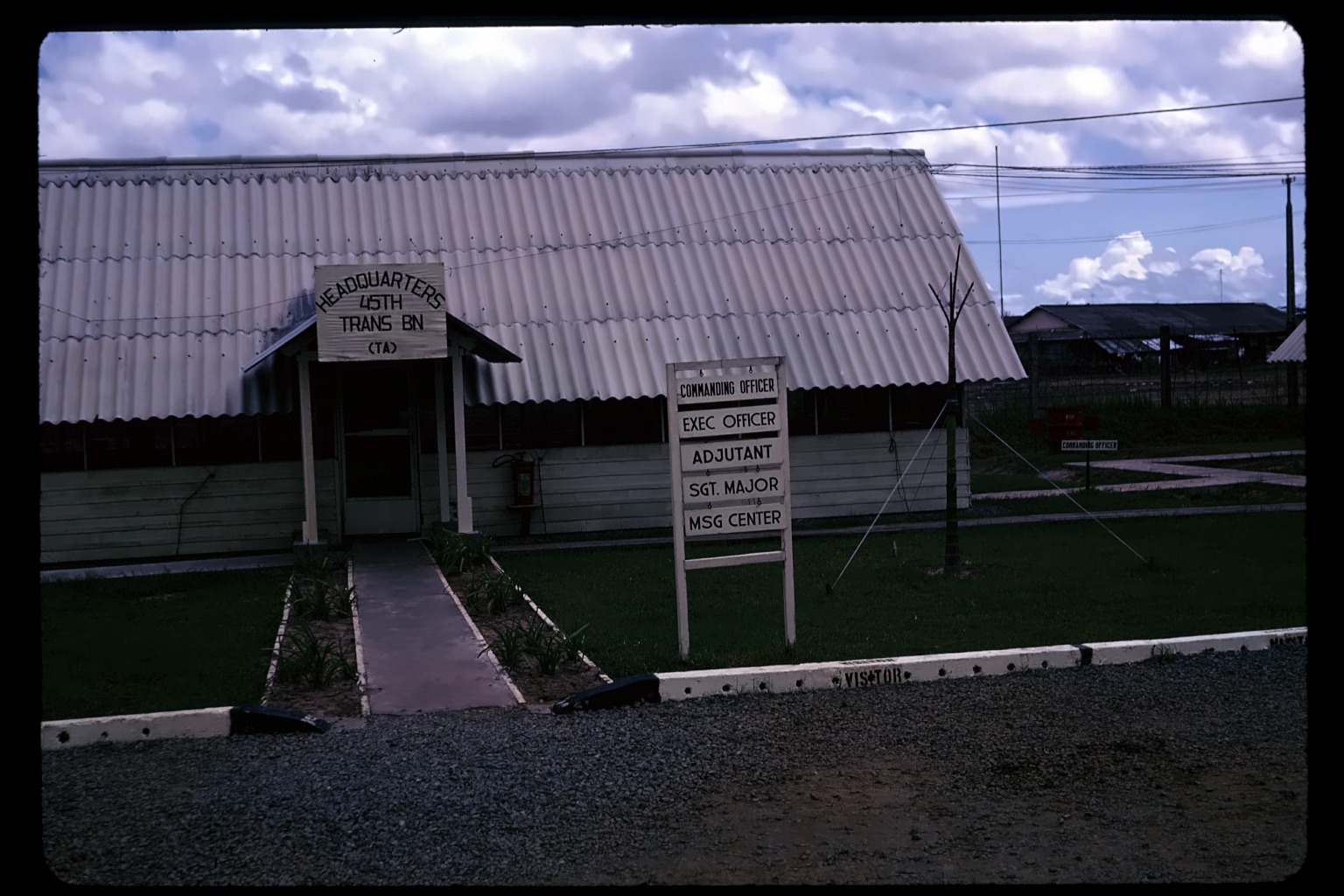
Fully legible sign: "Headquarters, 45th Trans Bn (TA)." Worth being precise — this is the 45th Transportation Battalion, a different unit from his own 45th Medical Detachment, sharing the number but not the branch, co-located on the same base.
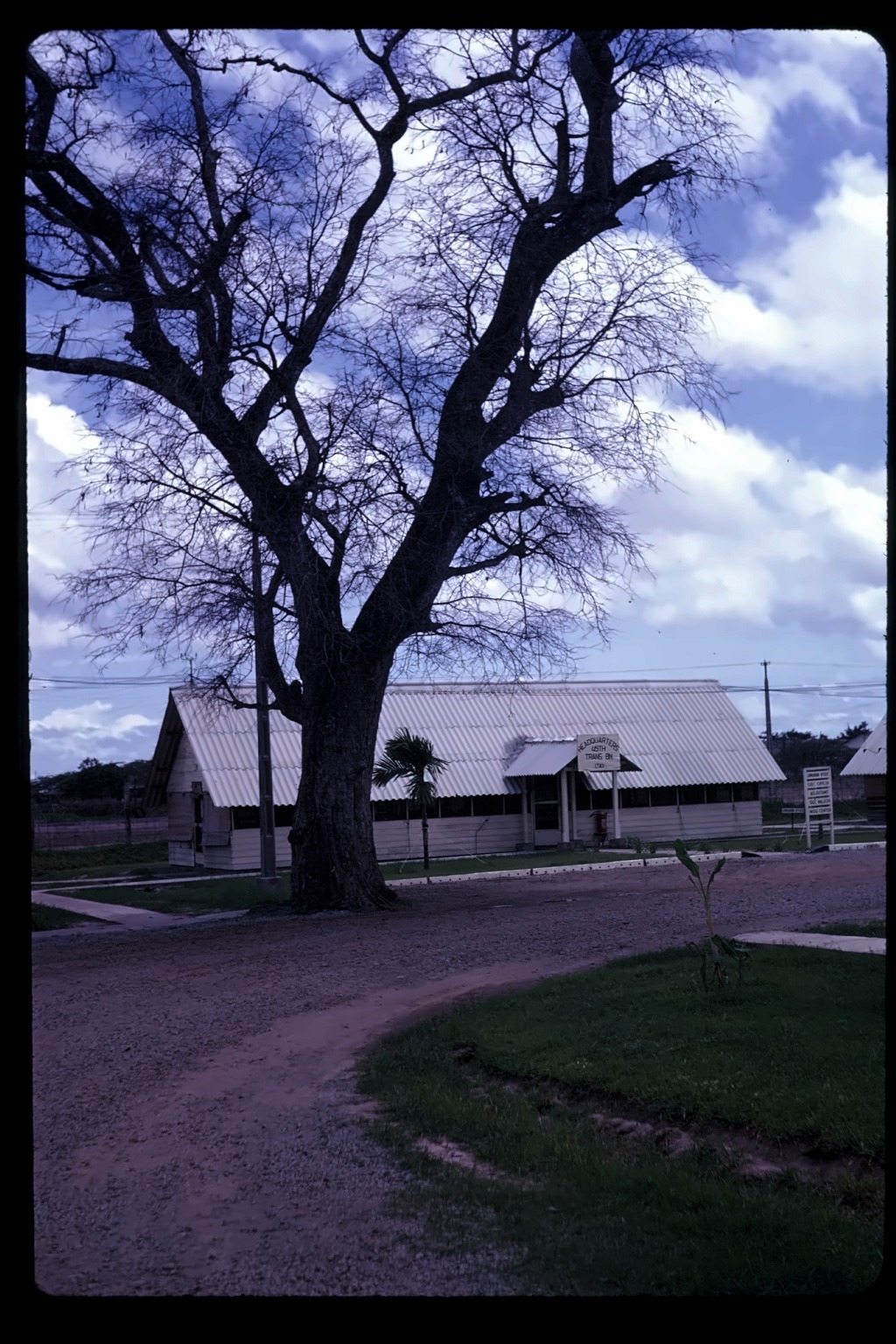
A bare tree against the sky, the "Headquarters, 45th Trans Bn" building visible behind it — same building as slides #2 and #3.
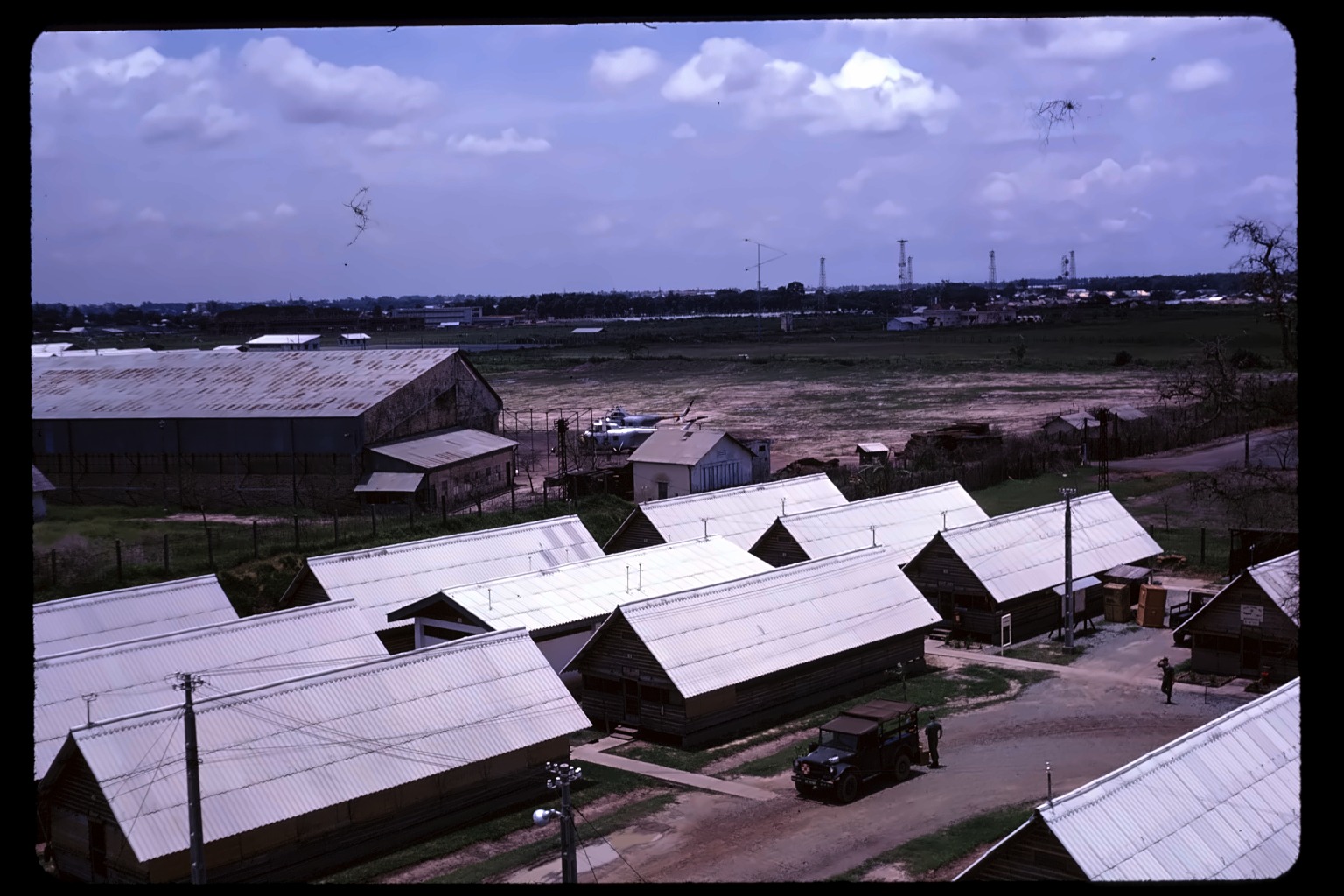
An elevated view over the camp's tent rows.
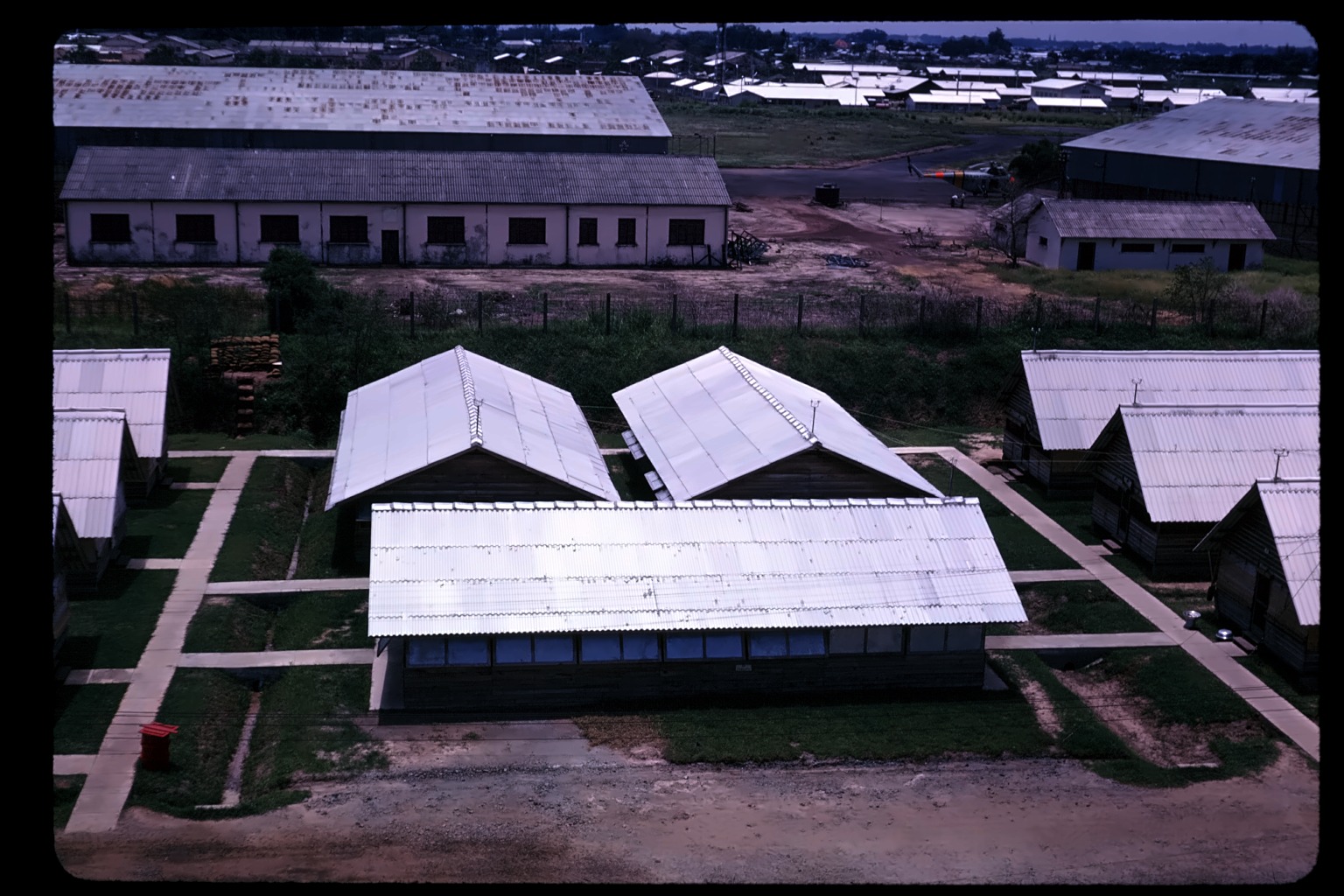
A different elevated angle over the same barracks layout.
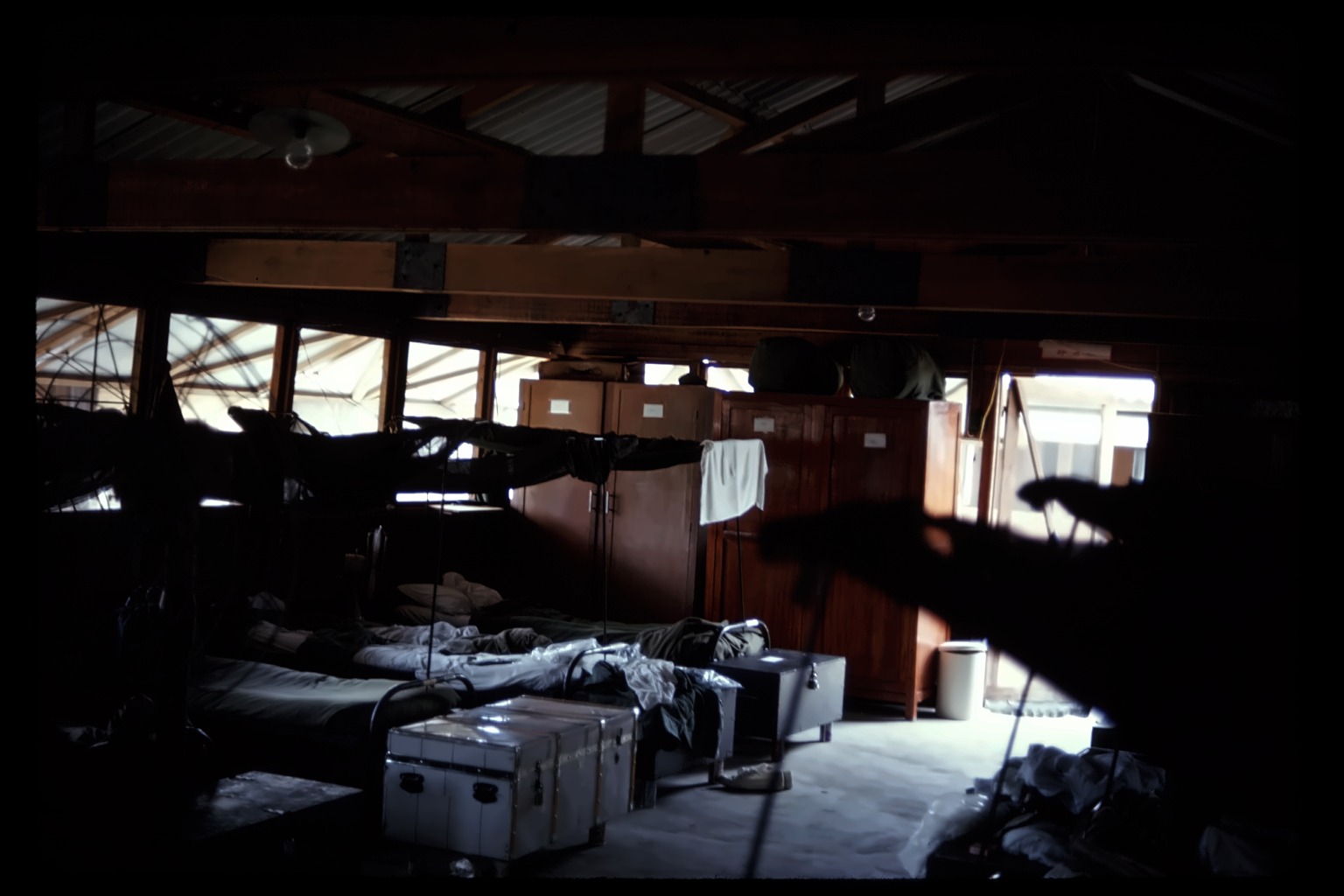
The cluttered interior of a hooch — cots, gear, personal effects.
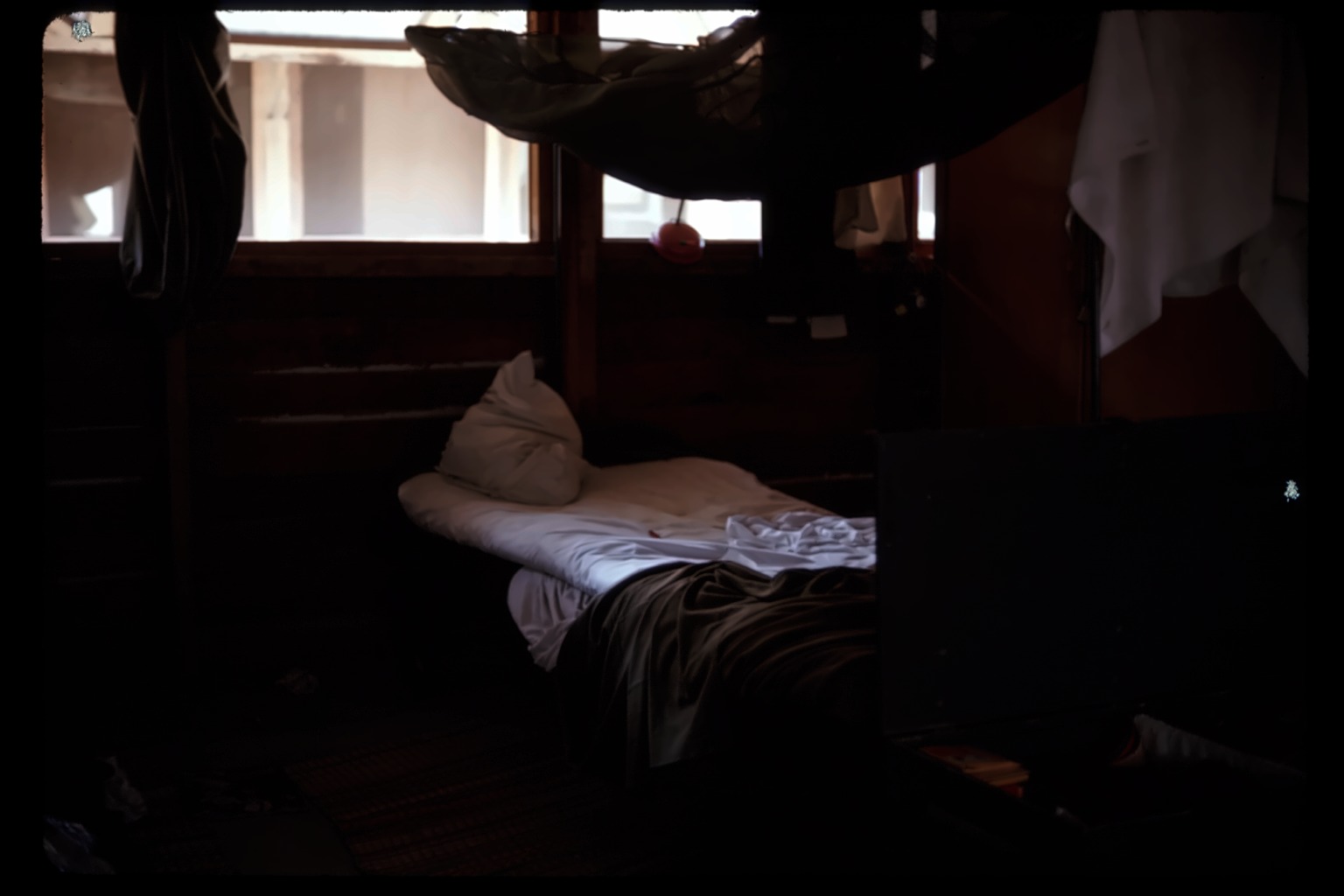
His own bunk.
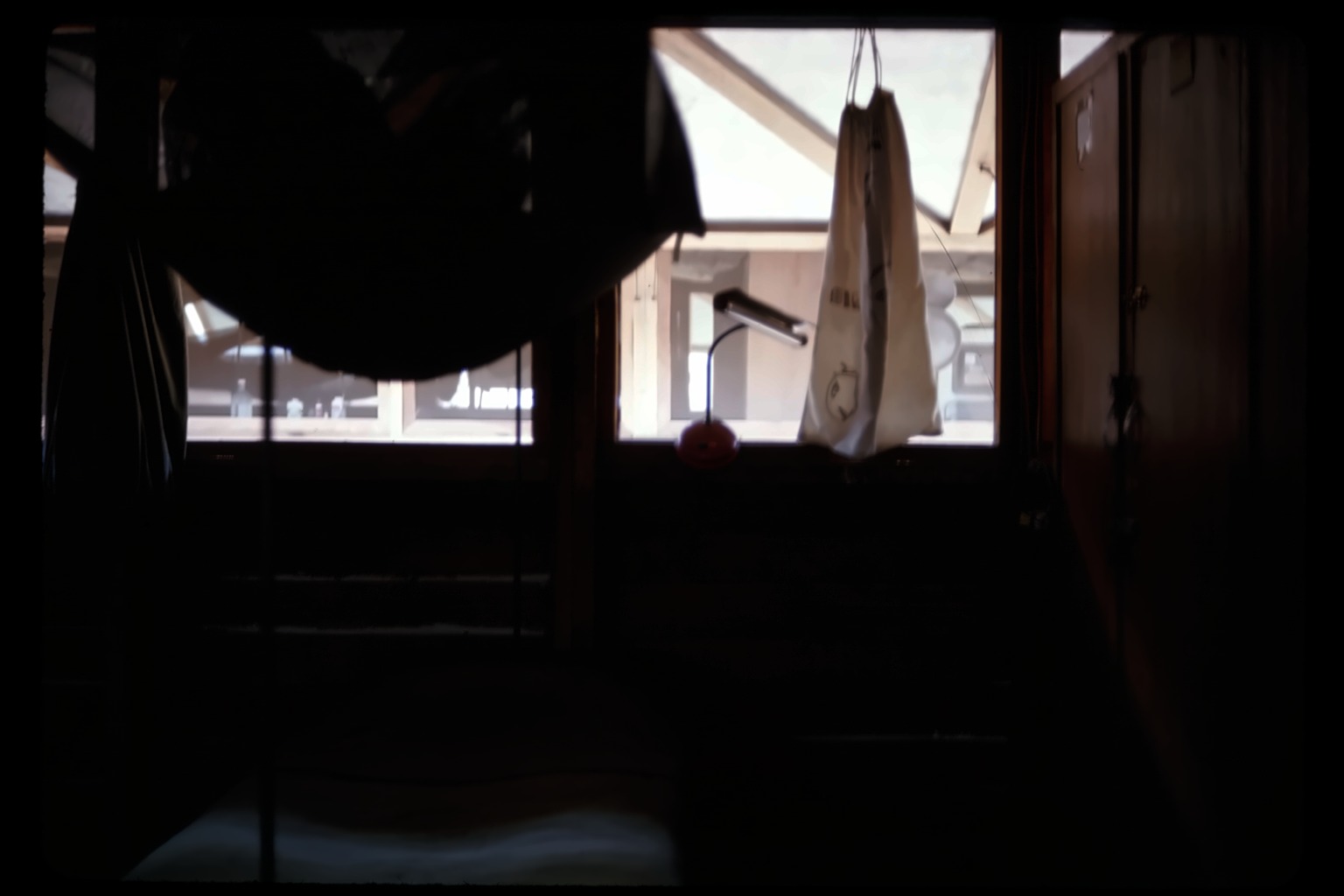
A wider view of his living space, clothes hanging near a window.
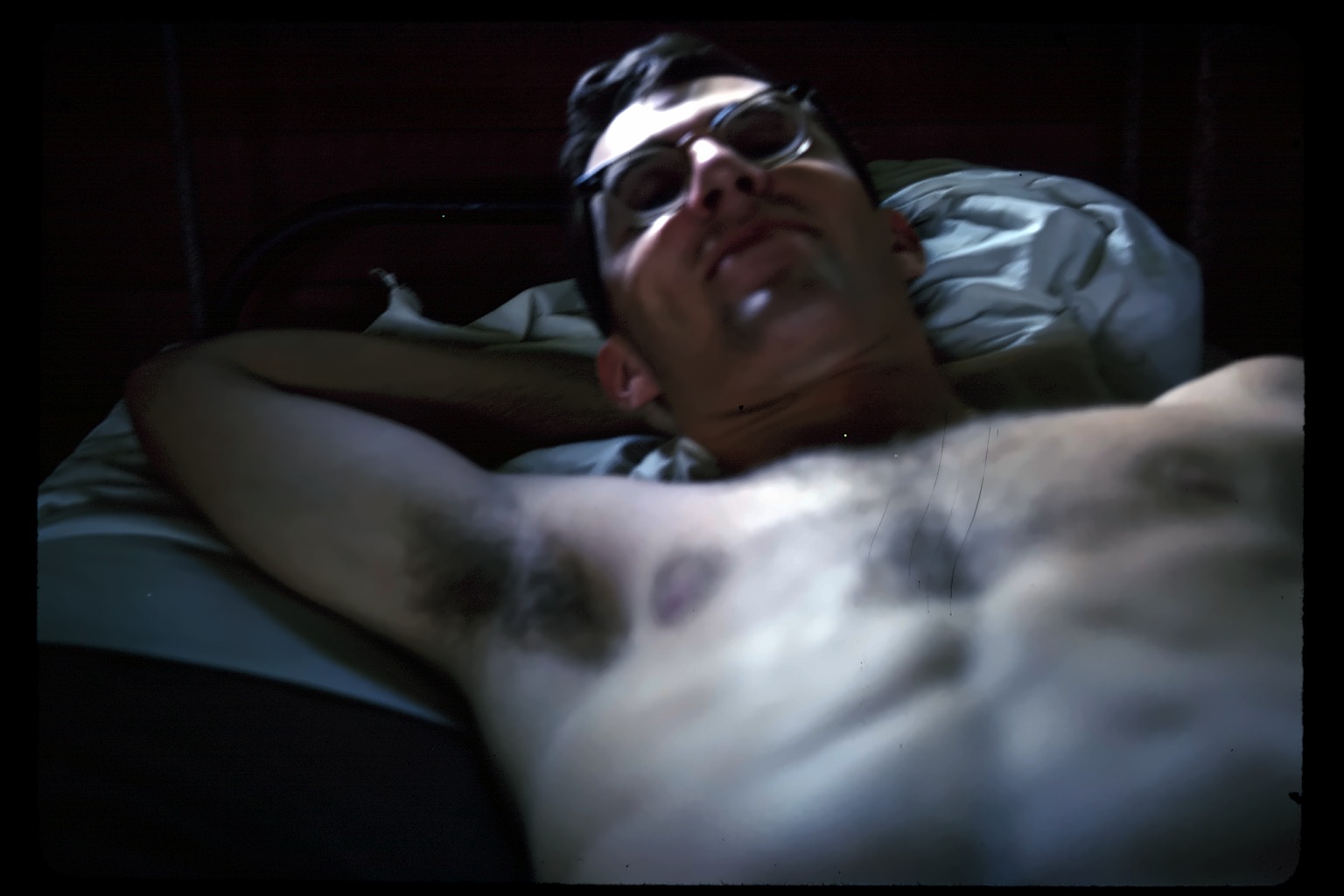
Him, relaxed, lying in his bunk.
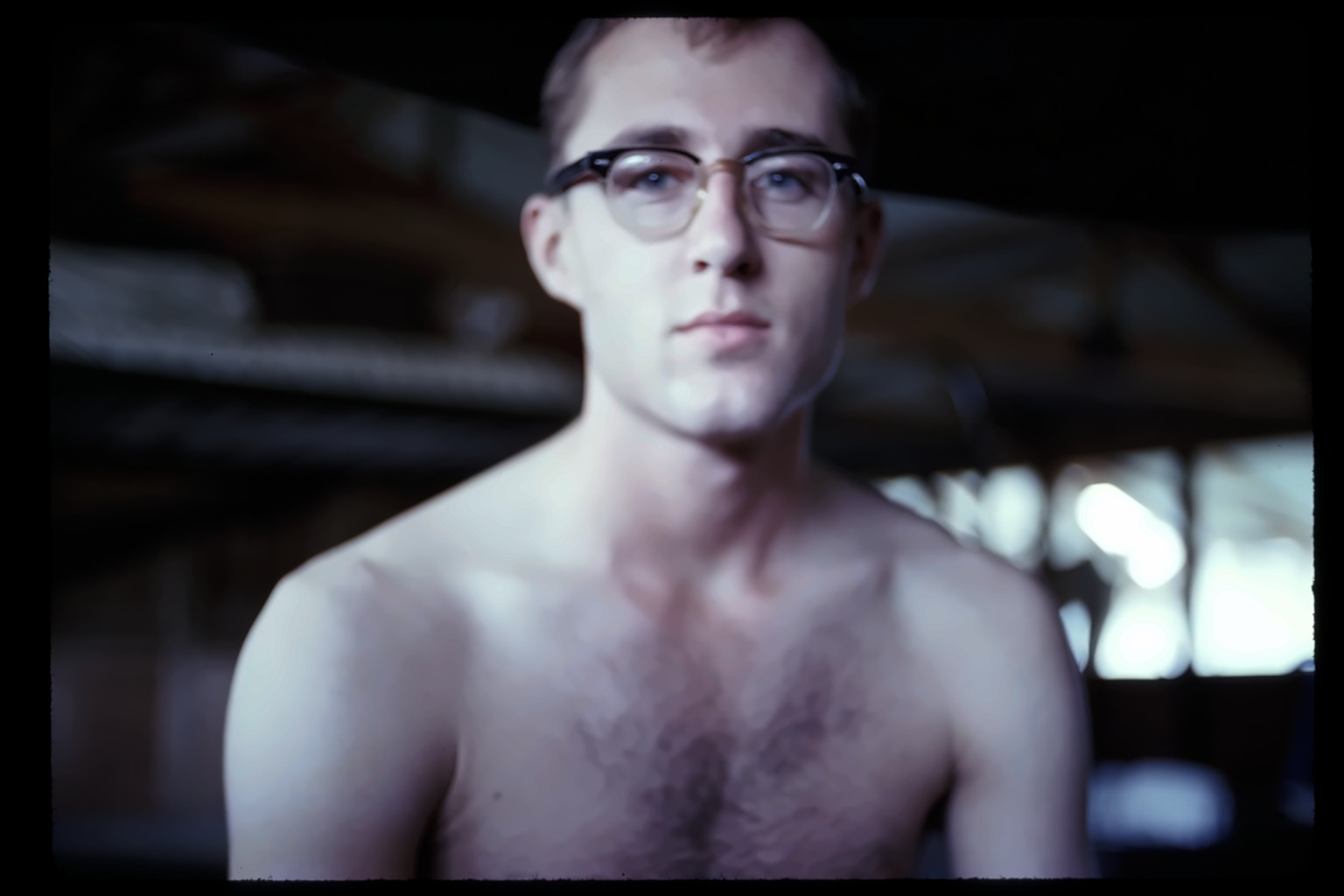
A portrait, shirtless.
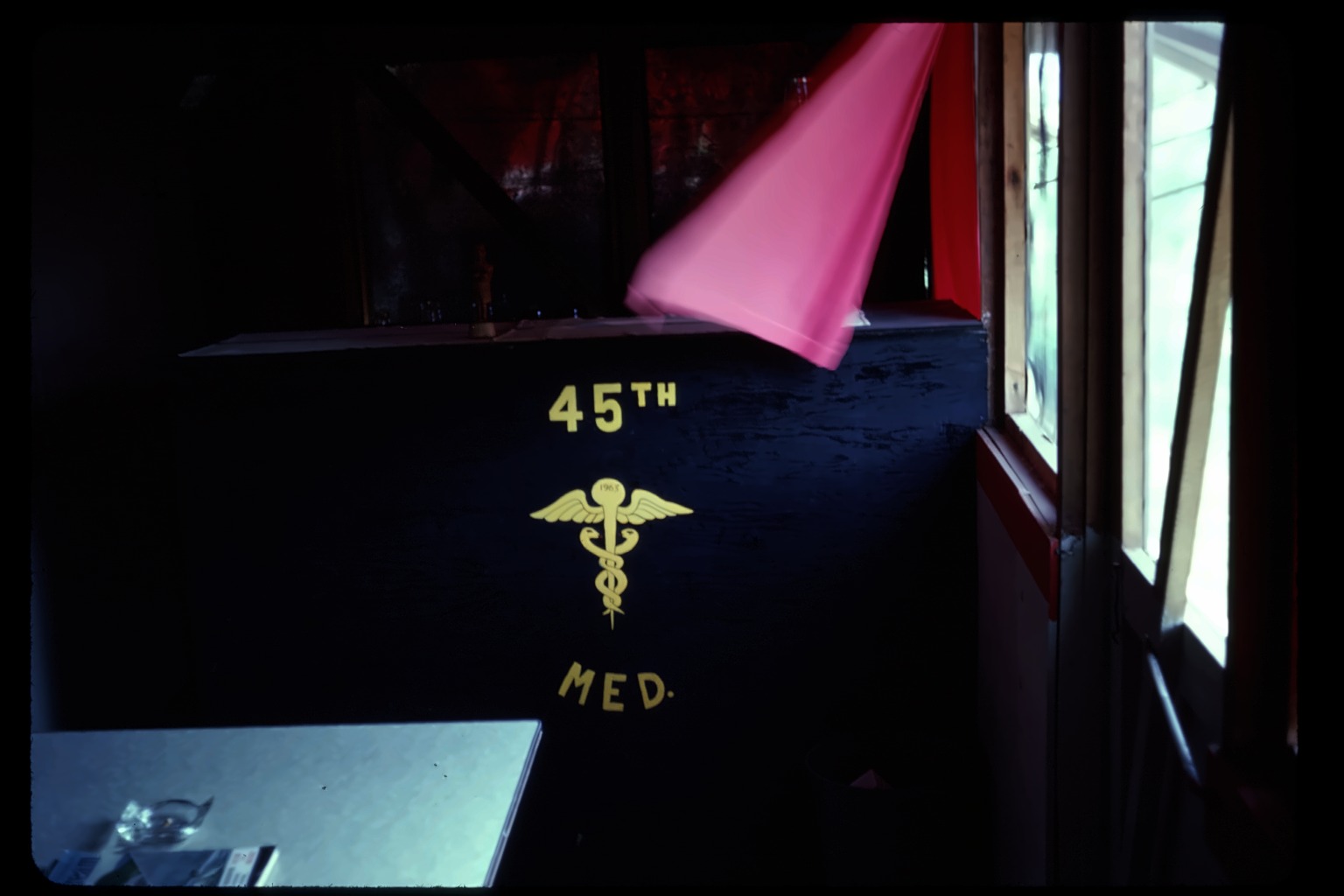
A painted wooden box or crate marked "45th," the medical caduceus, and "MED" — the unit's own insignia, photographed directly. A small "1963" is visible near the emblem, matching the year his tour began.
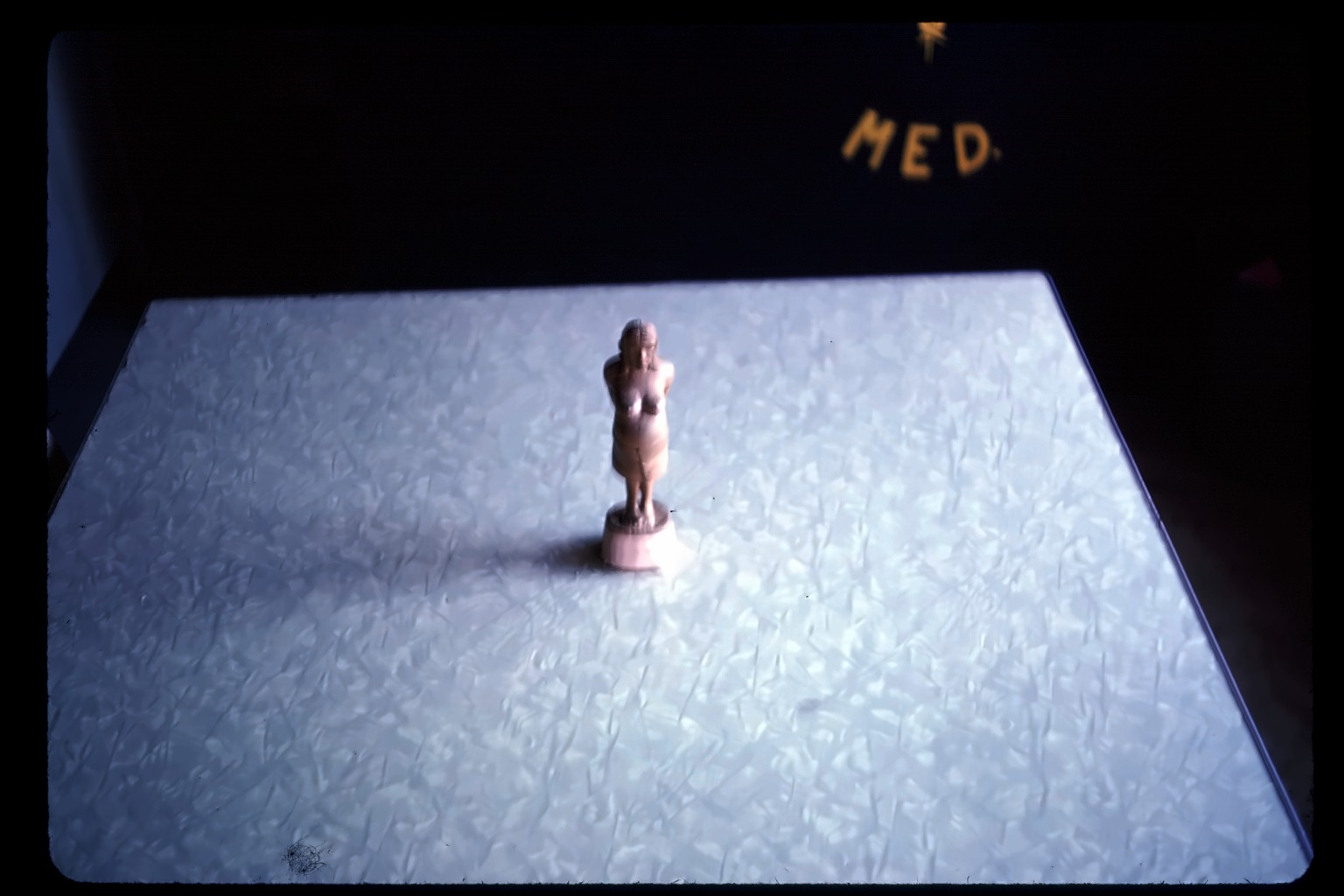
A small carved figurine of a woman on a pedestal base, "MED" painted nearby on the wall — the joke behind "First Mascot" lands a lot more directly once you see what it actually is.
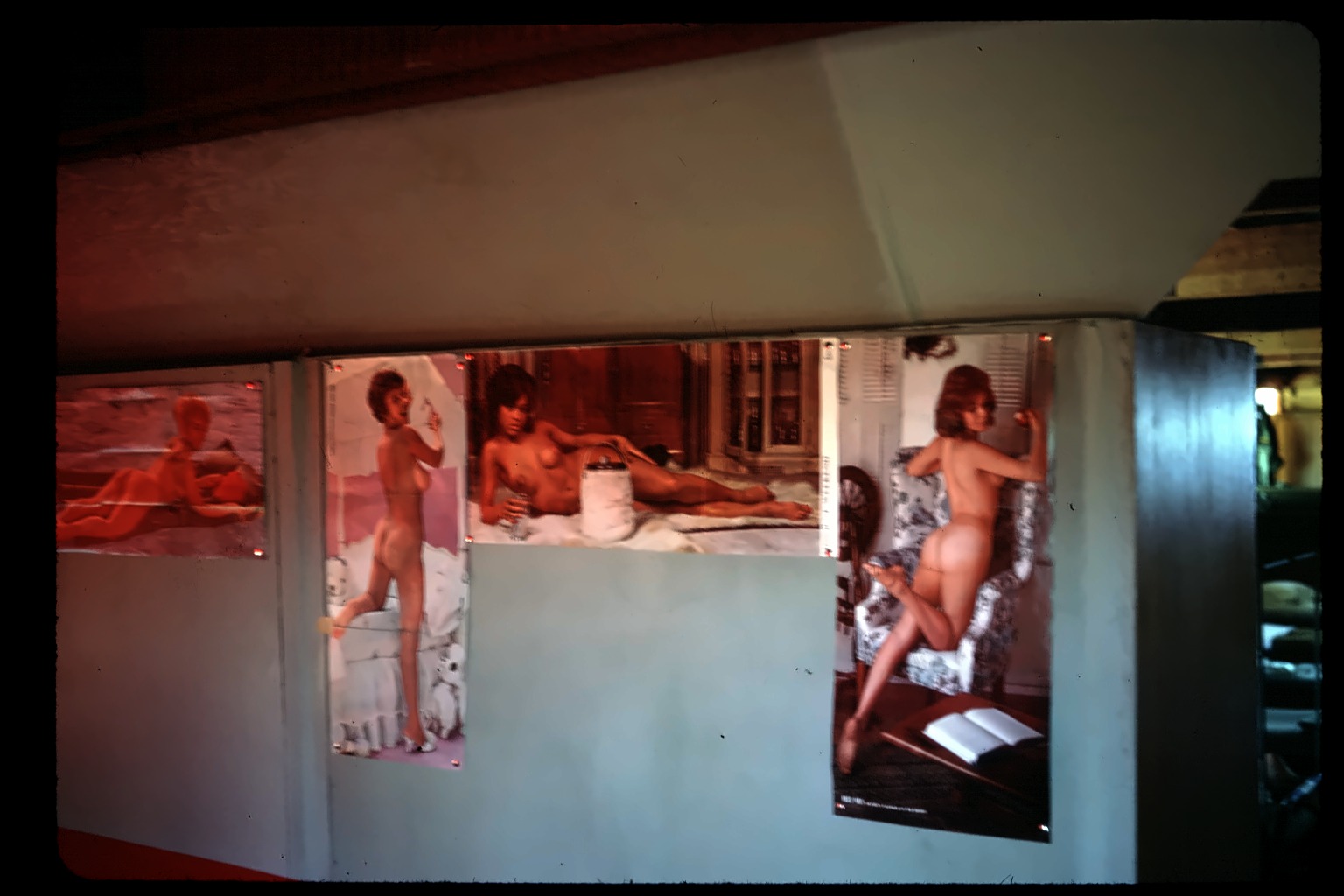
Pinup photos taped to the wall above a bunk — standard barracks decor of the era.
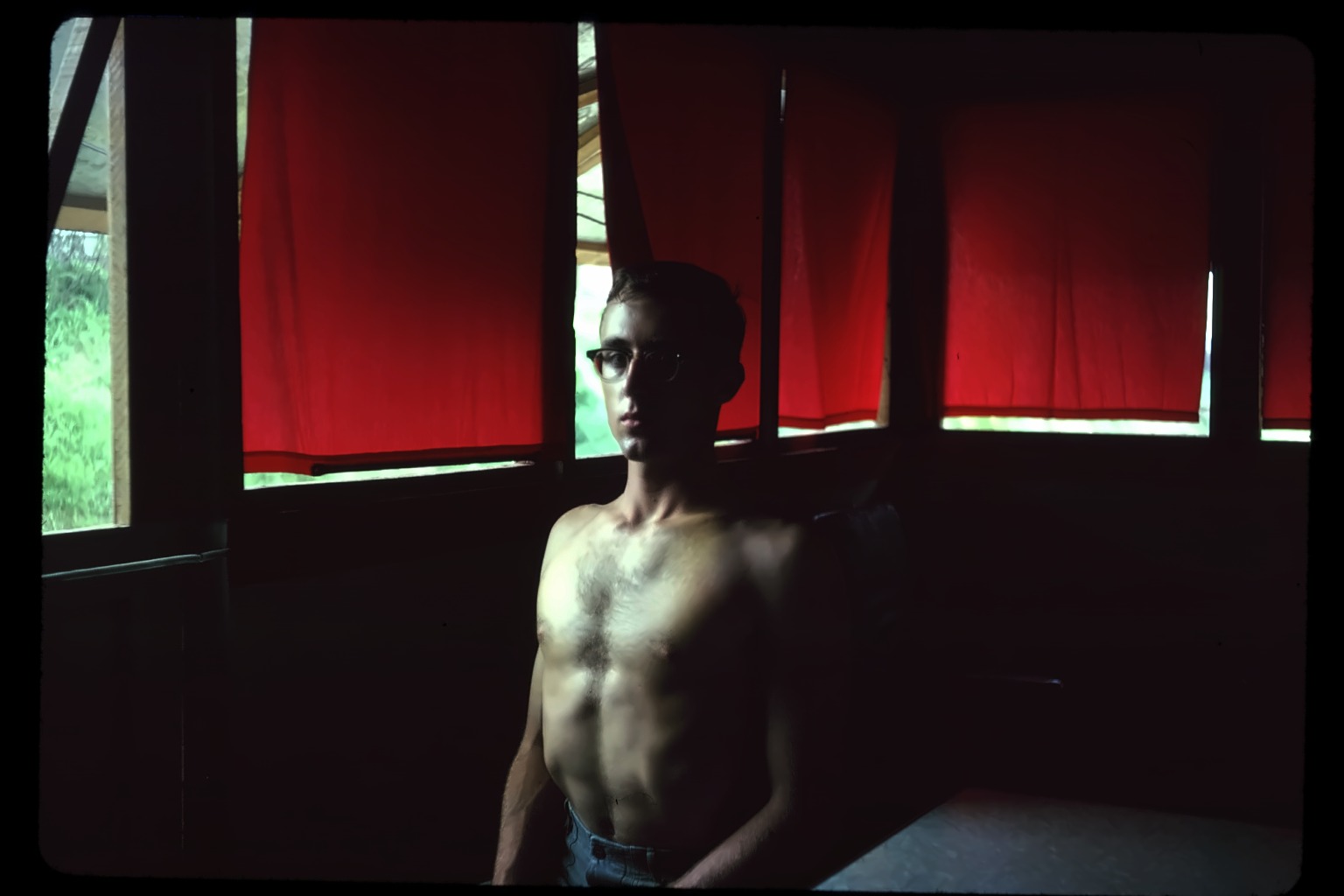
Another portrait, red curtains behind him.
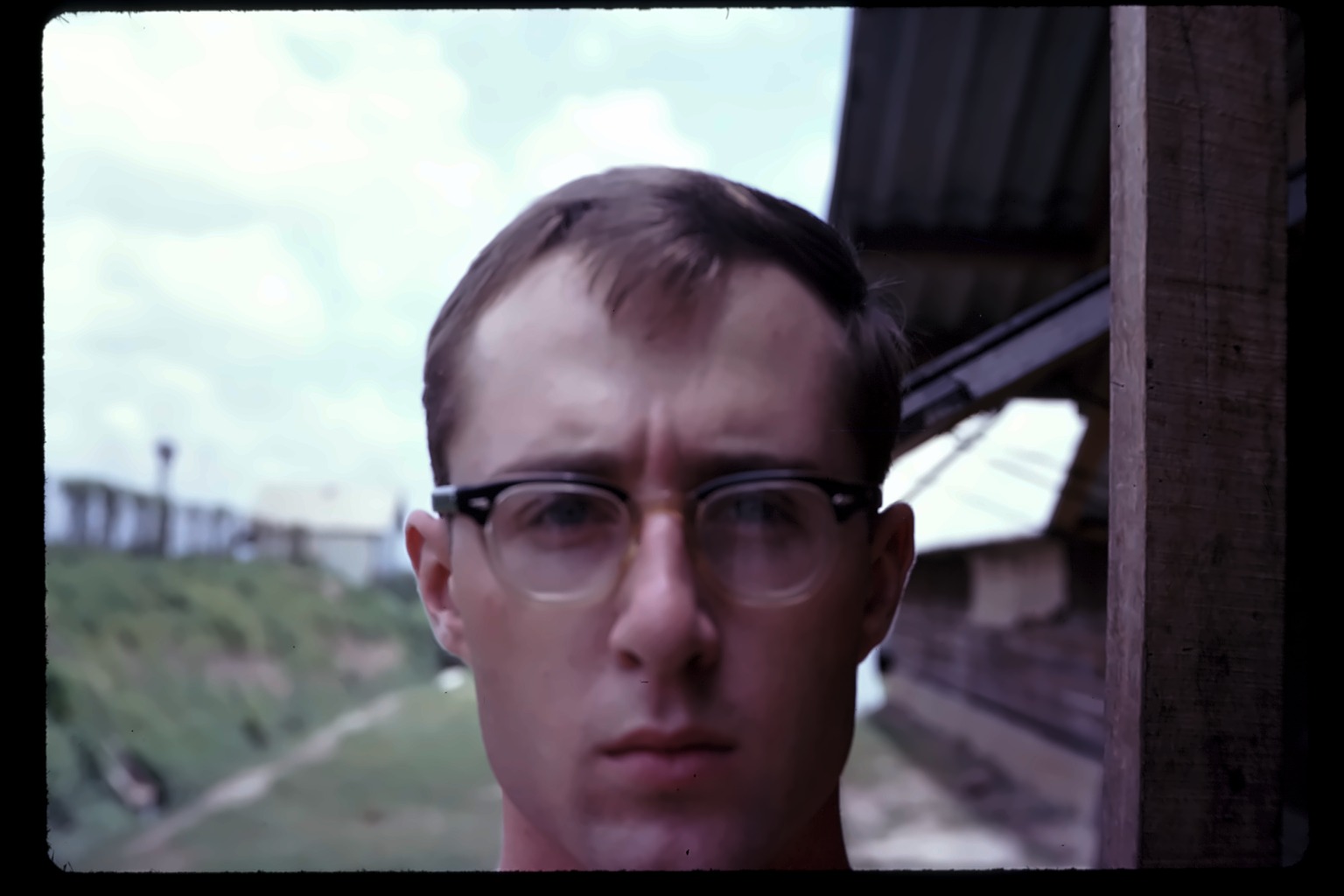
A portrait through a window opening.
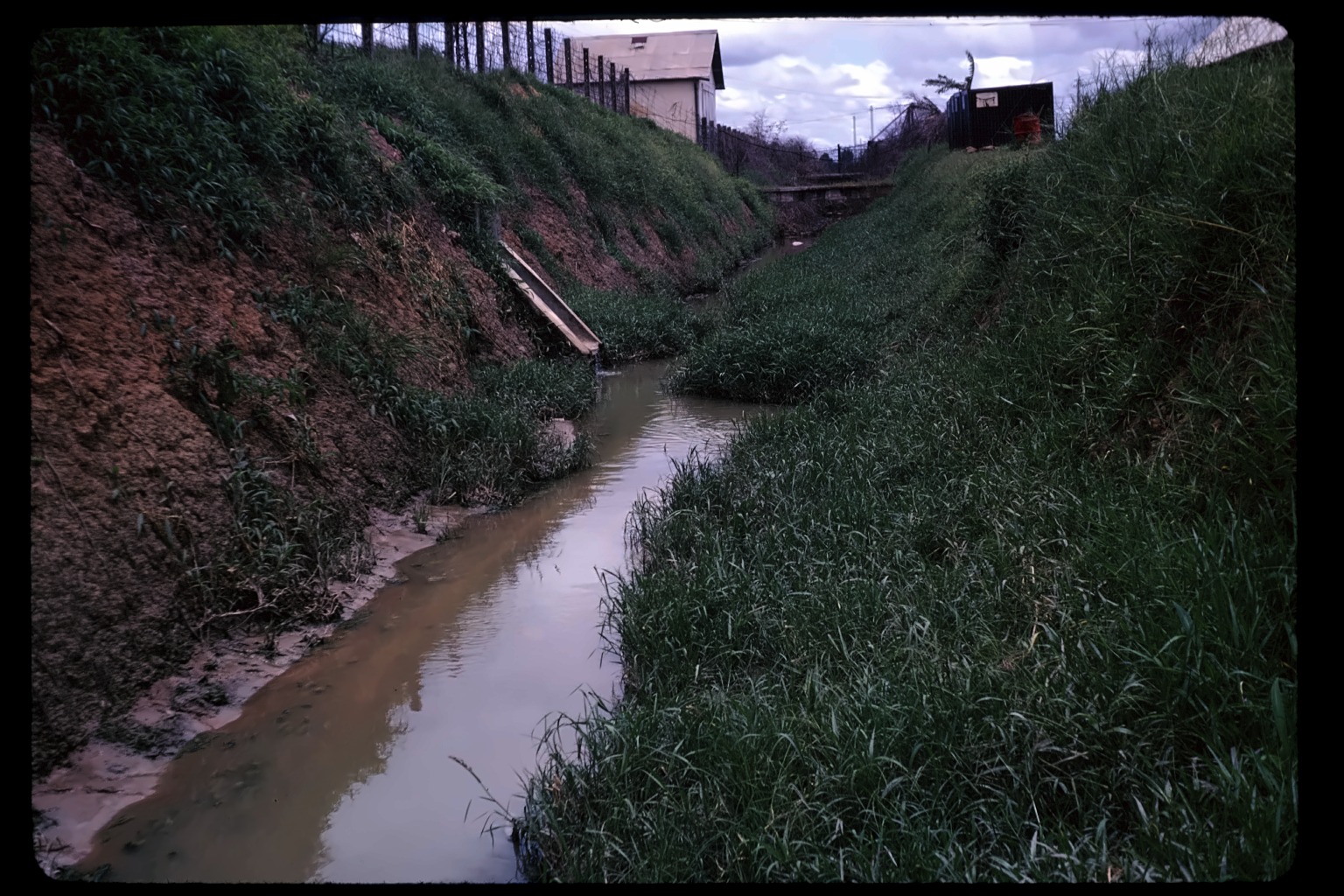
A muddy drainage ditch cutting through the base.
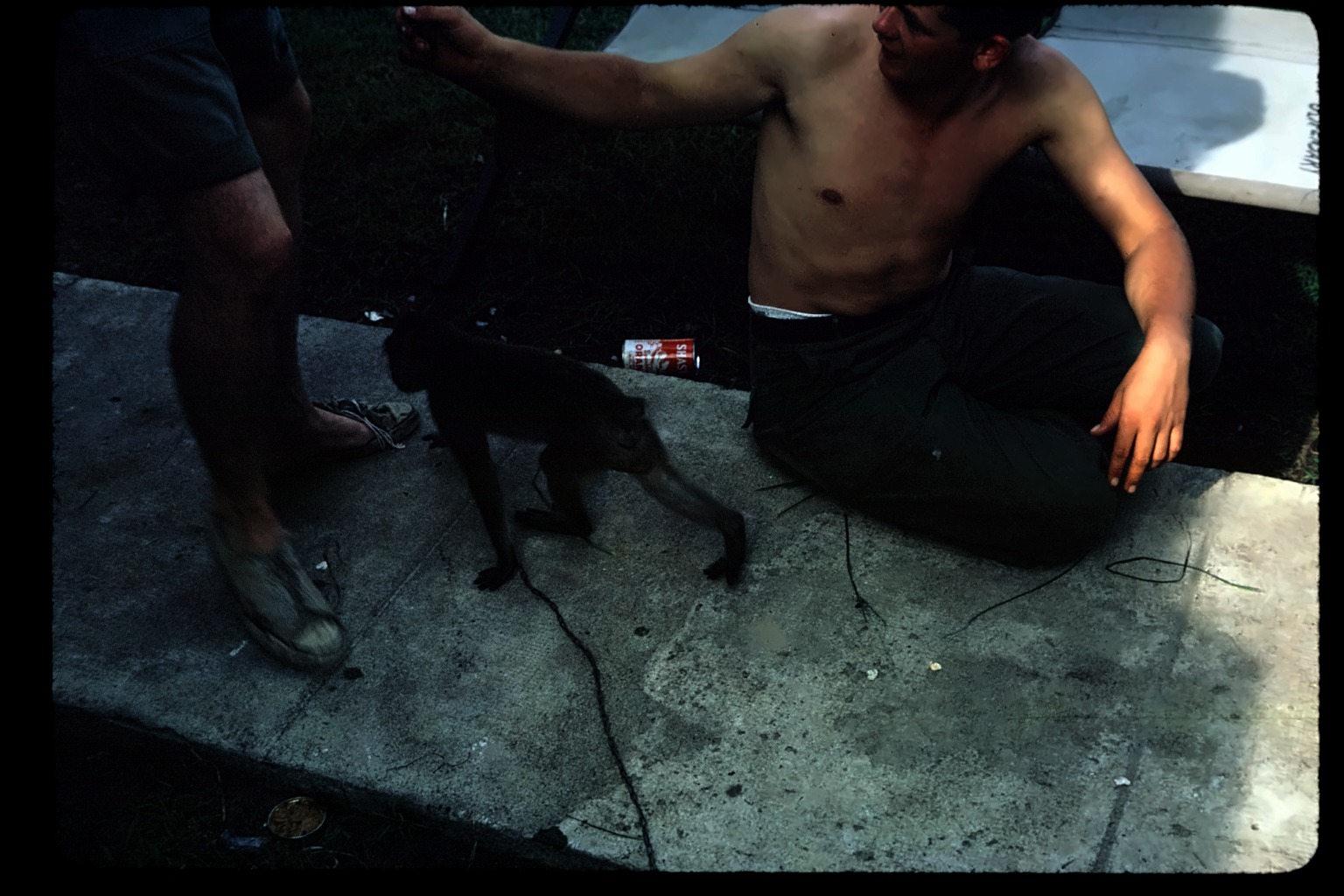
Two soldiers with a small monkey on a chain — the unit's actual live mascot.
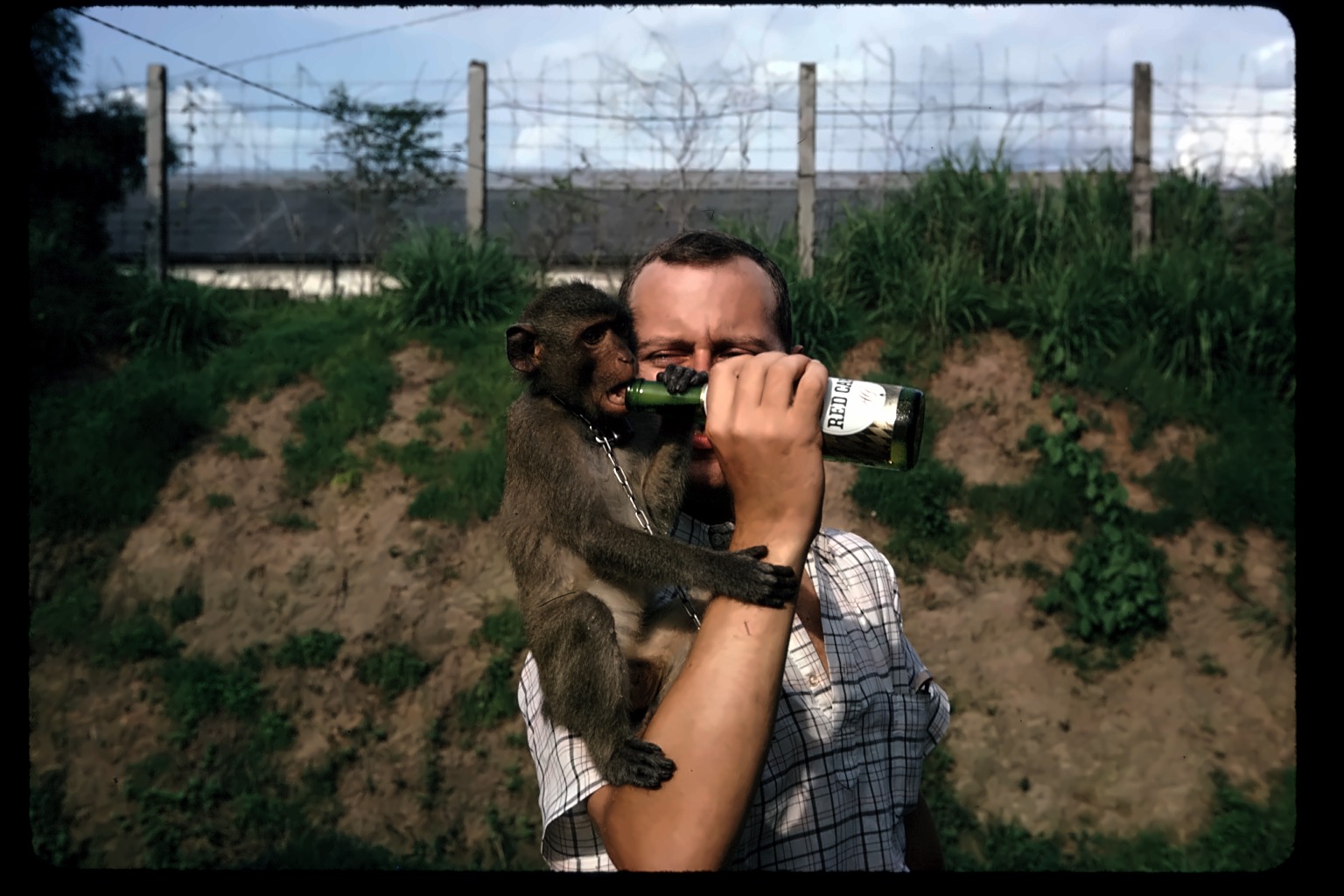
Continued — the monkey climbing on a soldier's shoulder while he drinks from a bottle. Possibly Chubb, from the dispensary — same hair and general build as the man flagged in the June 64 R&R photo.
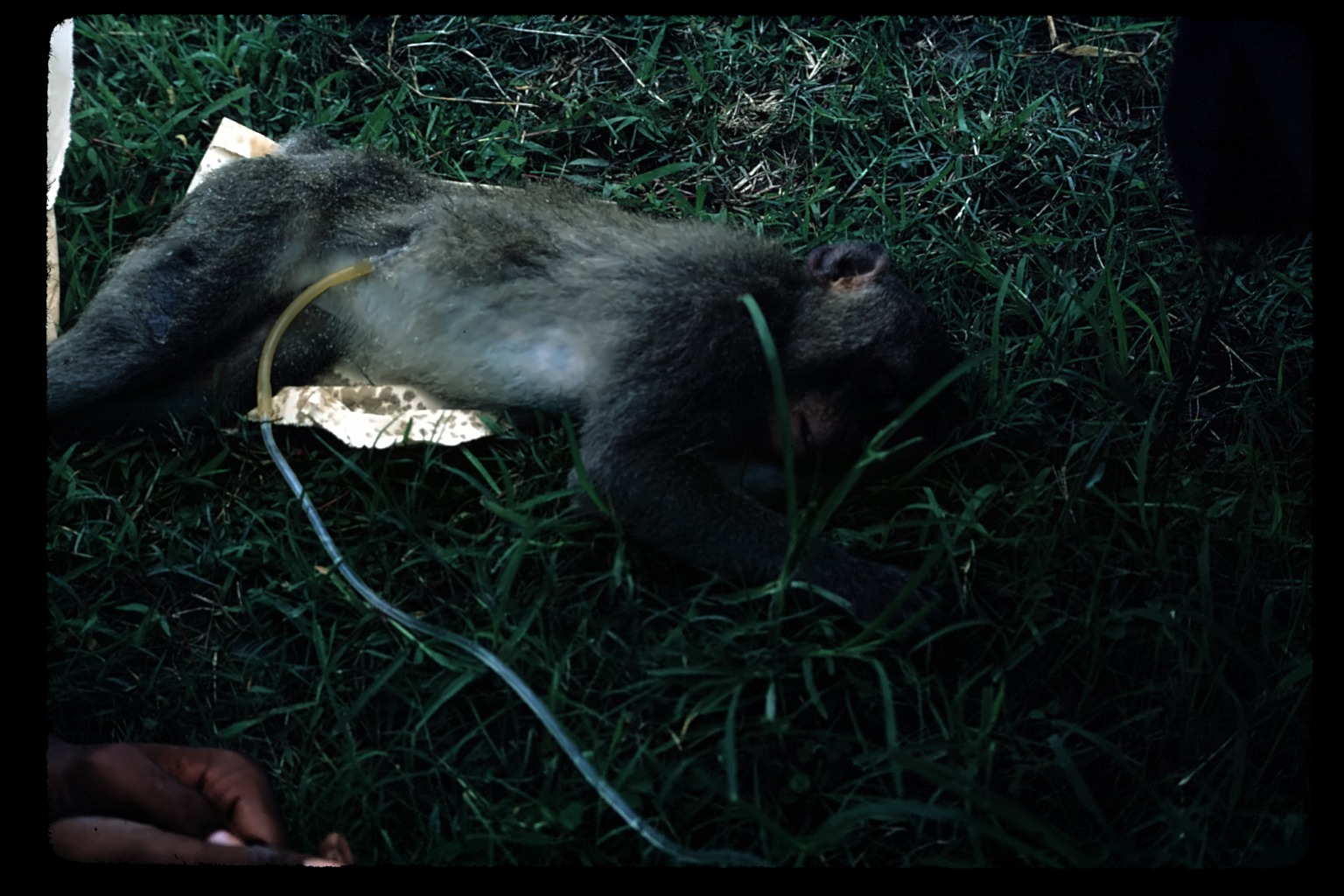
The same monkey, dead in the grass. His caption states plainly what happened to it.
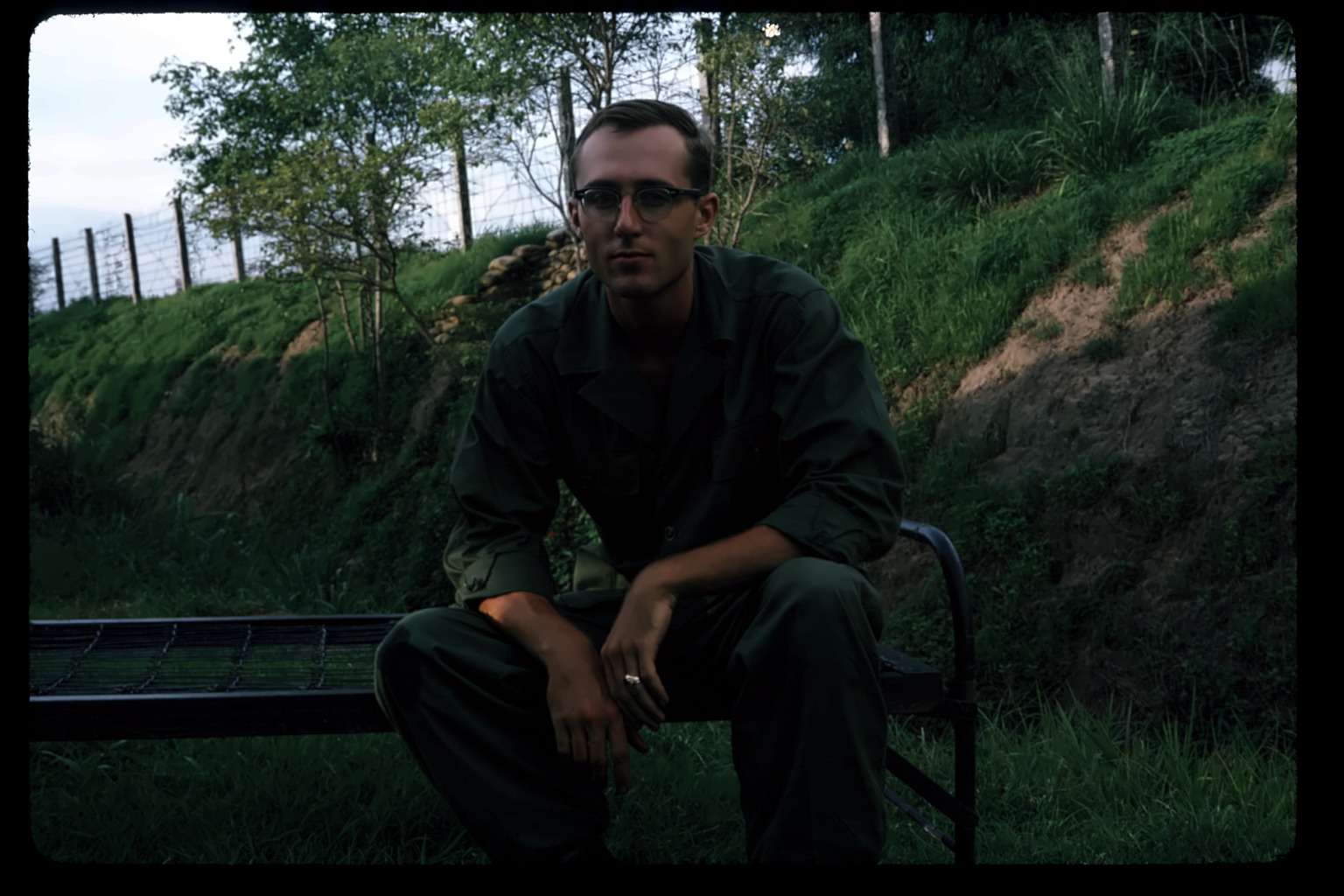
A portrait, seated, dog tags visible.
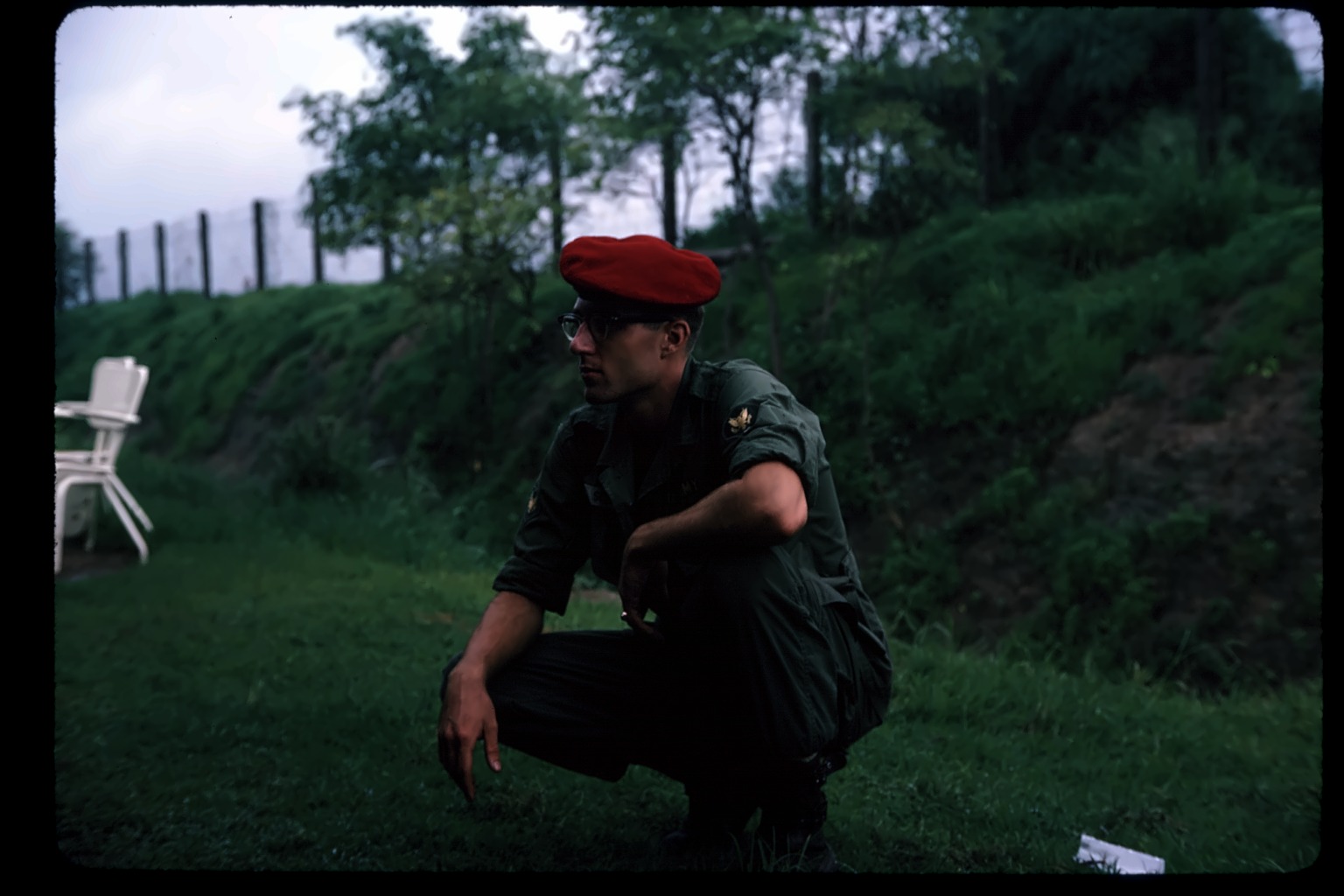
A portrait in a red beret — not standard US Army issue for his role. He flew regularly with the ARVN, going out and staying with them for combat operations and medic work, not just occasional support flights. The South Vietnamese Airborne Division (Nhảy Dù) was known for red berets, which explains the beret directly.
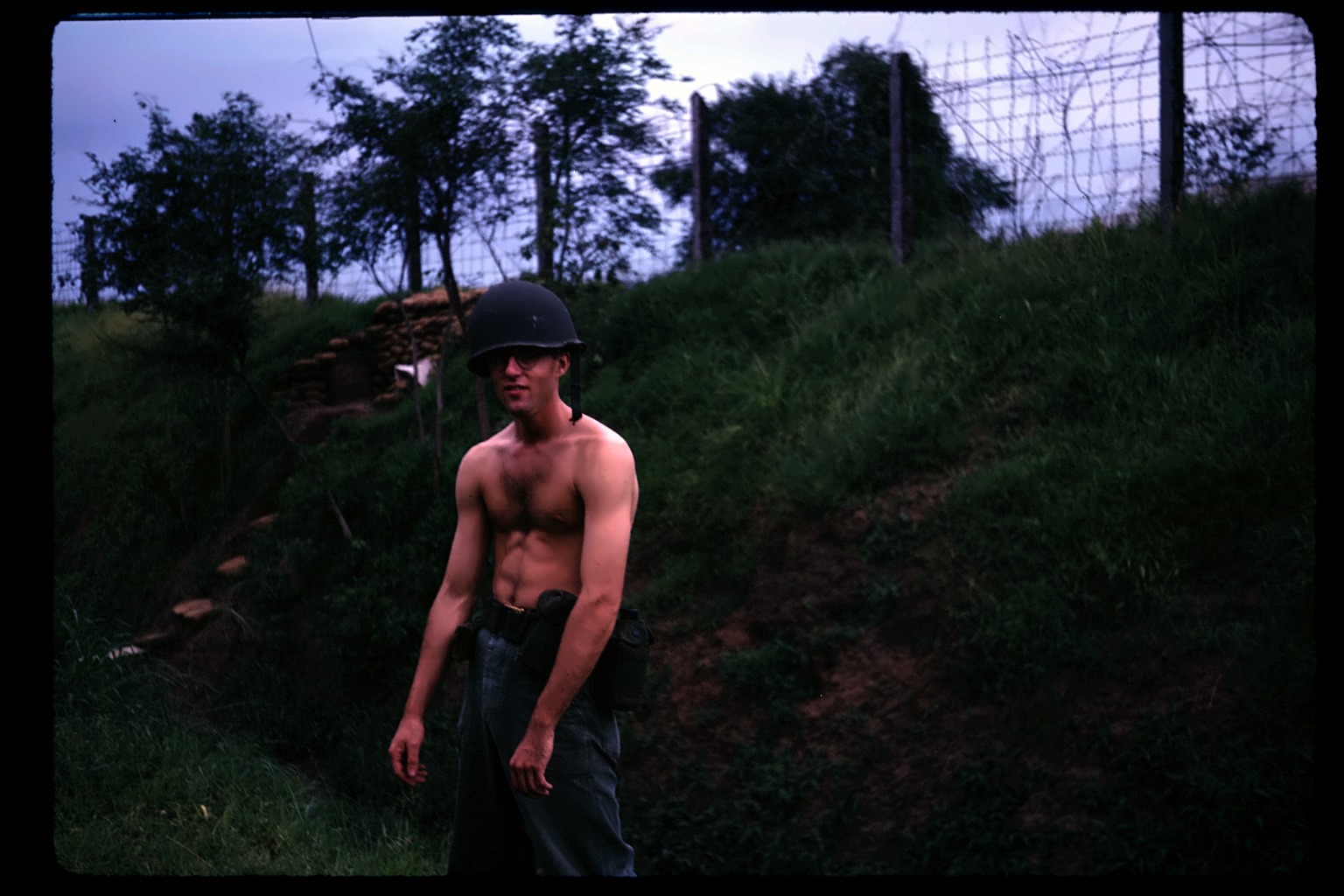
Another portrait, shirtless, near the drainage ditch.
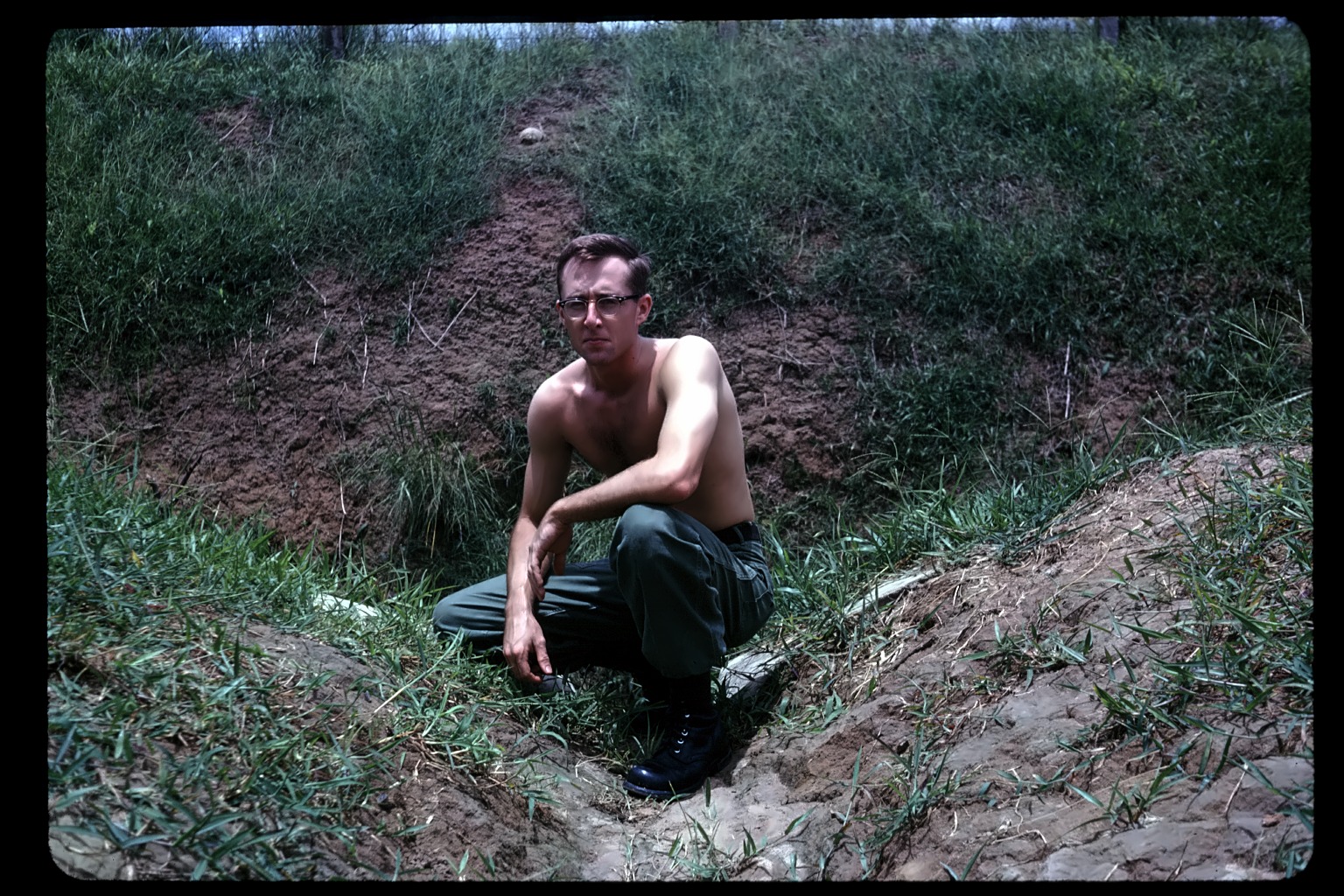
Continued, same location.
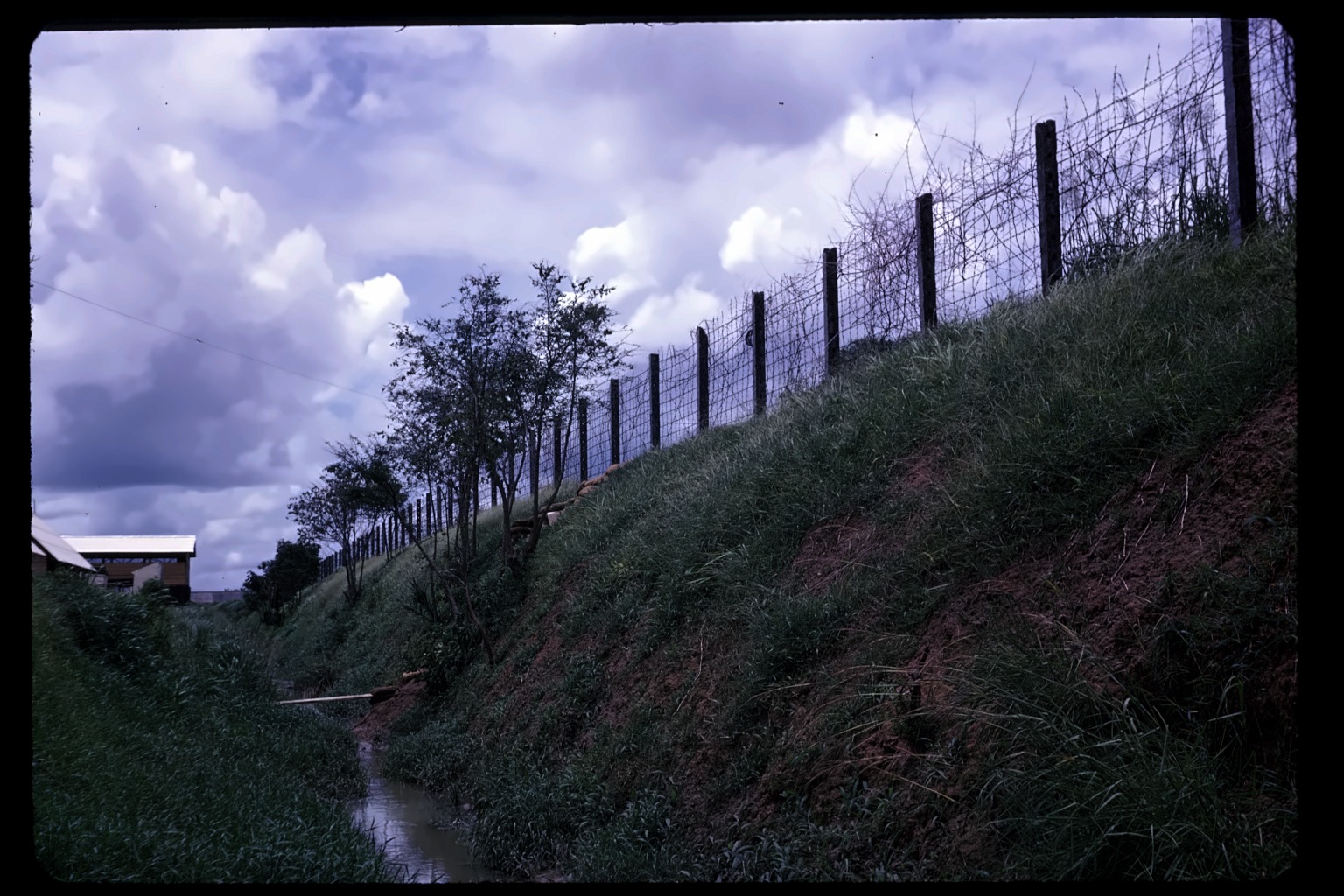
The drainage ditch and a defensive fence line.
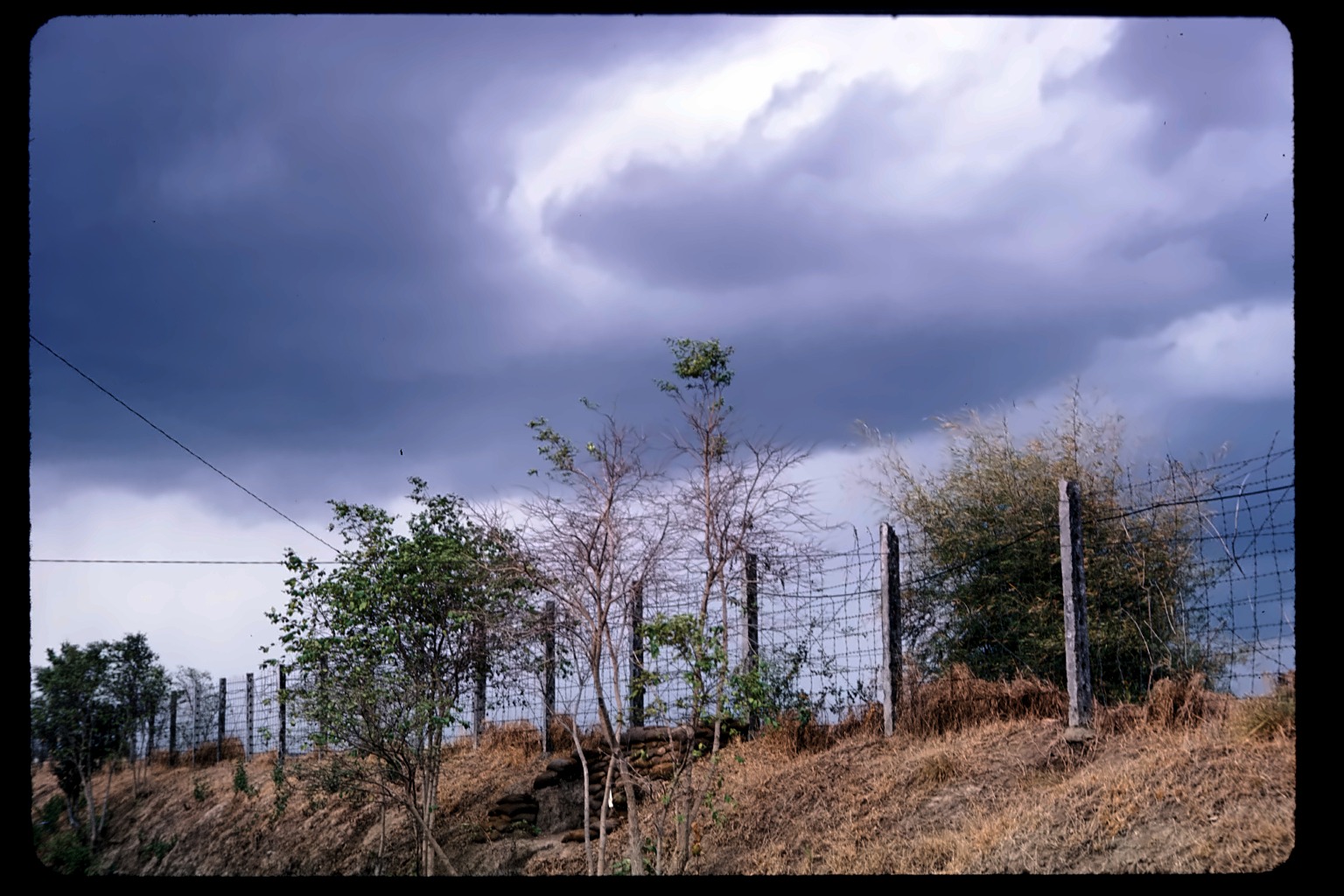
The perimeter fence, sparse brush.
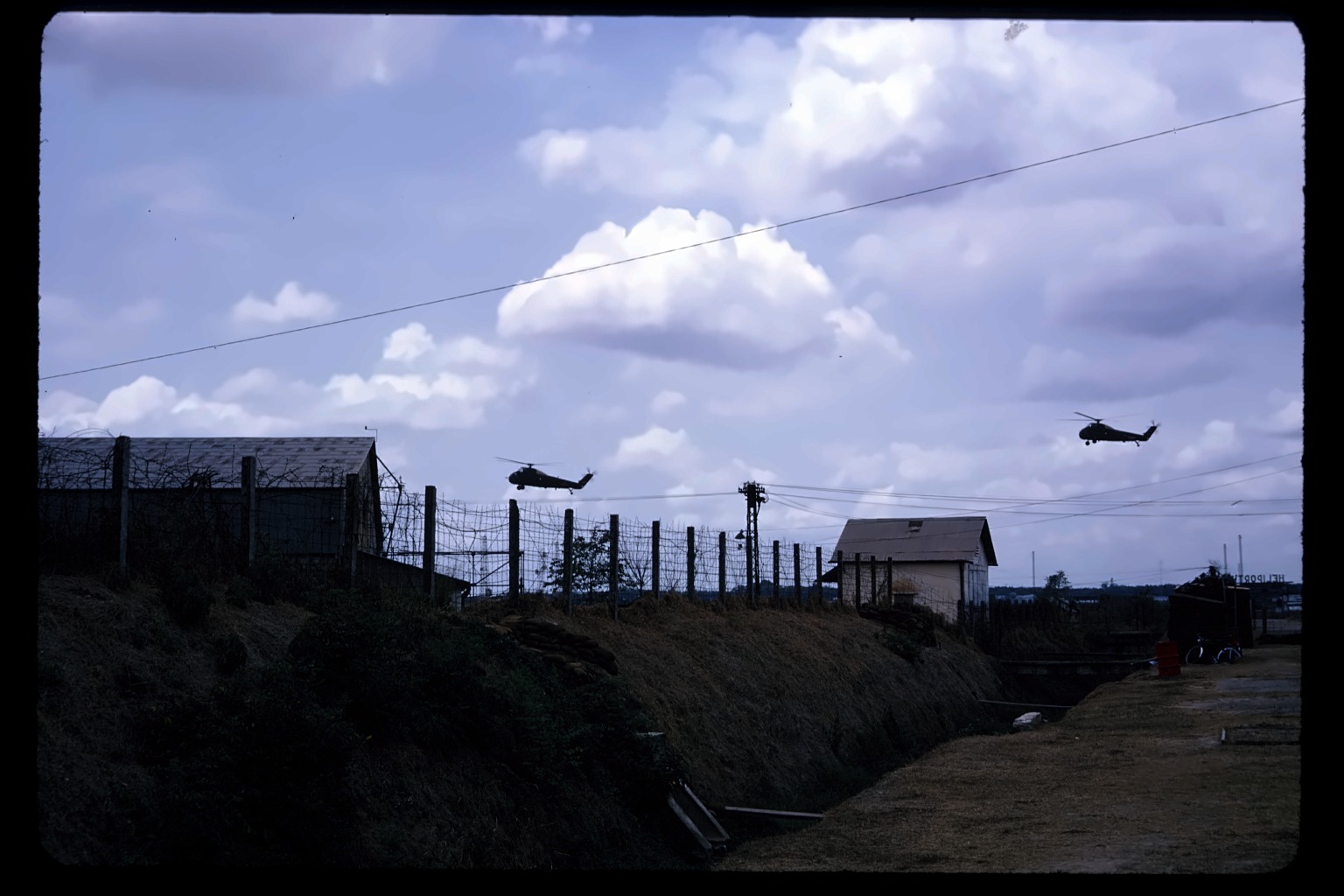
South Vietnamese Air Force H-34 helicopters, visible past the fence line.
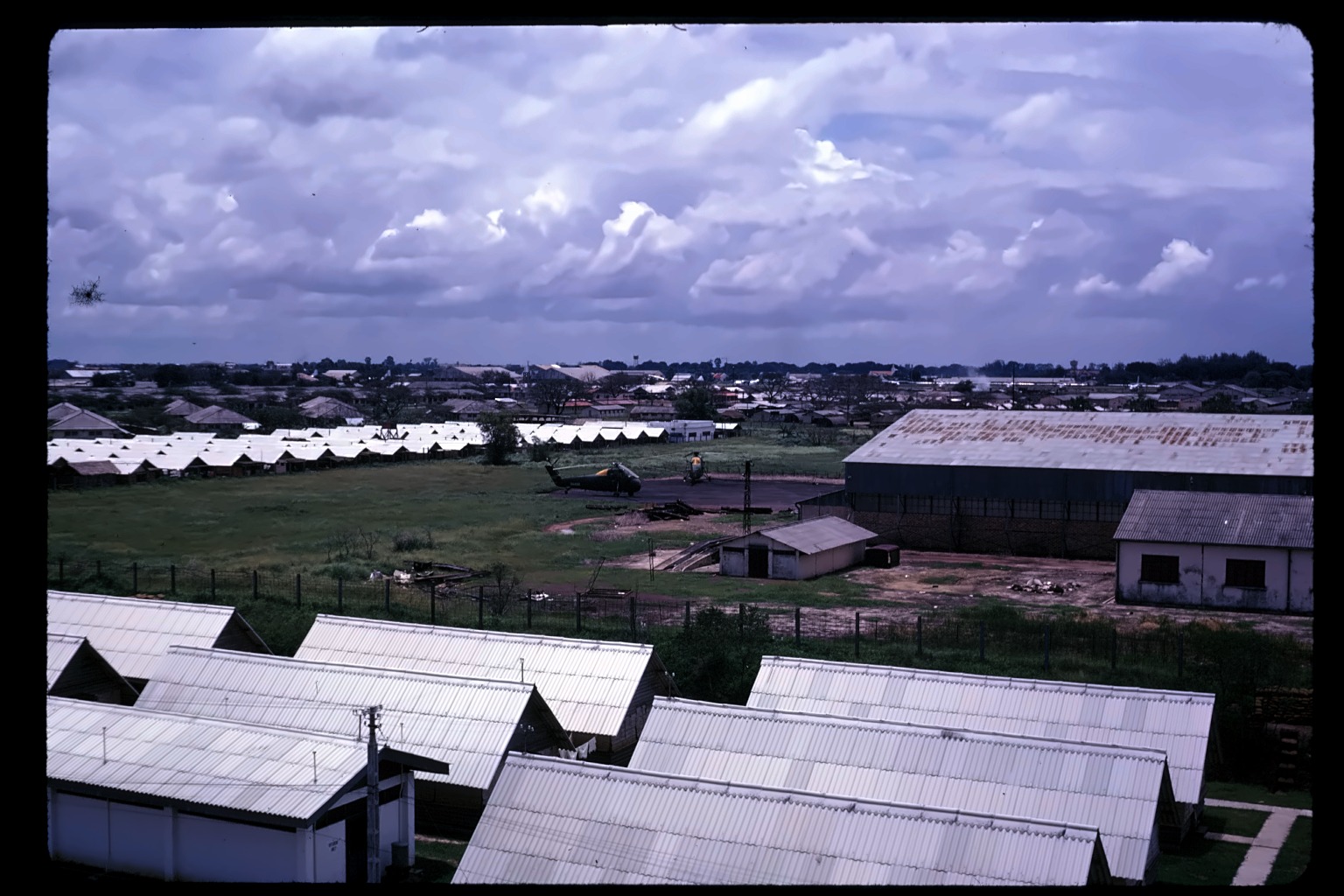
An elevated view over more of the base — names three co-located units.
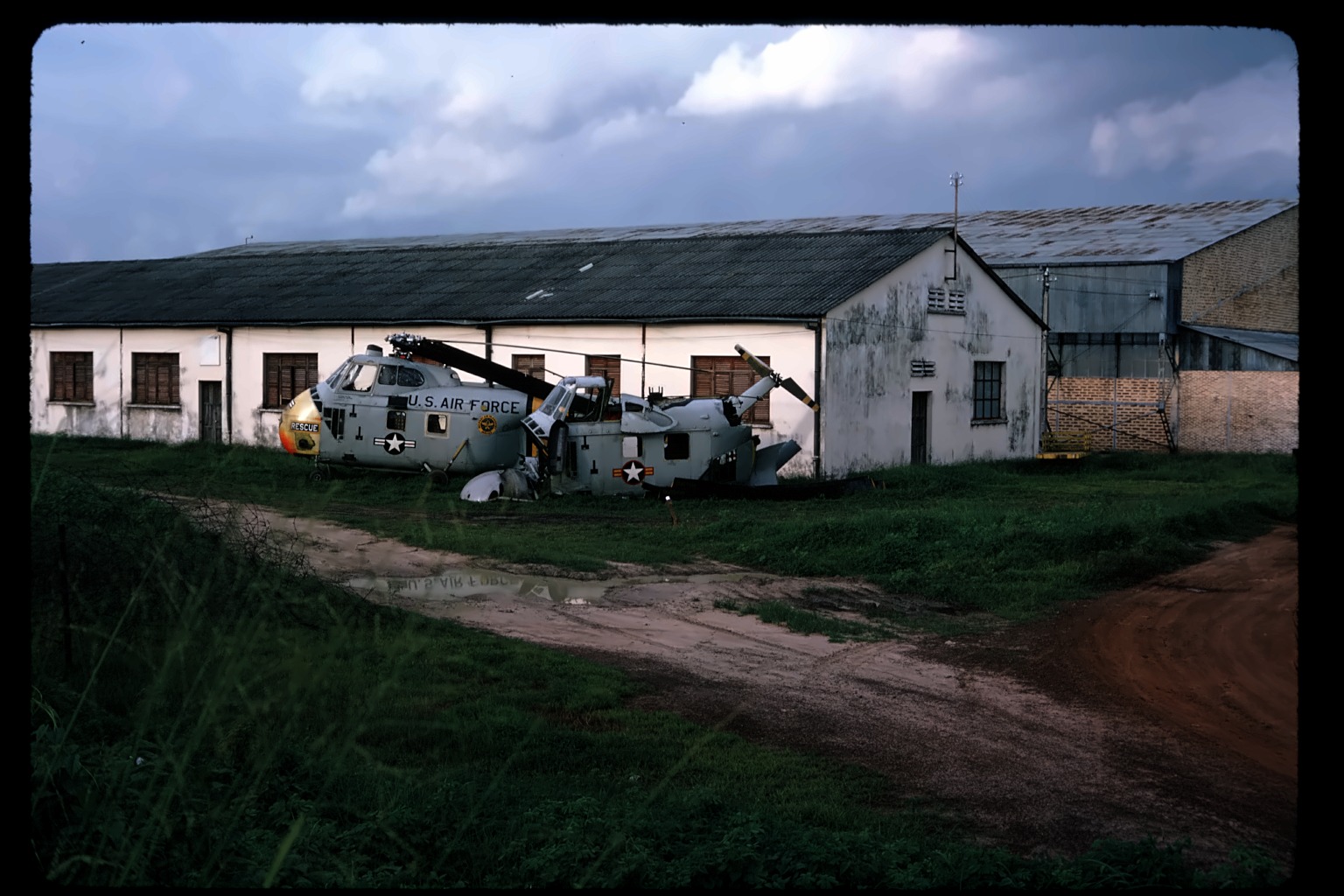
A base building, road running past it.
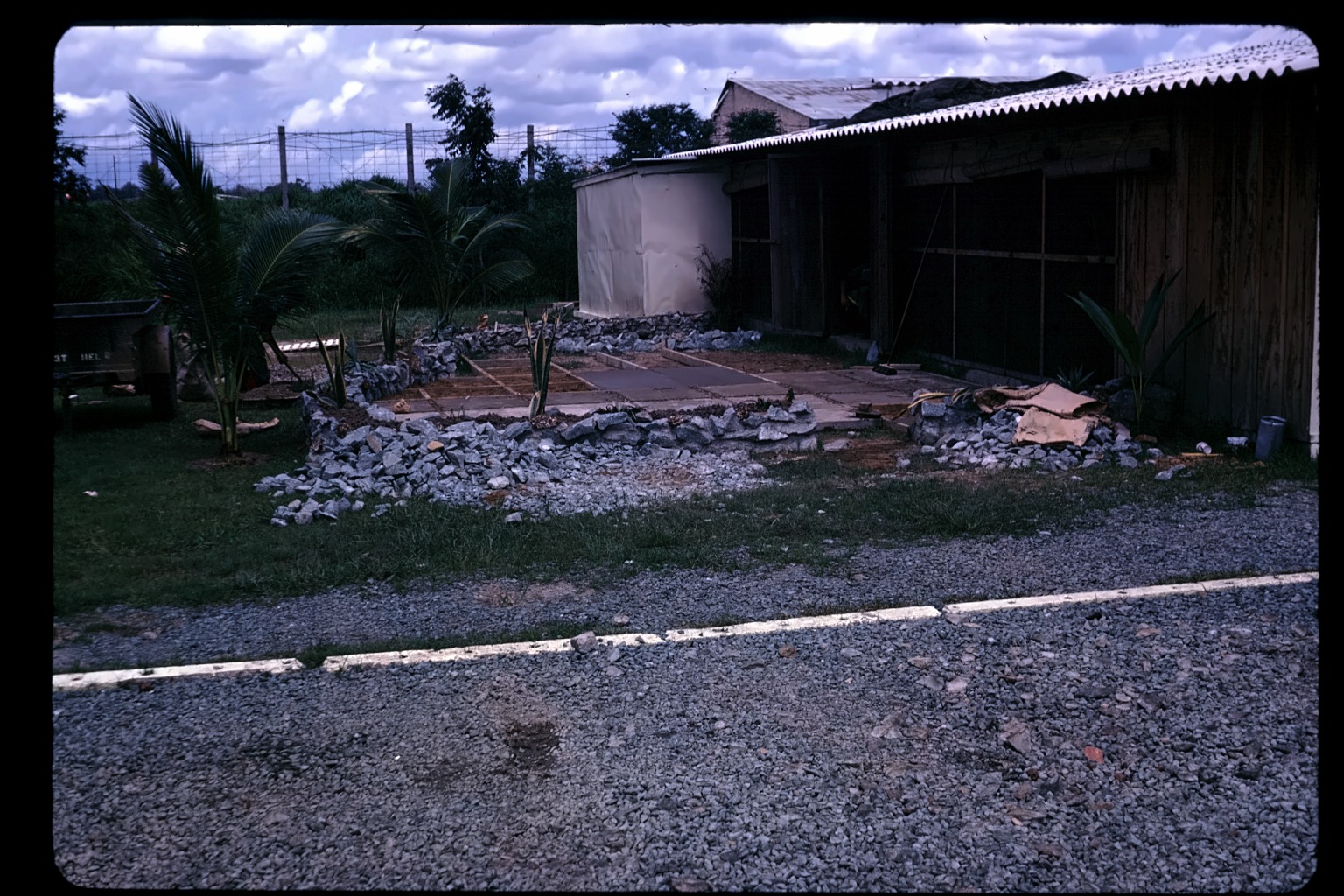
A newly laid gravel walkway.
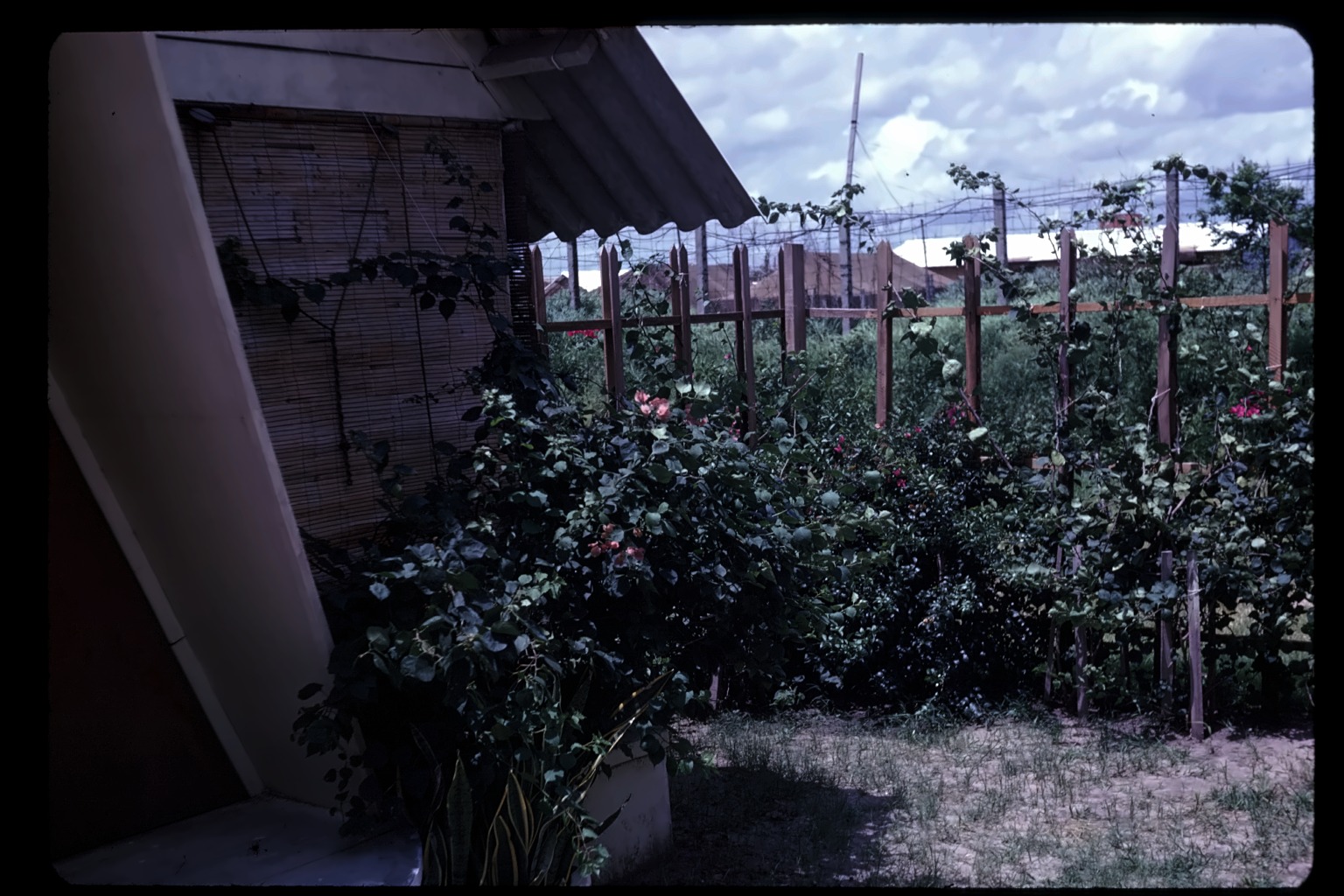
Plantings at the corner of the chapel building.
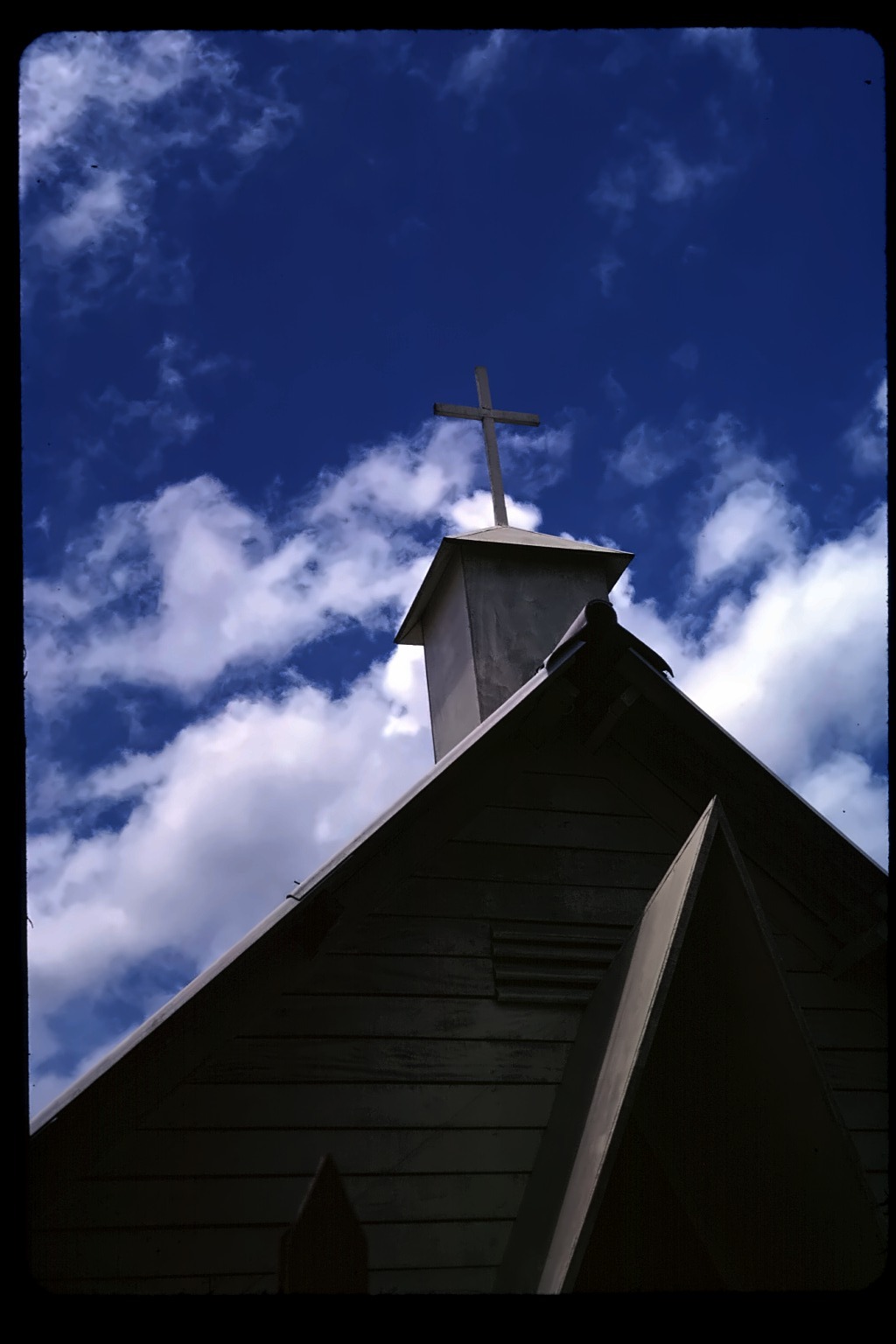
Looking up at the chapel roofline against the sky.
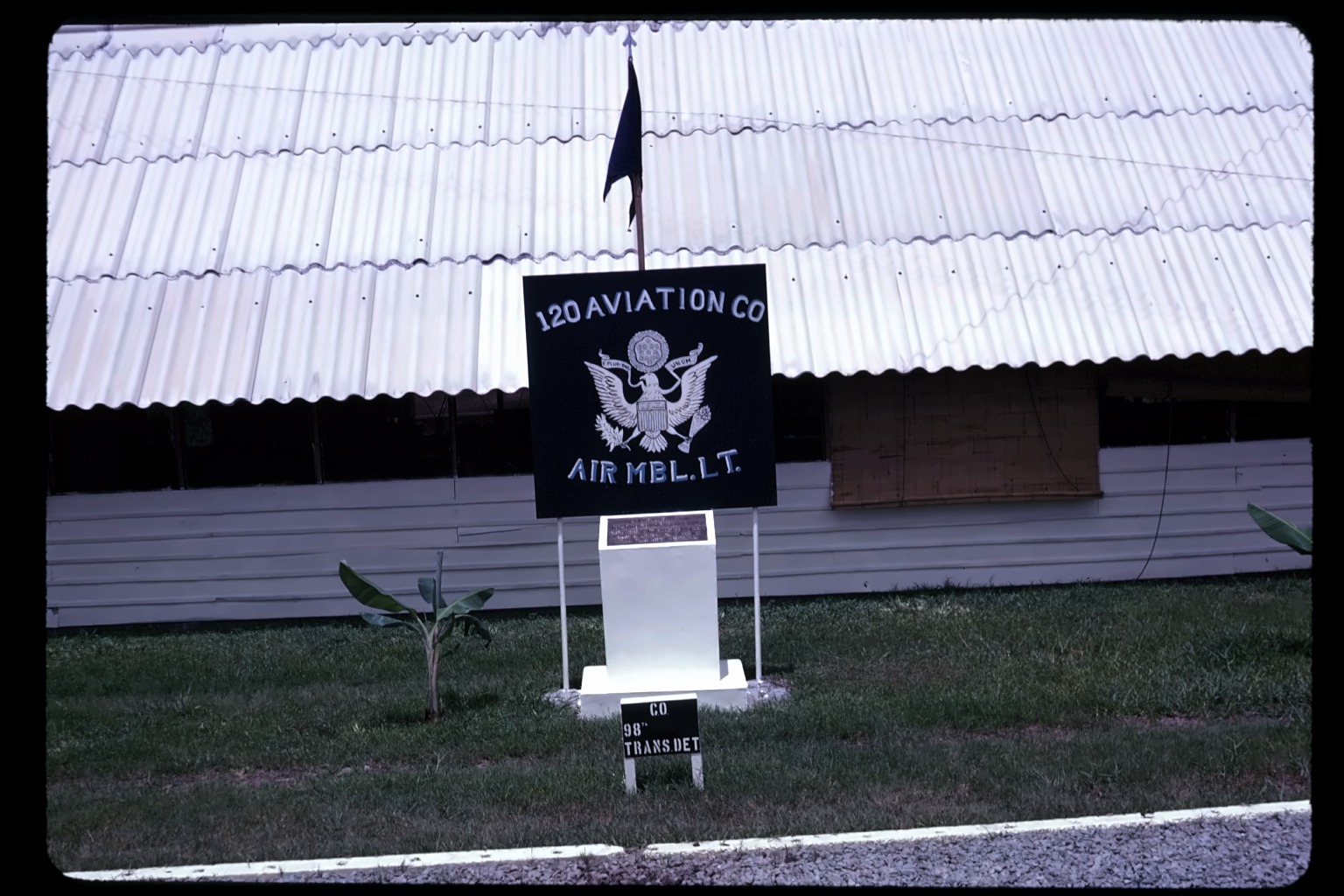
The sign above the plaque reads "120 AVIATION CO, AIR MBL. LT." with the unit's eagle crest — the same 120th named in his own bio text, confirmed here directly. The memorial plaque itself, honoring the first man from the unit killed in Vietnam
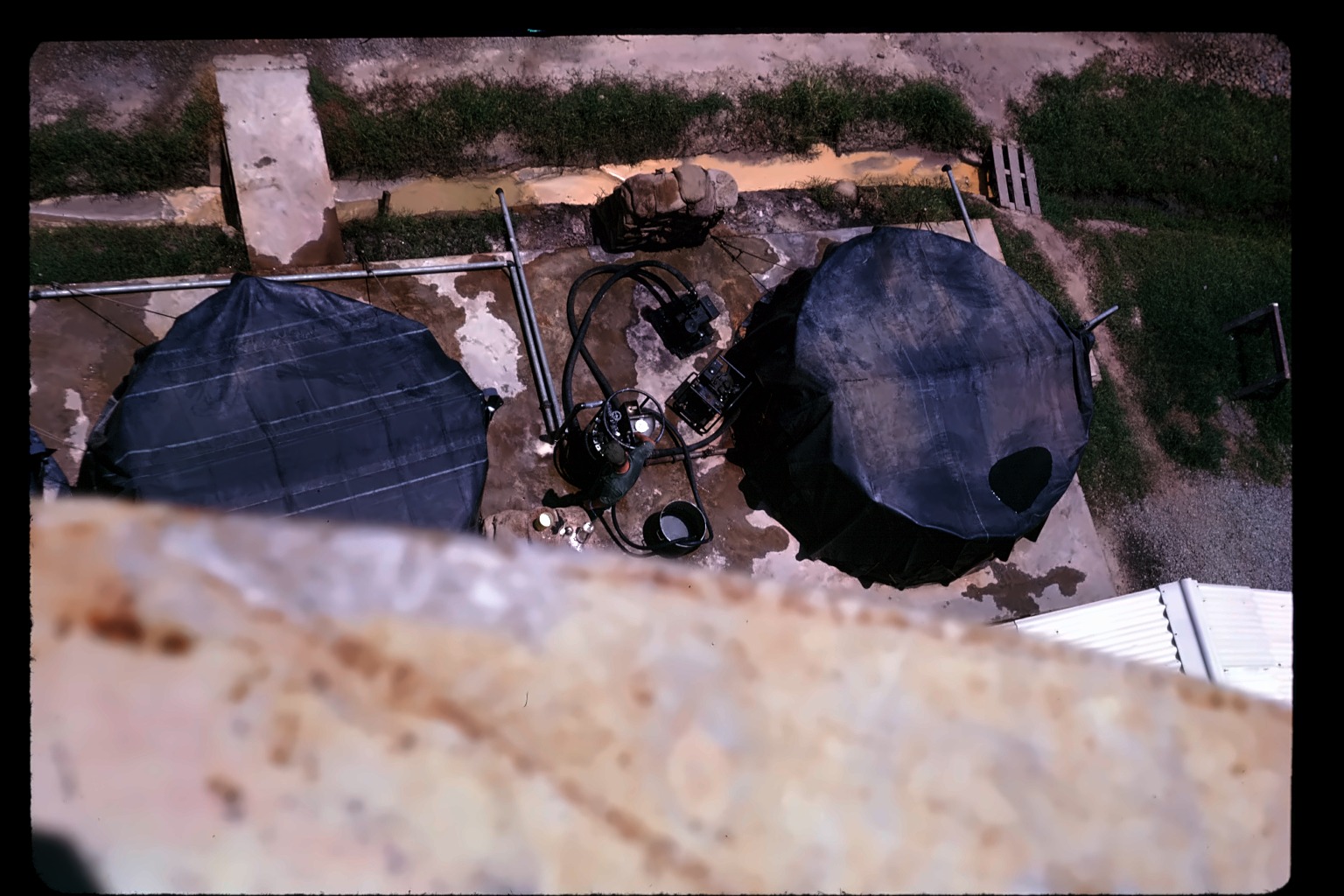
The base's water purification equipment.
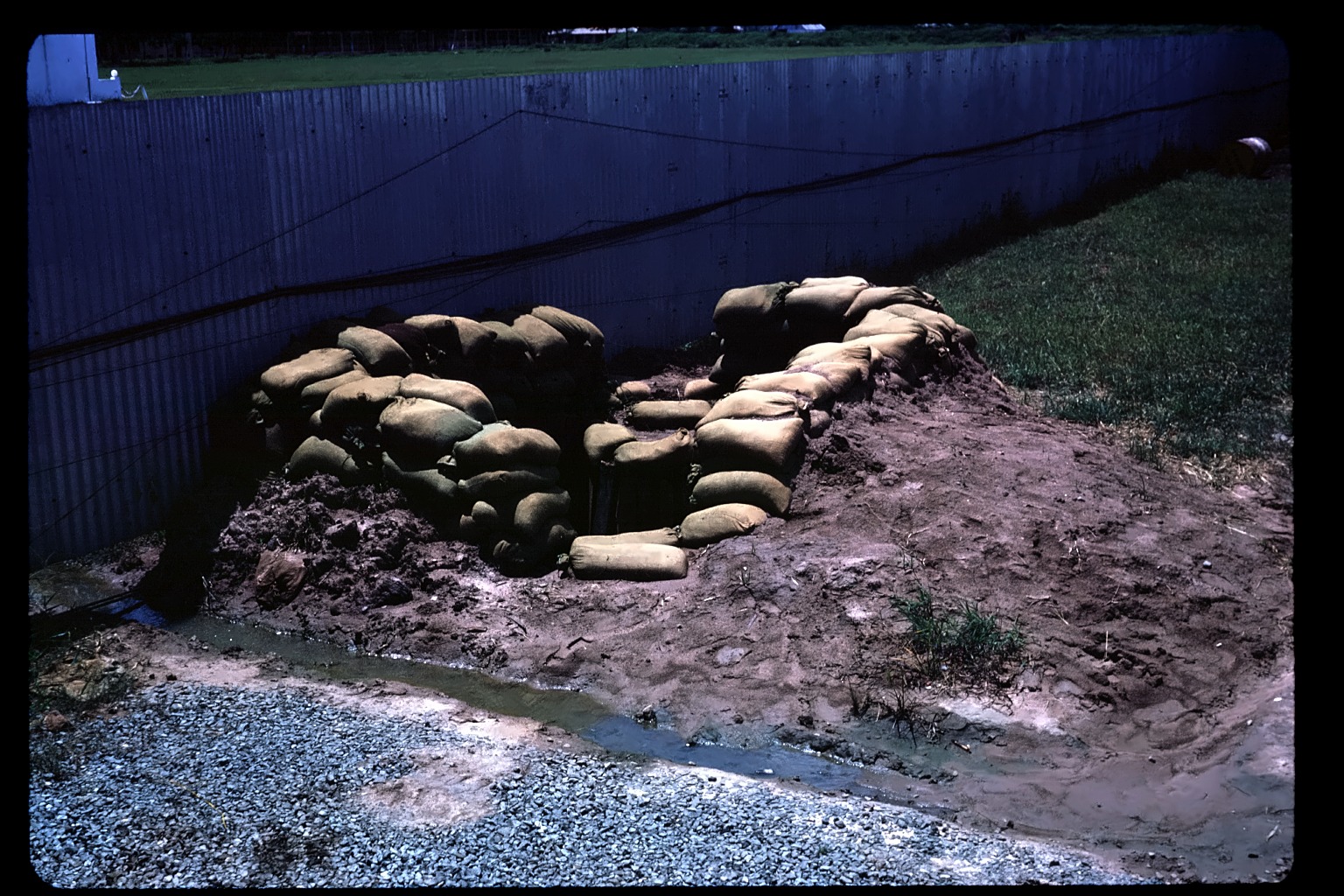
Sandbags stacked at a defensive position.
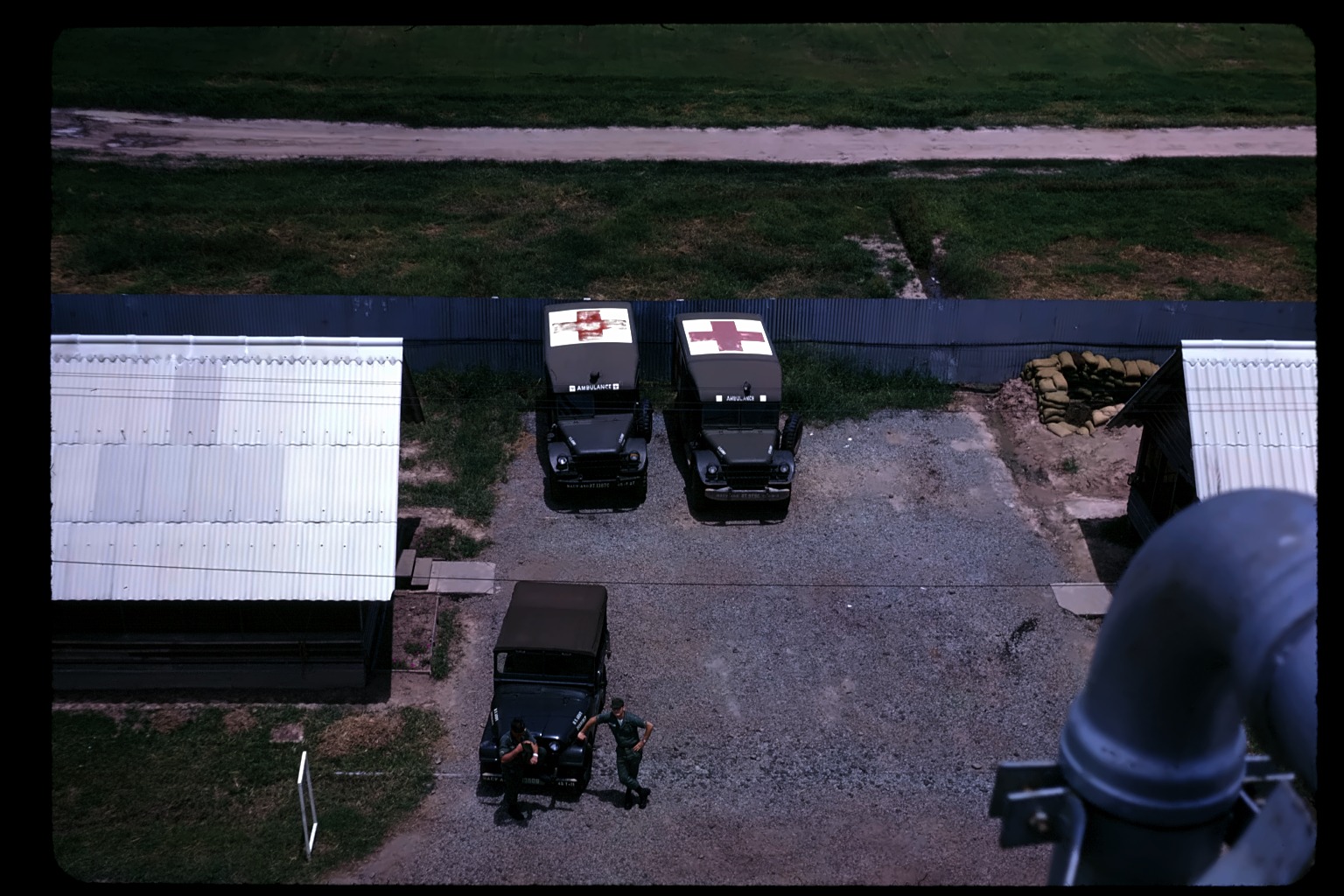
An elevated view over vehicles parked near the dispensary building.
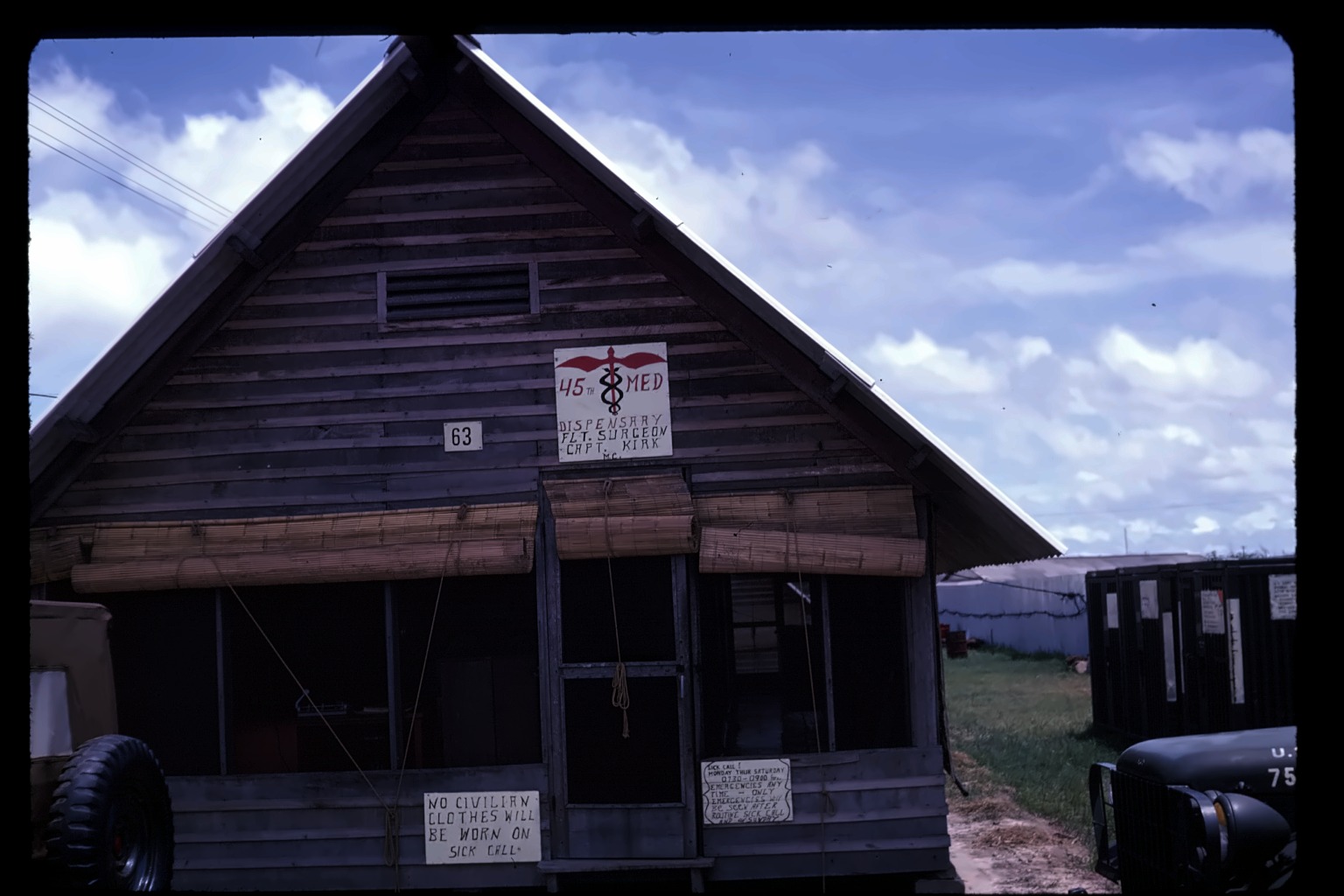
Fully legible sign: "45th Med, Dispensary, Flt. Surgeon, Capt. Kirk, MC" — building #63, a real named doctor. A second sign sets the dress code for sick call: no civilian clothes.
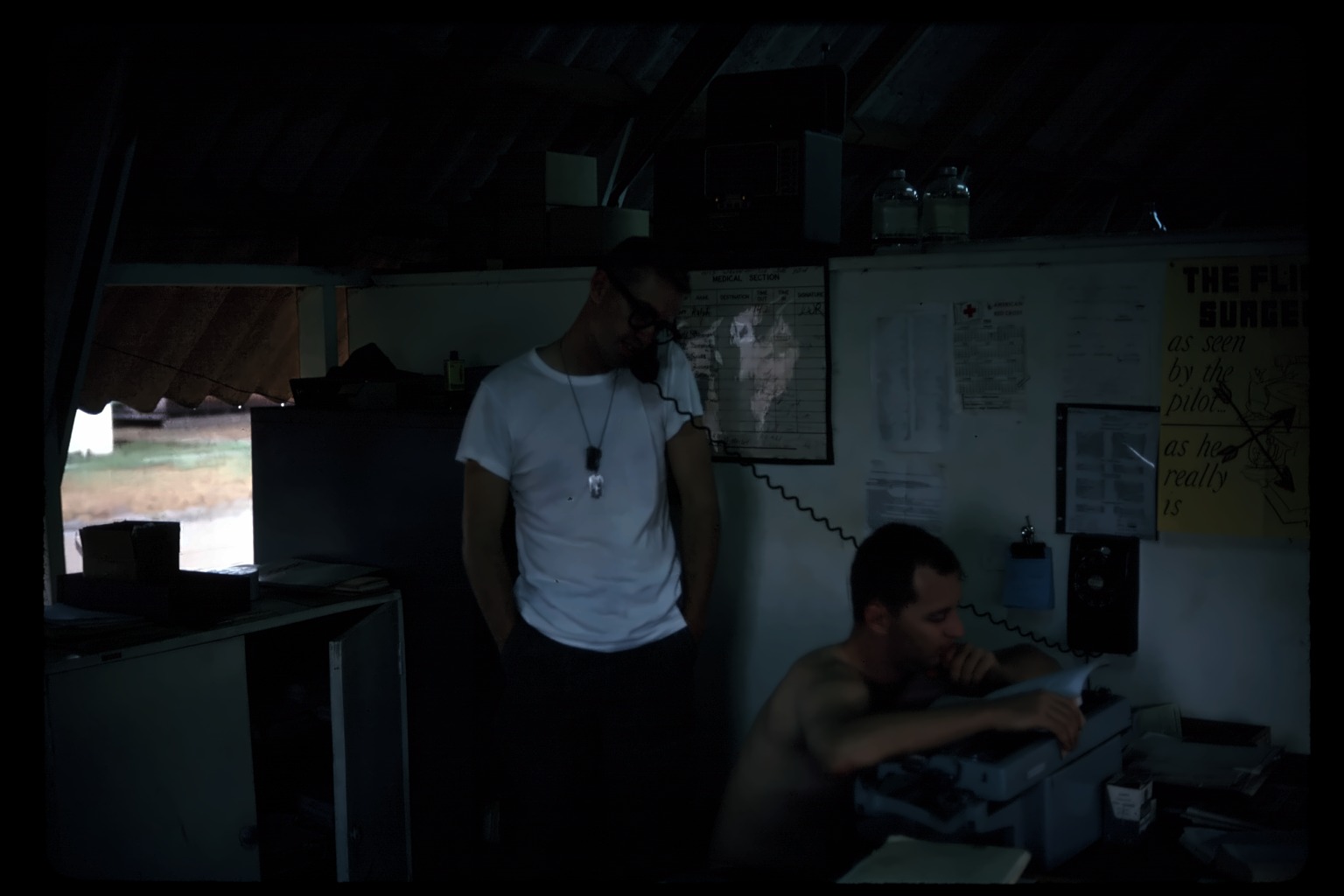
Dr. Ralph inside the dispensary with a colleague named Chubb at the reception desk — the same James Ralph identified in the Rach Gia tray, here shown as a working colleague at his own dispensary, not just someone he met once.
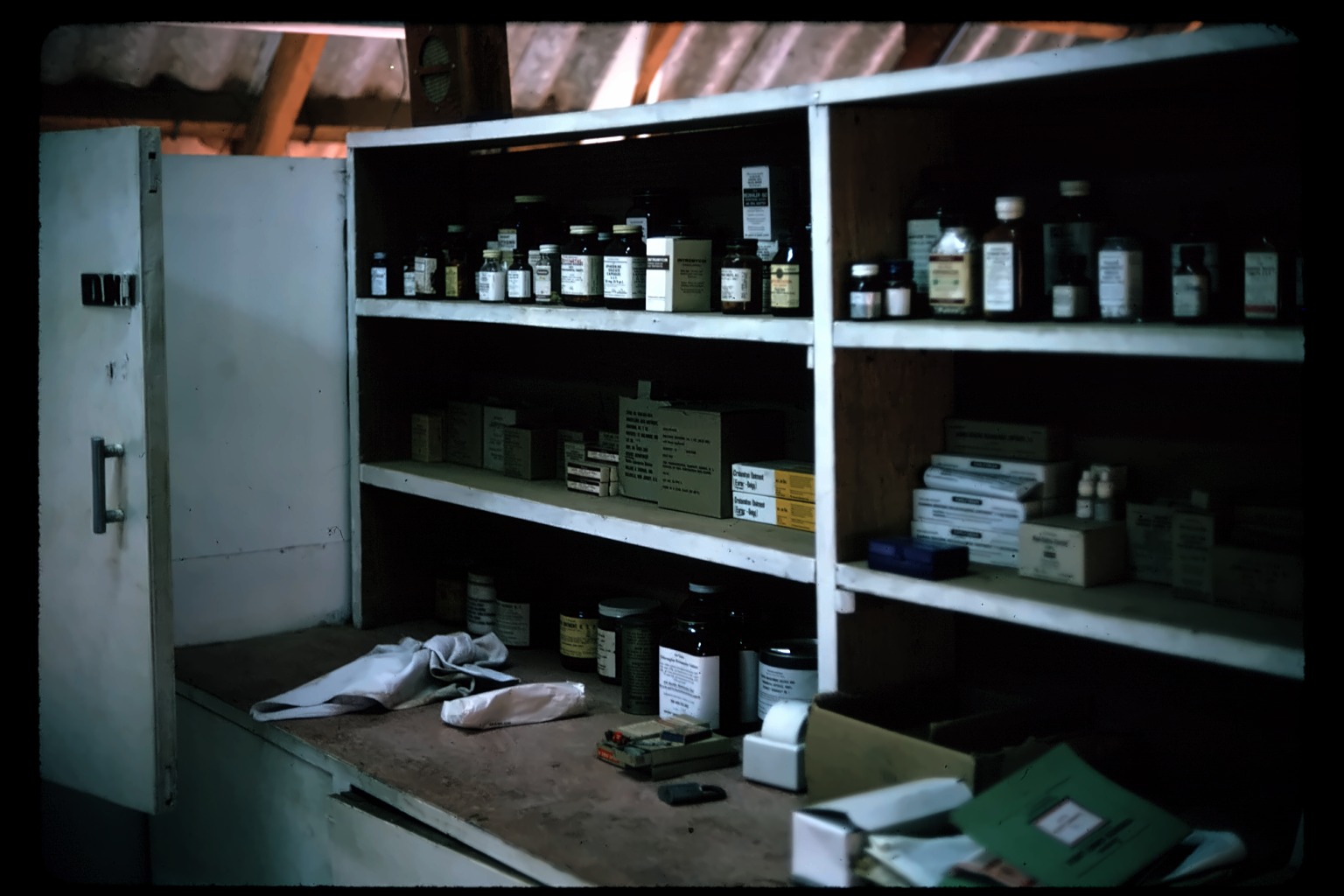
Shelves stocked with medical supplies.
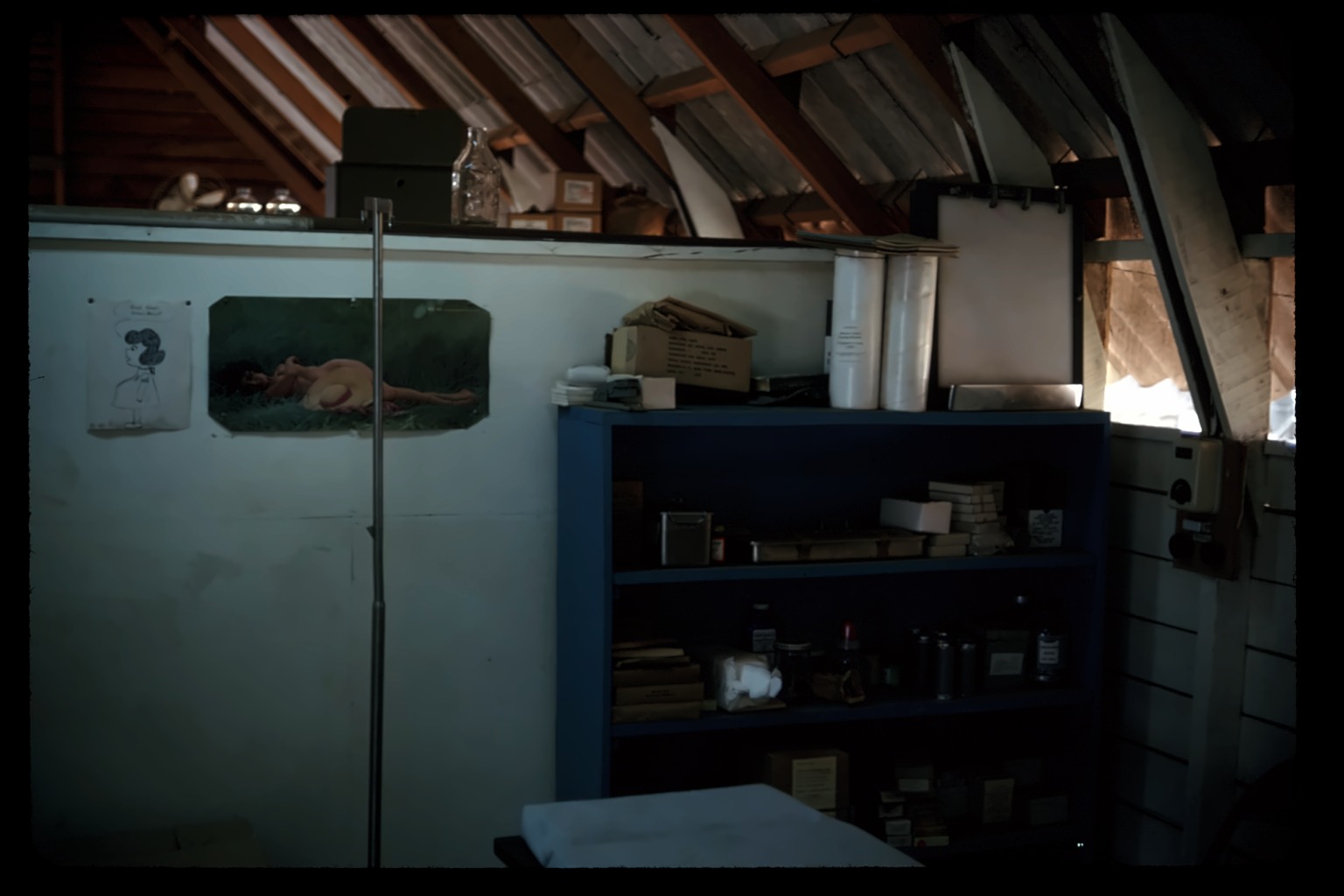
A treatment room, cabinet and equipment visible.
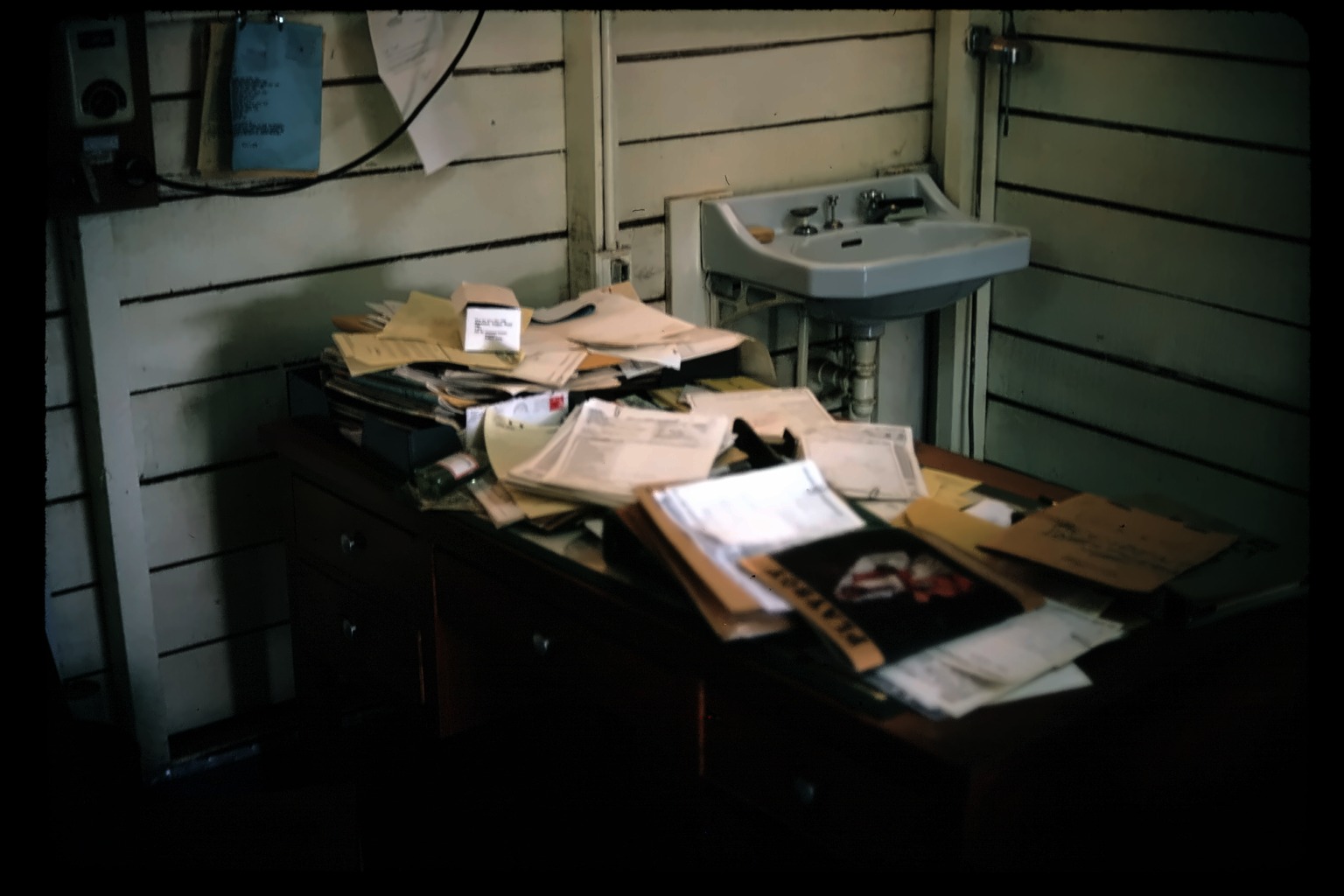
A desk covered in paperwork.
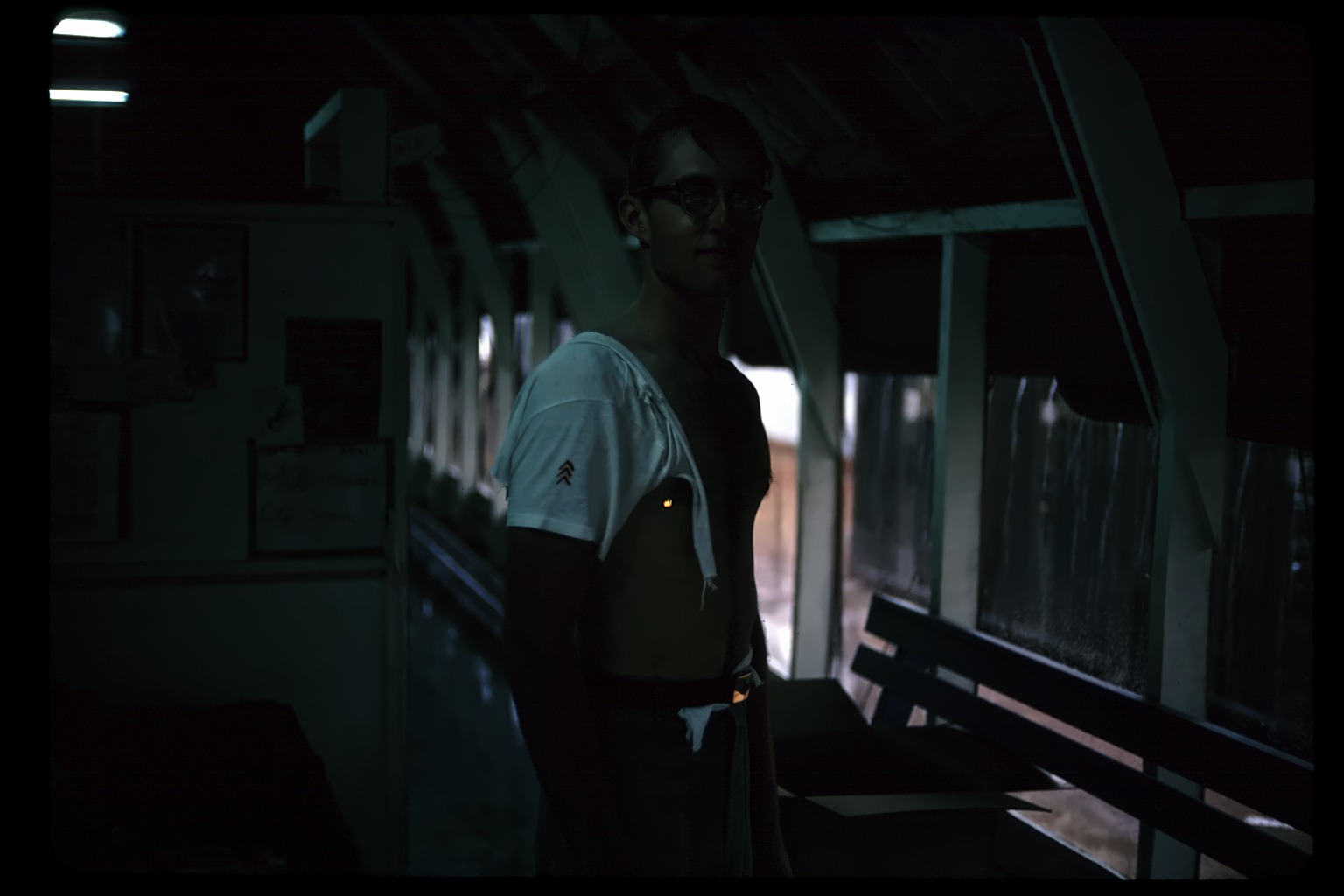
Him at work inside the dispensary.
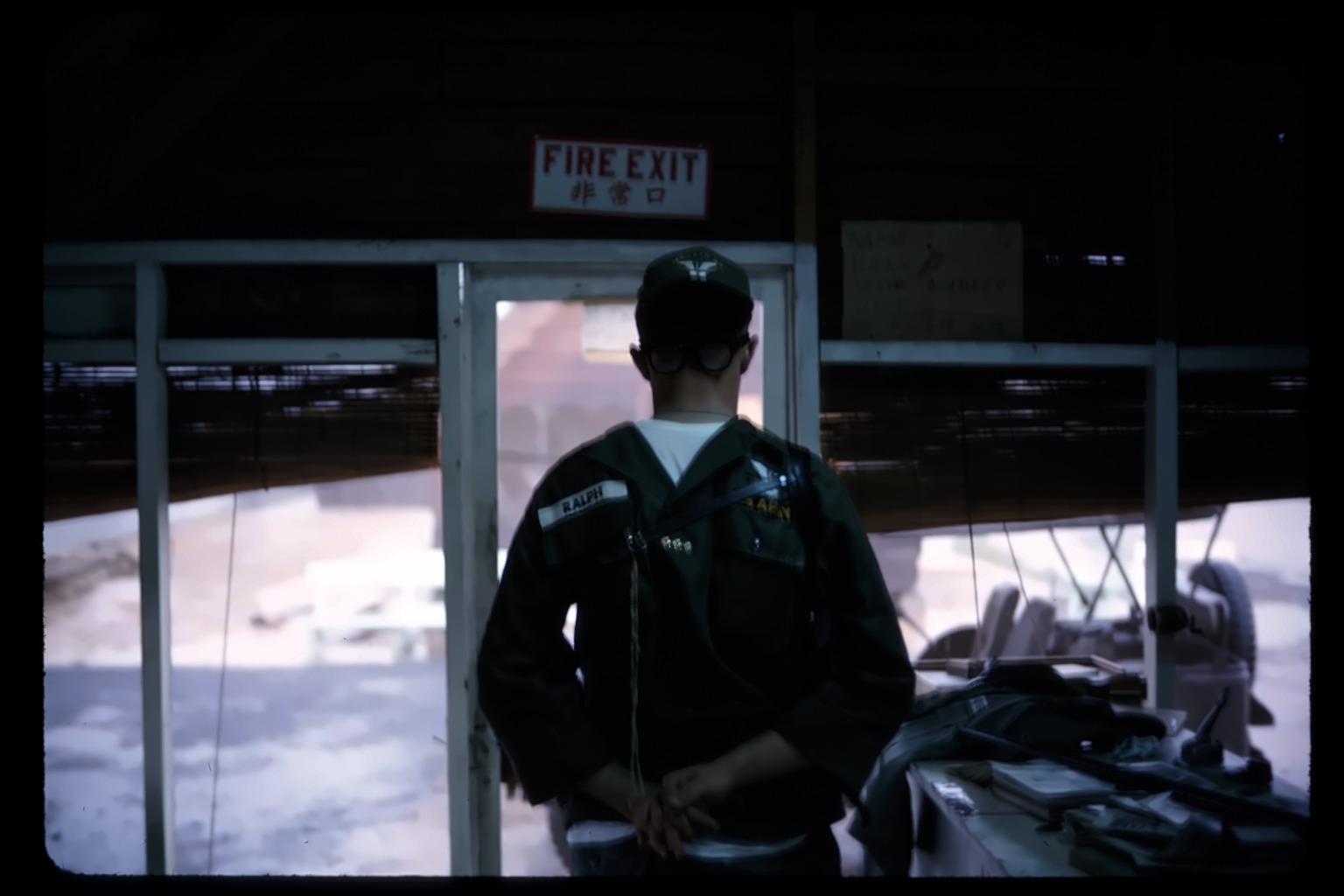
Ralph fooling around in the dispensary doorway — Wil is the one taking this photo, not in it.
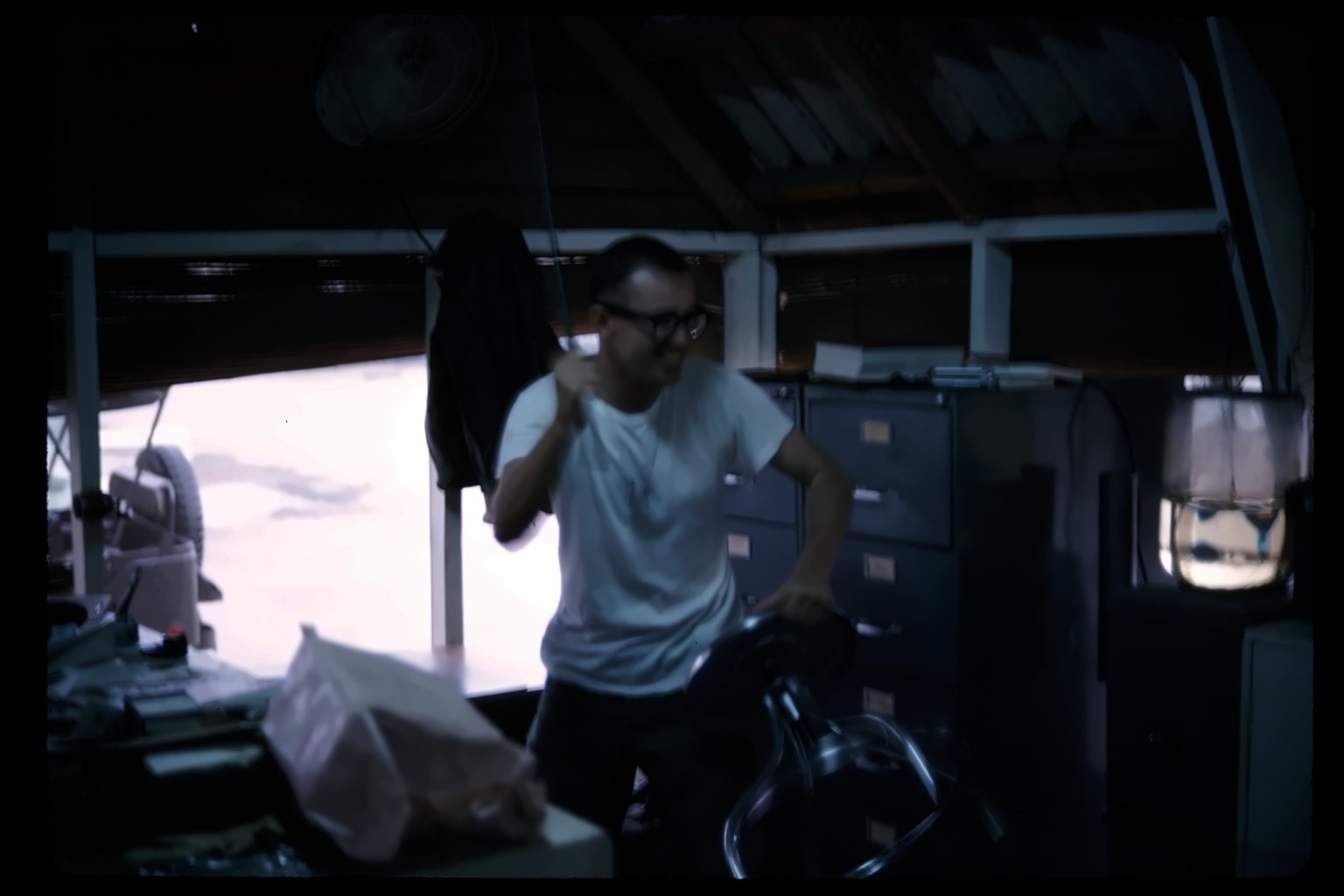
Also Ralph, same joking spirit as "Operating Garb" and "I'm Ready" — reads like a bit, Ralph playing it up like he'll scare the patients off rather than treat them.
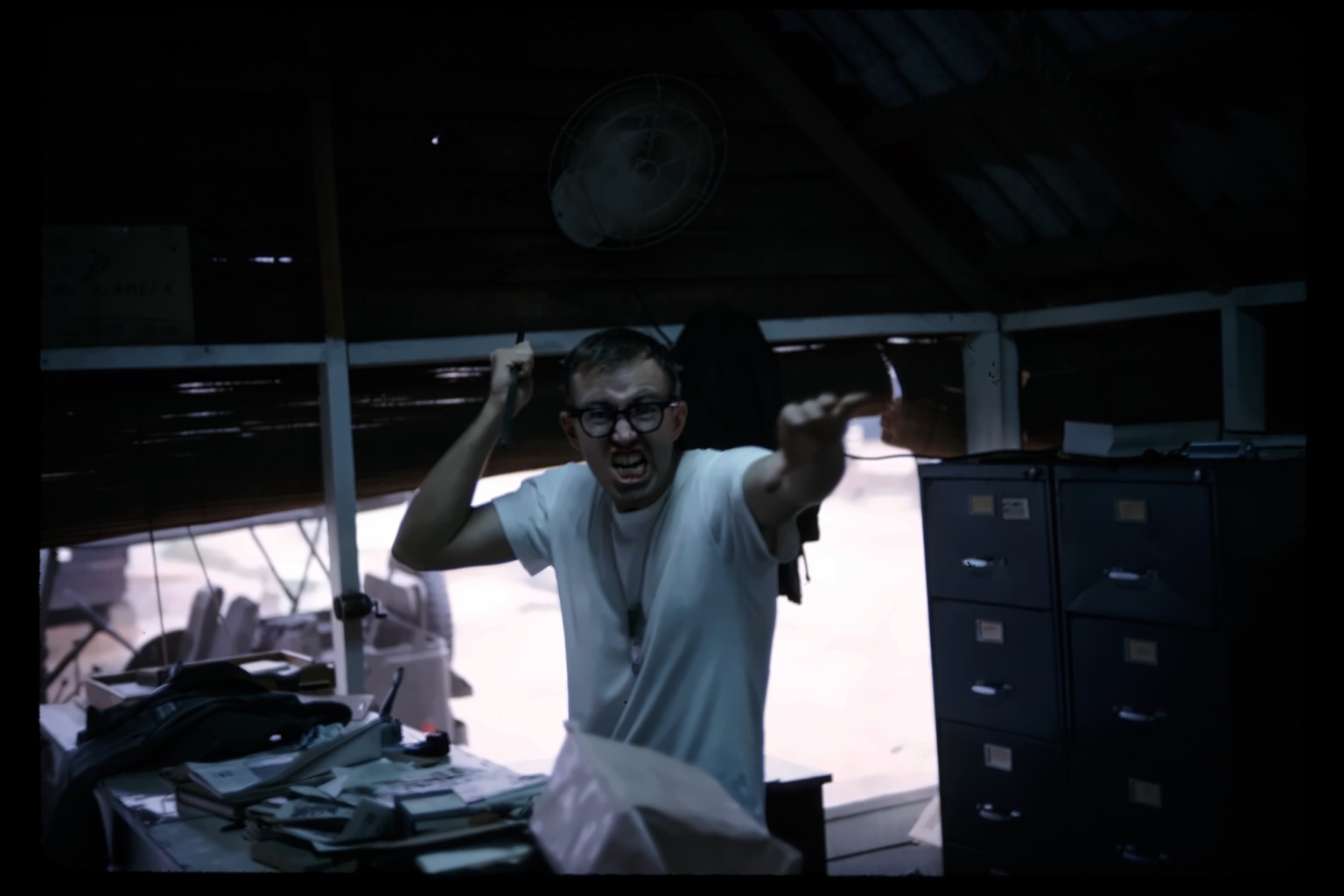
Ralph again, hands raised, joking for the camera.
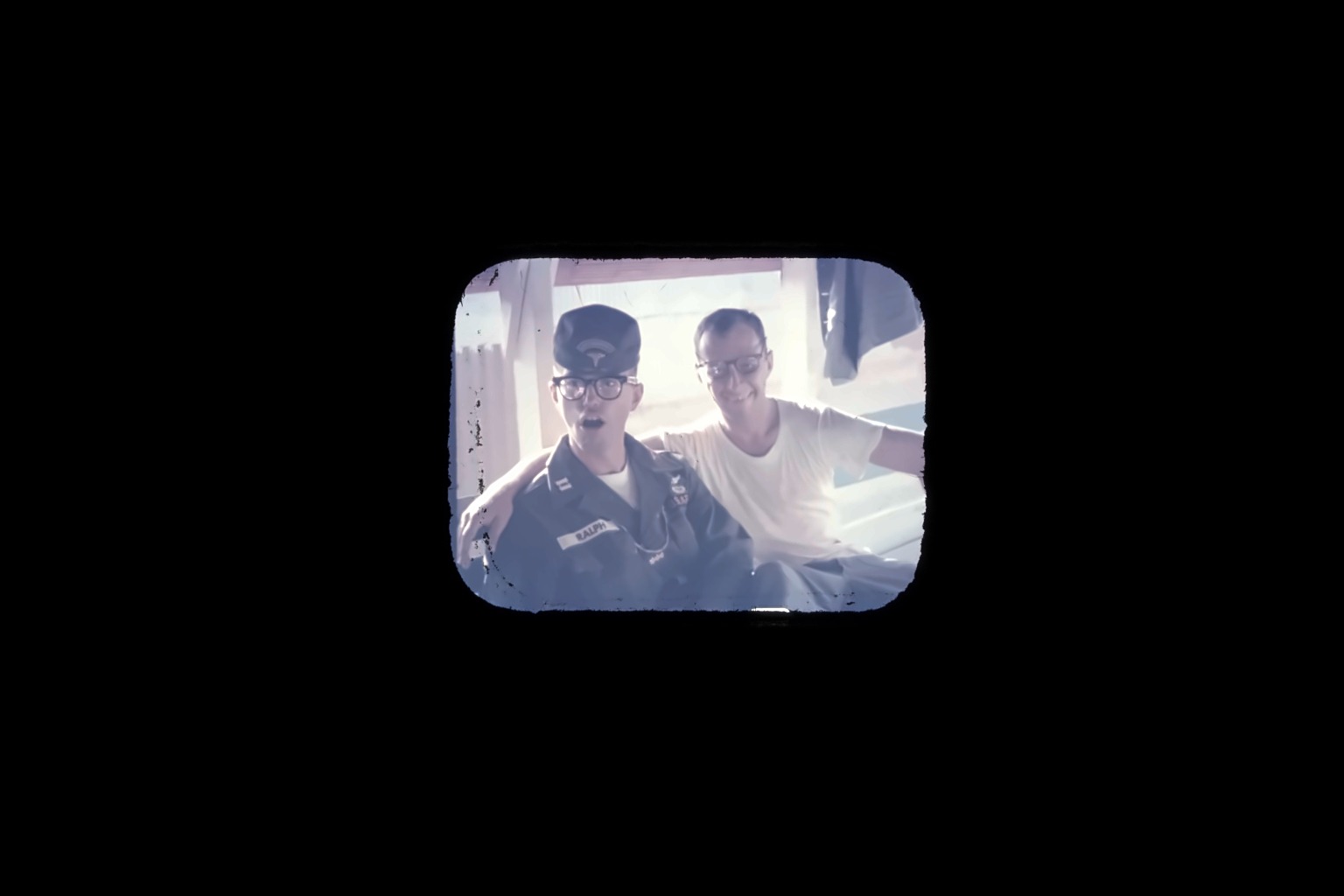
This came from a different roll or camera format, which is why the print shape differs from the rest of the collection. His name tape is legible: "RALPH." A personal photo, arm around each other, both smiling — a fourth appearance of James Ralph in this collection, and by far the warmest, most personal one.
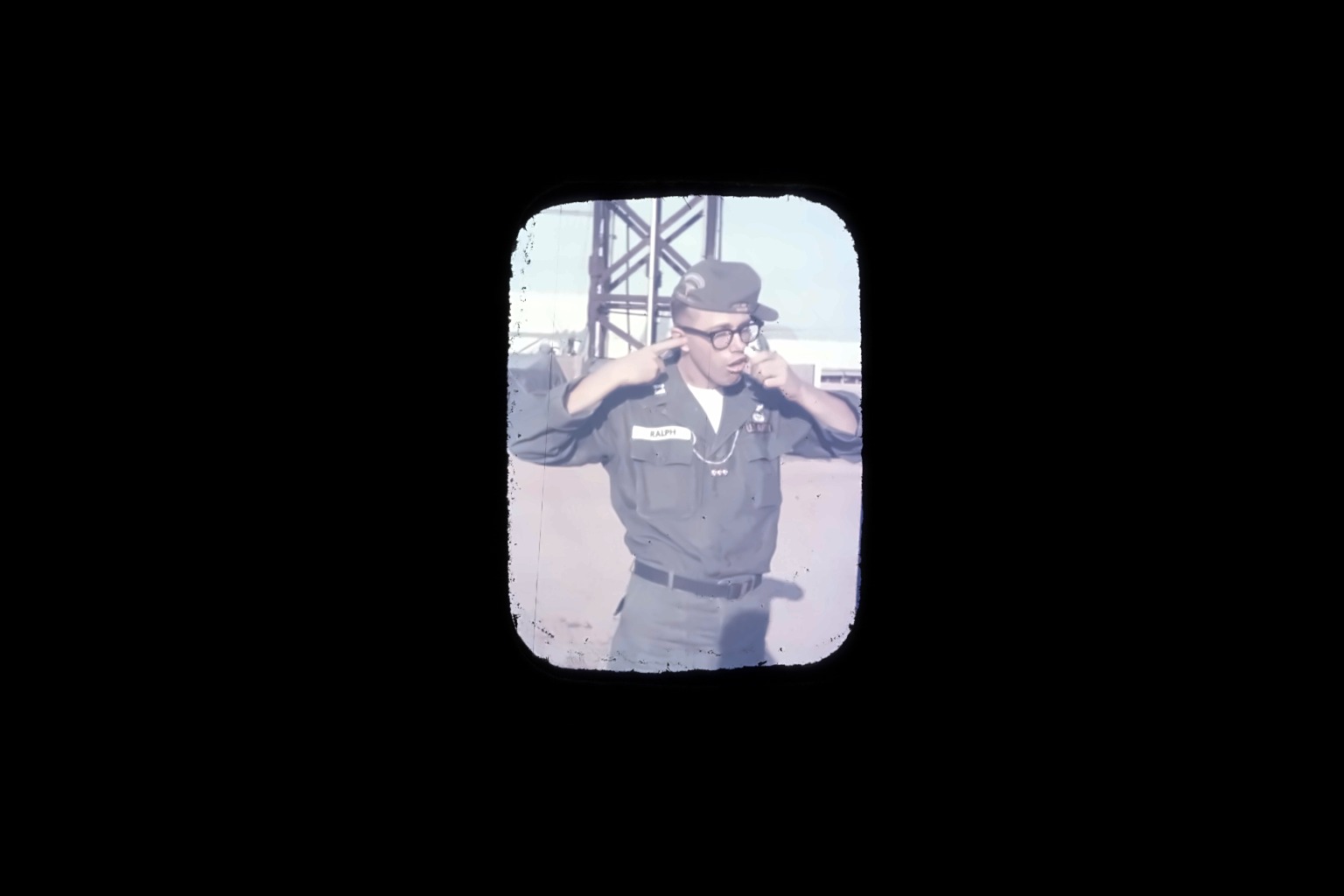
Same different-format shape as #47 — same person, too: this is Ralph, name tape directly legible without needing to zoom, making a joking finger-guns gesture to his own head. Matches the dark humor of "Blow It All Out." A fifth appearance across the collection, and the clearest, most personality-revealing photo of him anywhere in it.
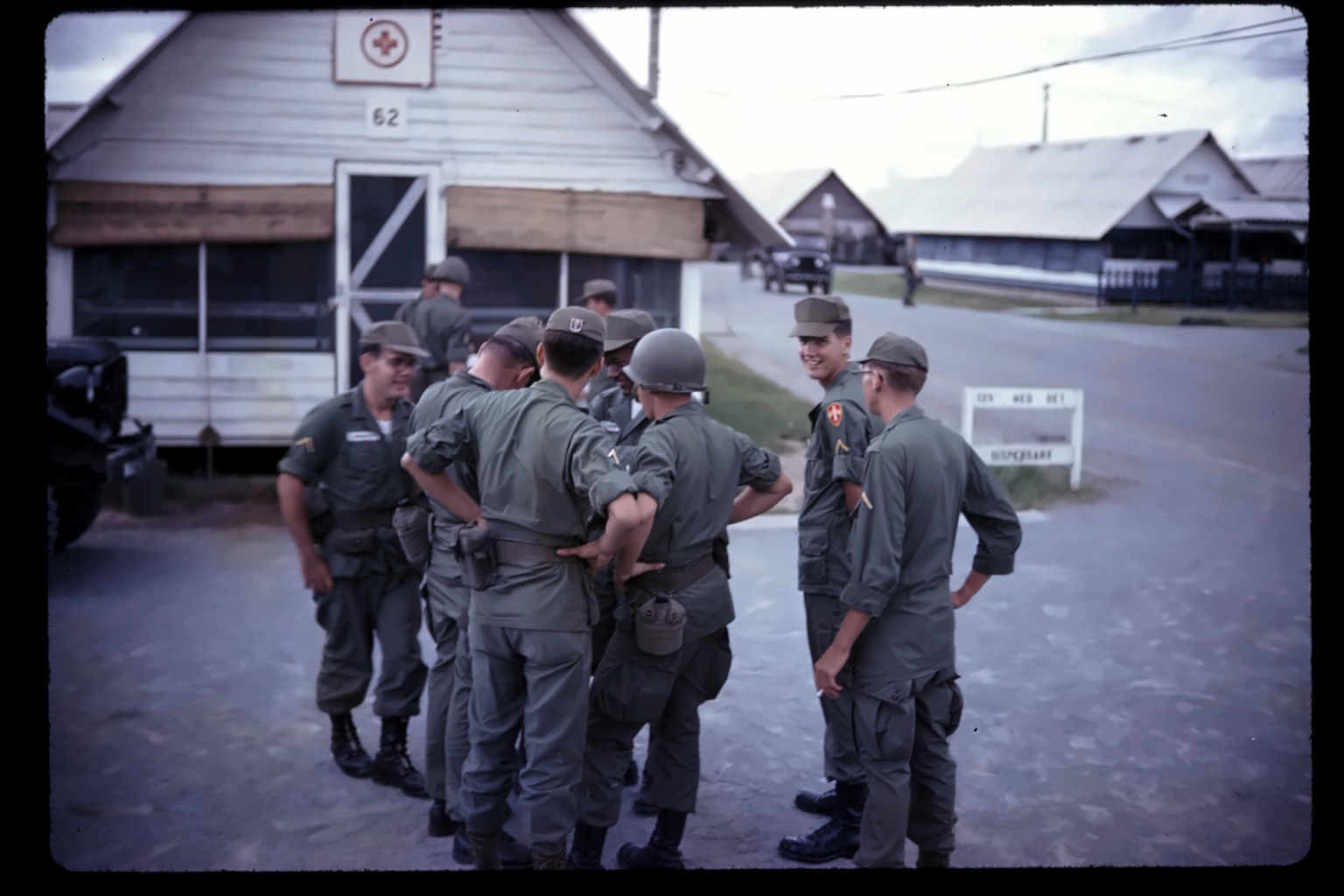
A group of soldiers outside building #62, Red Cross marked above the door. The background sign reads "129 Med Det, Dispensary" — a different unit from his own 45th (confirmed on building #63 in slide #38). Reads like two medical detachments were co-located side by side at Tan Son Nhut, not one.
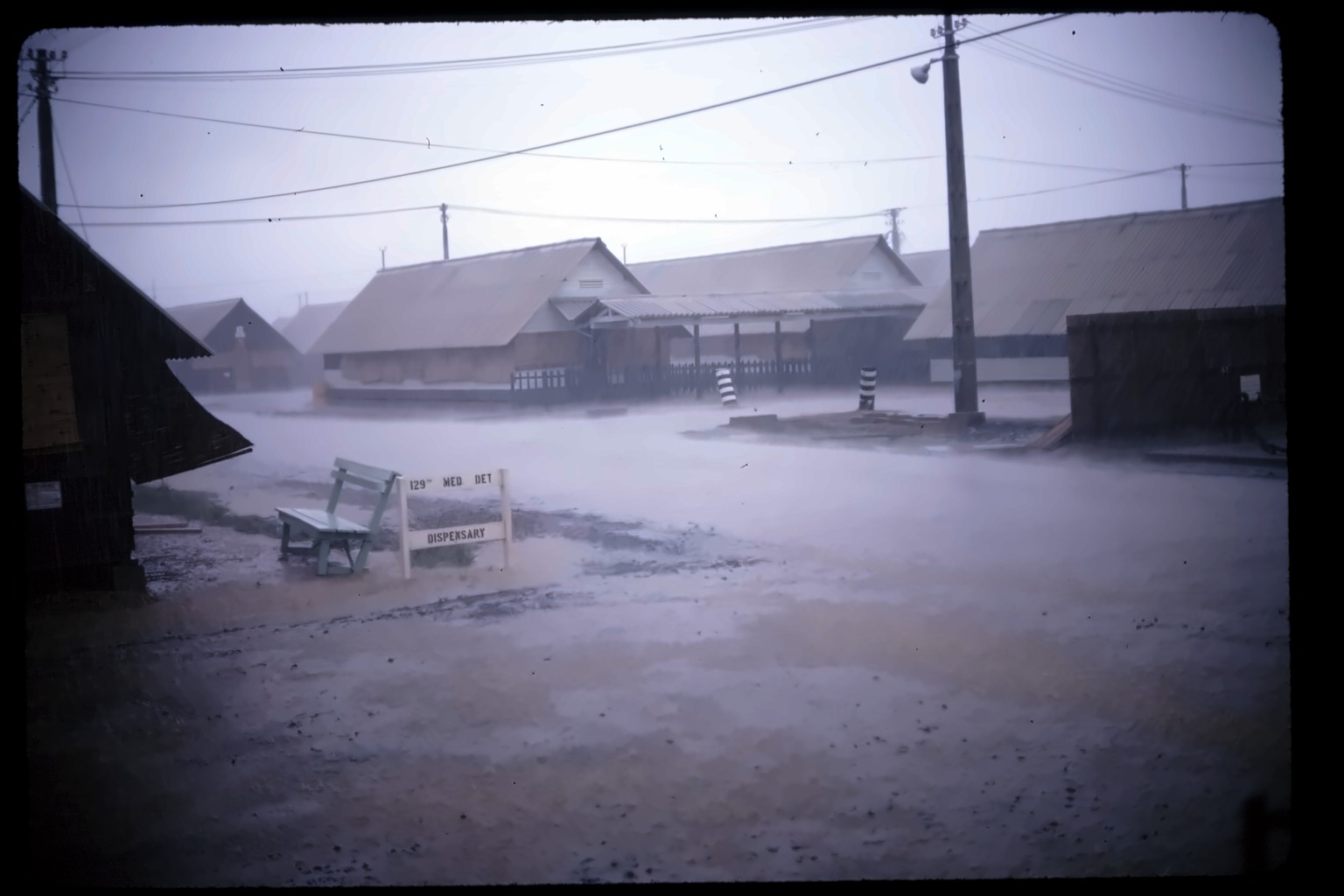
A rain-soaked stretch of the base, water pooling.
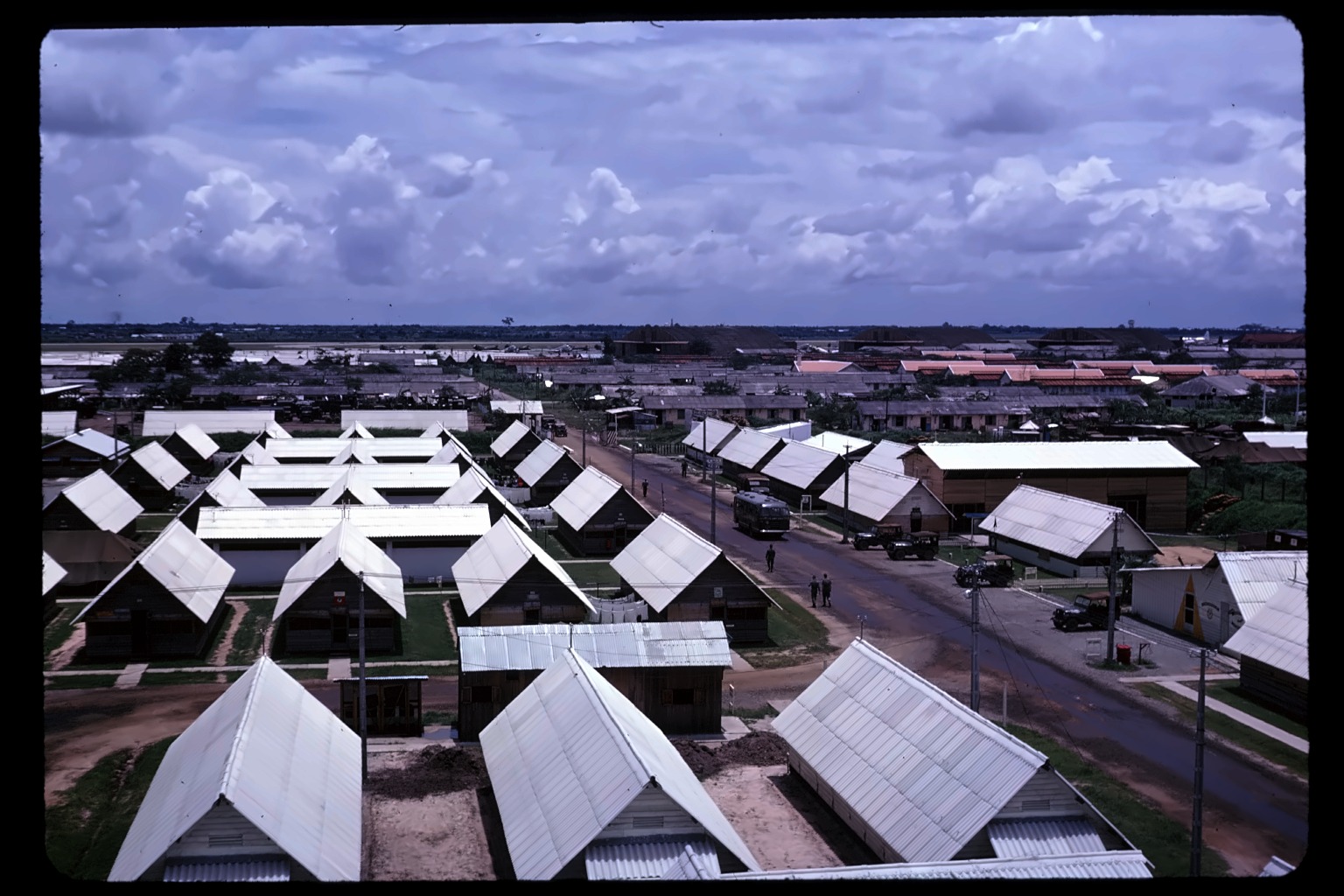
An elevated view over the barracks toward the airfield.
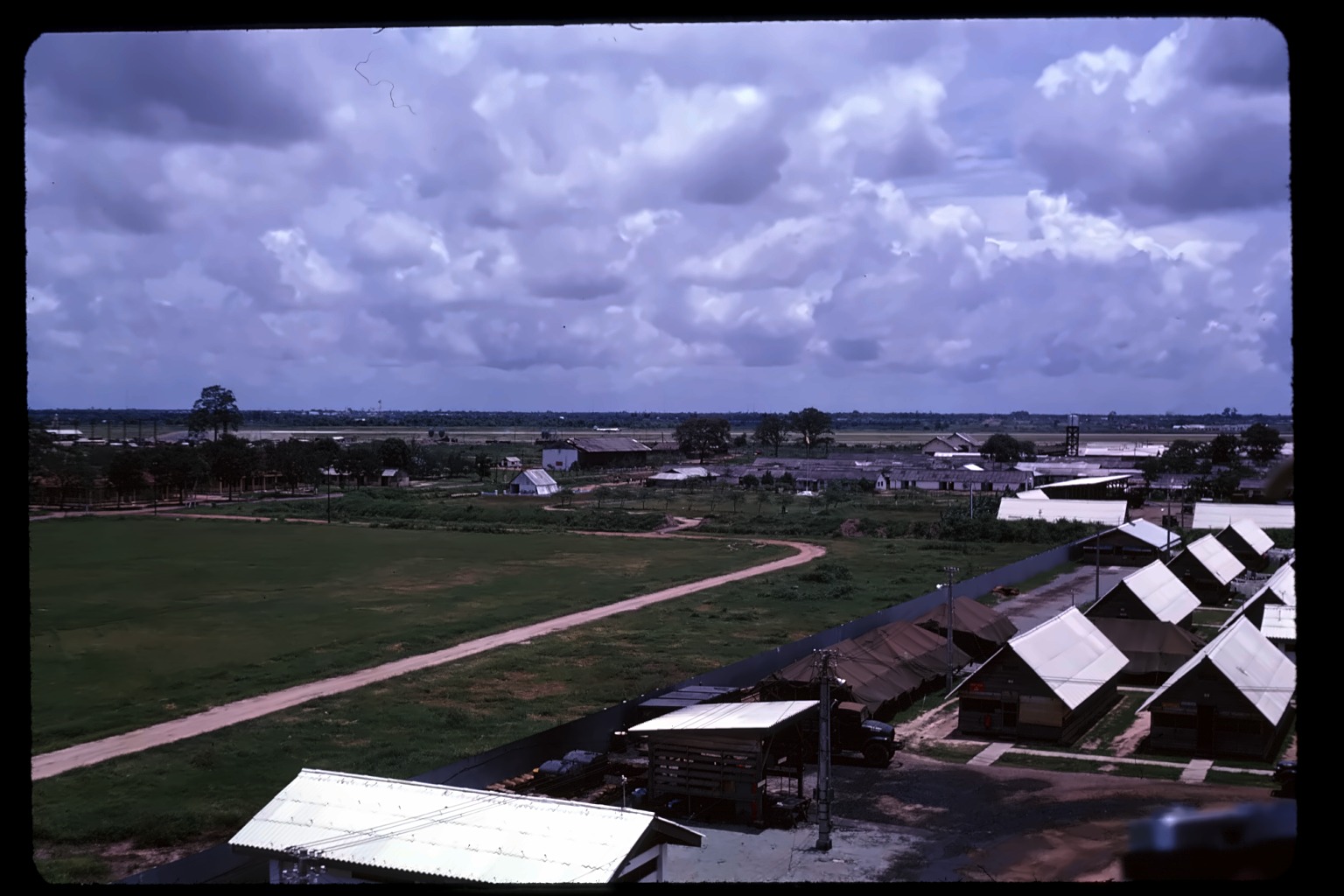
Base generator equipment, seen from above.
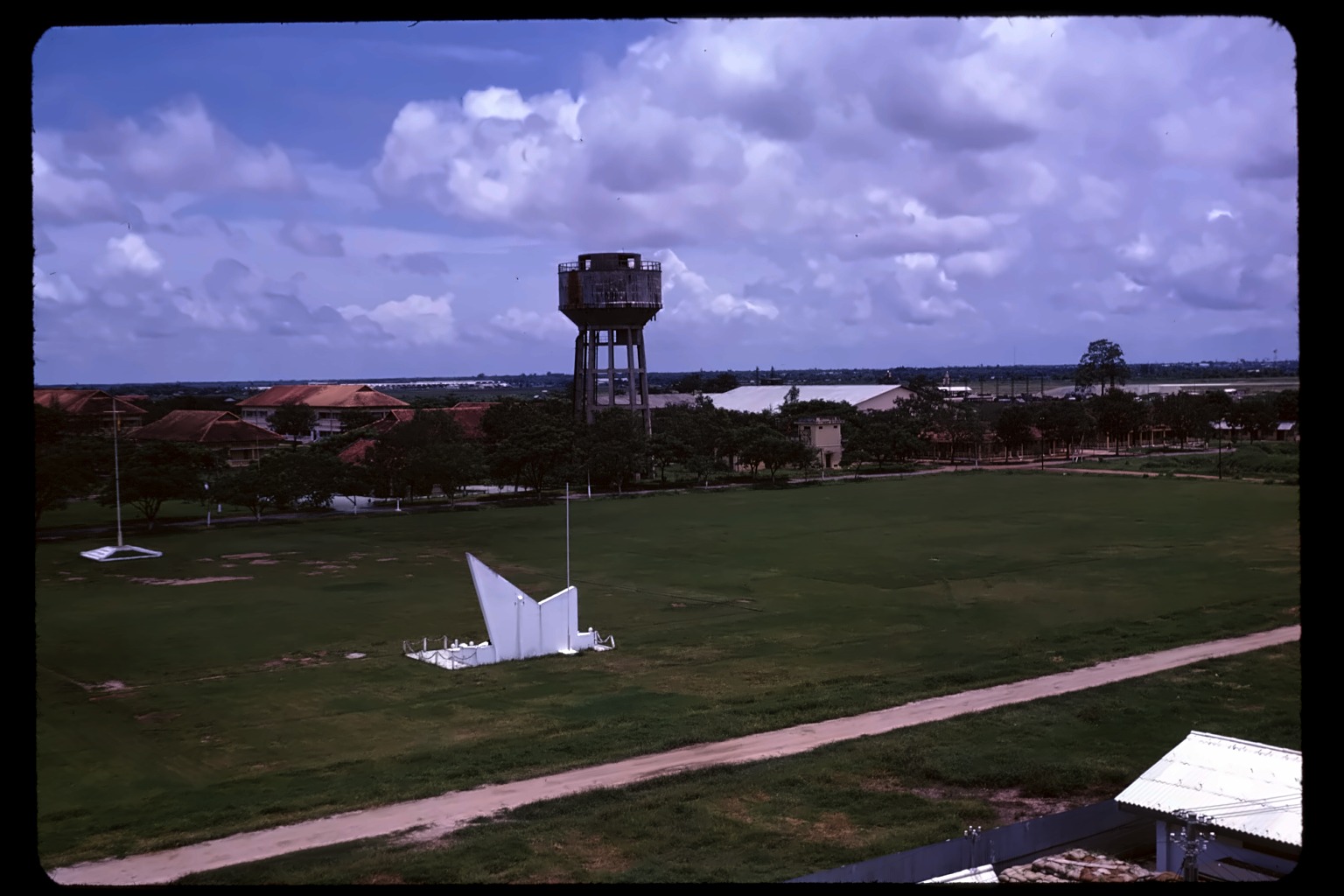
The base's water tower.
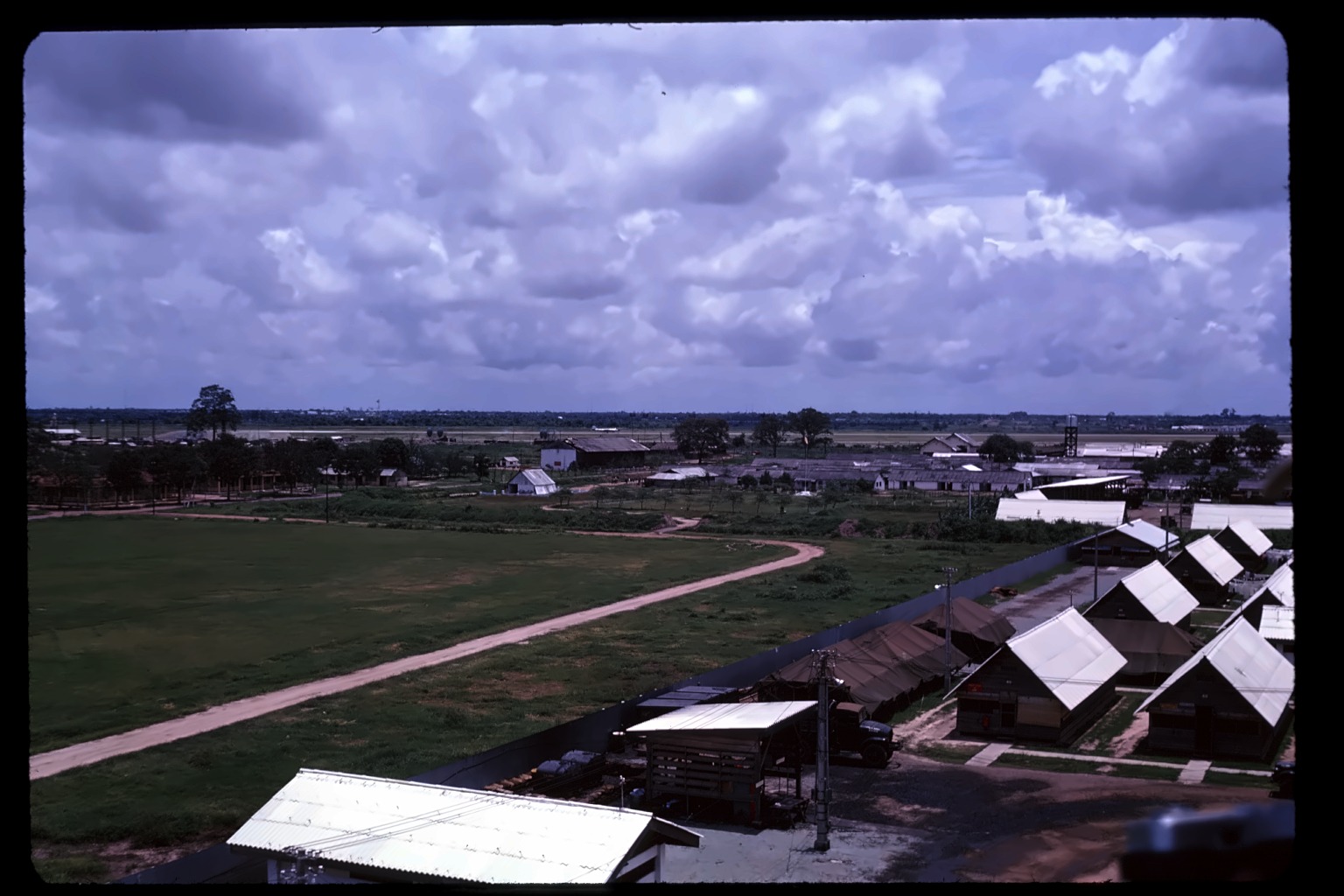
An elevated view over the base — likely a training area.
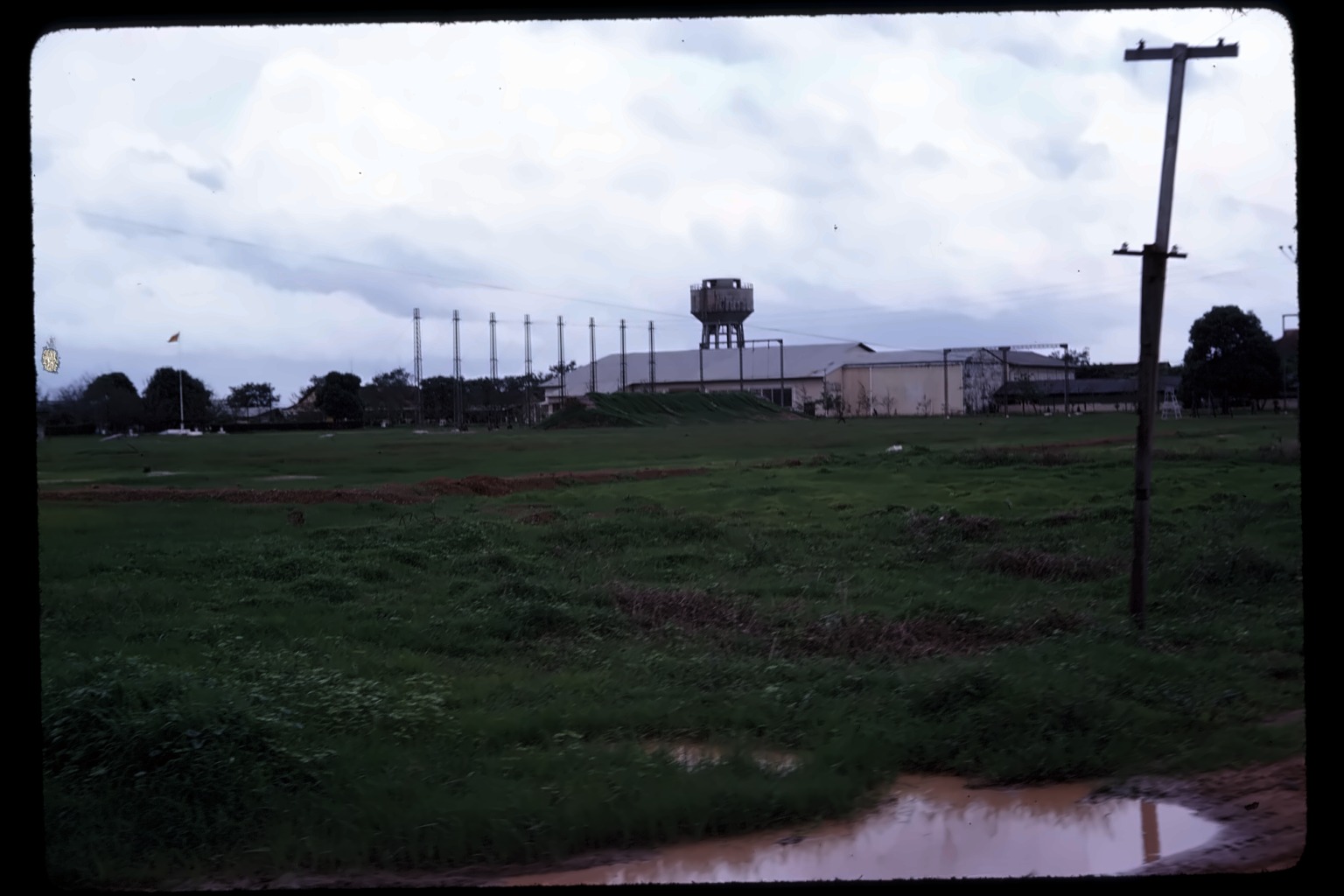
Continued.
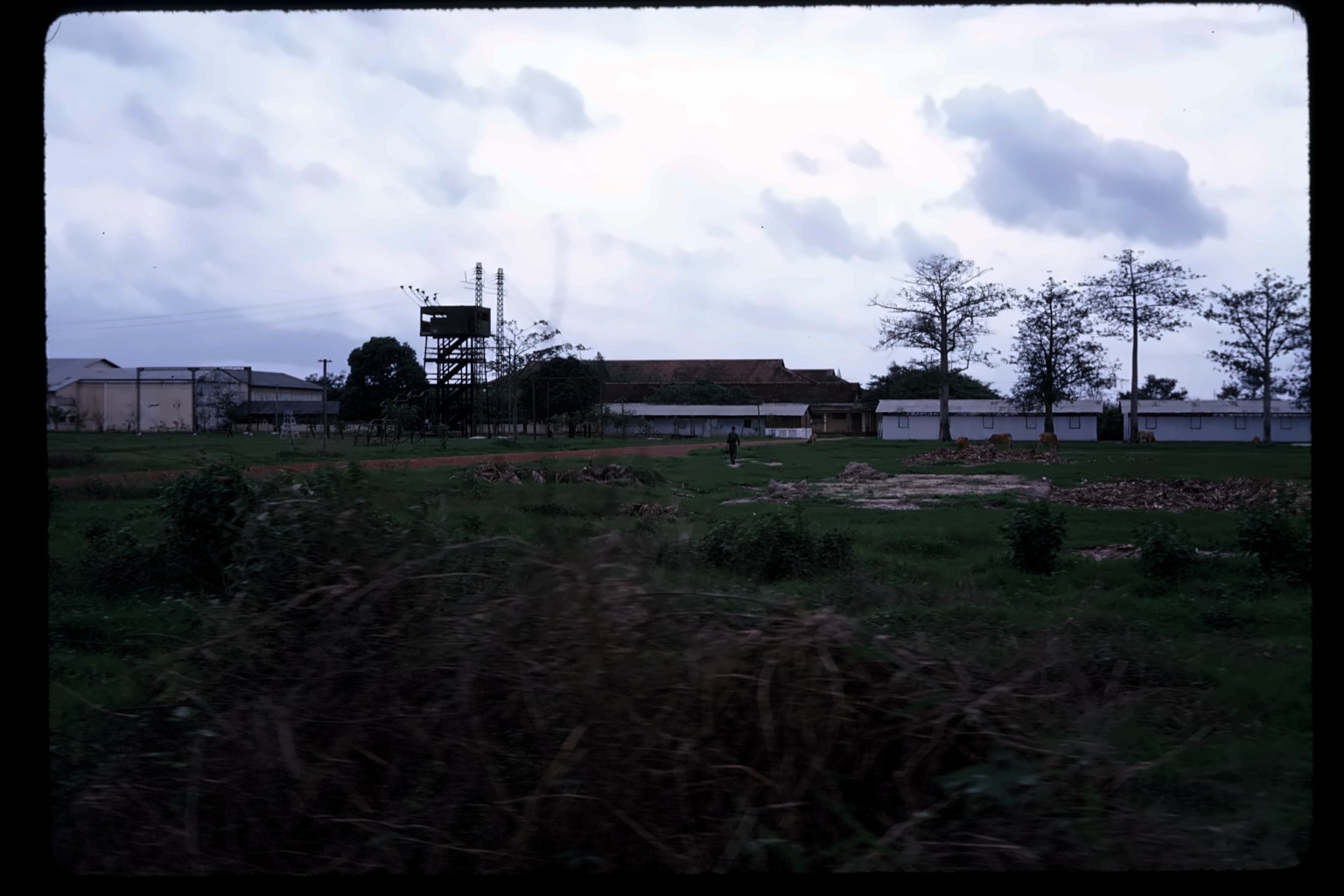
Wrecked or stripped aircraft frames on the ground.
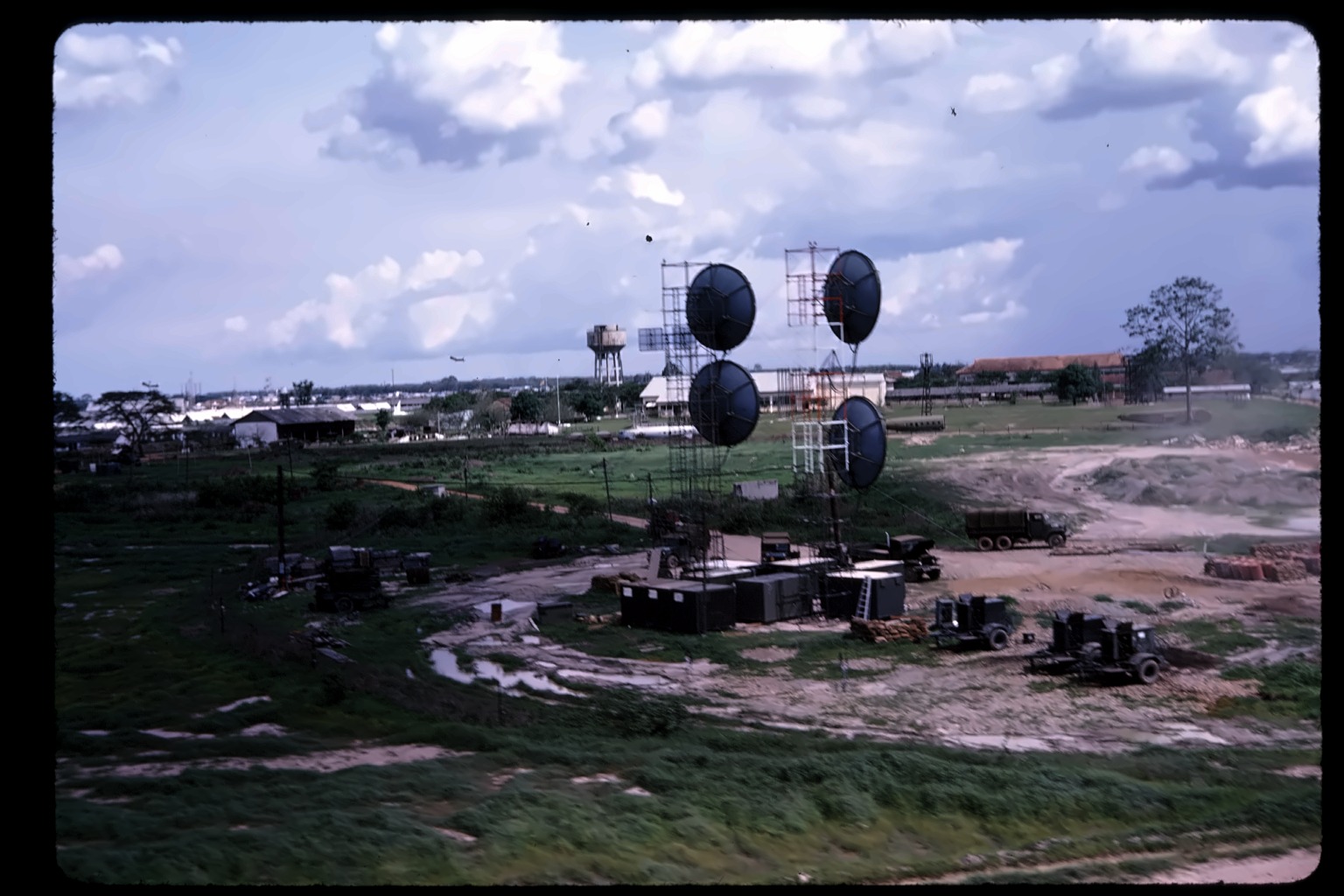
Radio antenna equipment.
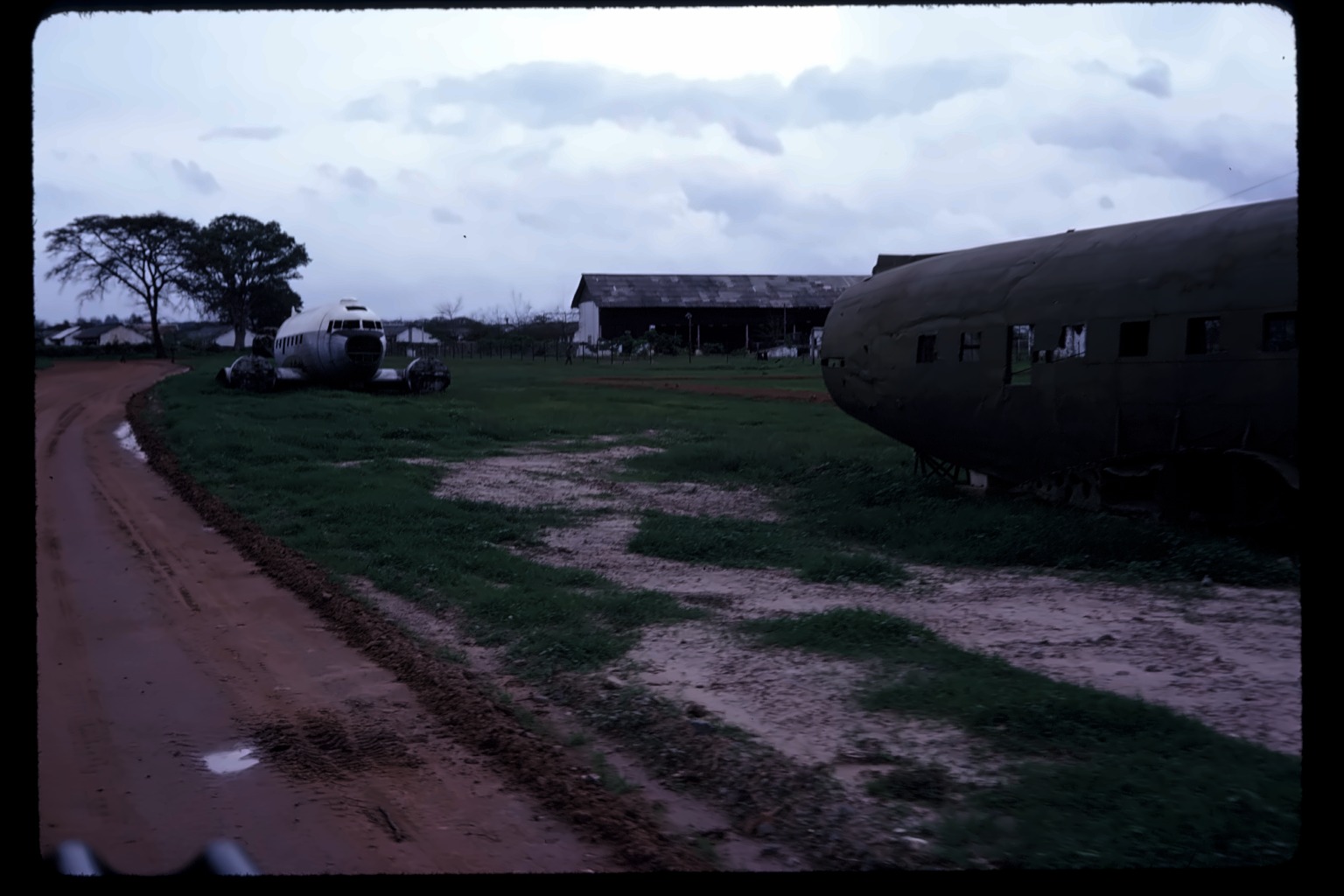
The titles on this photo and the next one look swapped from the original scan — this one shows wrecked, derelict aircraft hulks sitting in a field, not a flight line: a U-1 Otter's nose section propped on stands at left, a stripped and rusted fuselage at right.
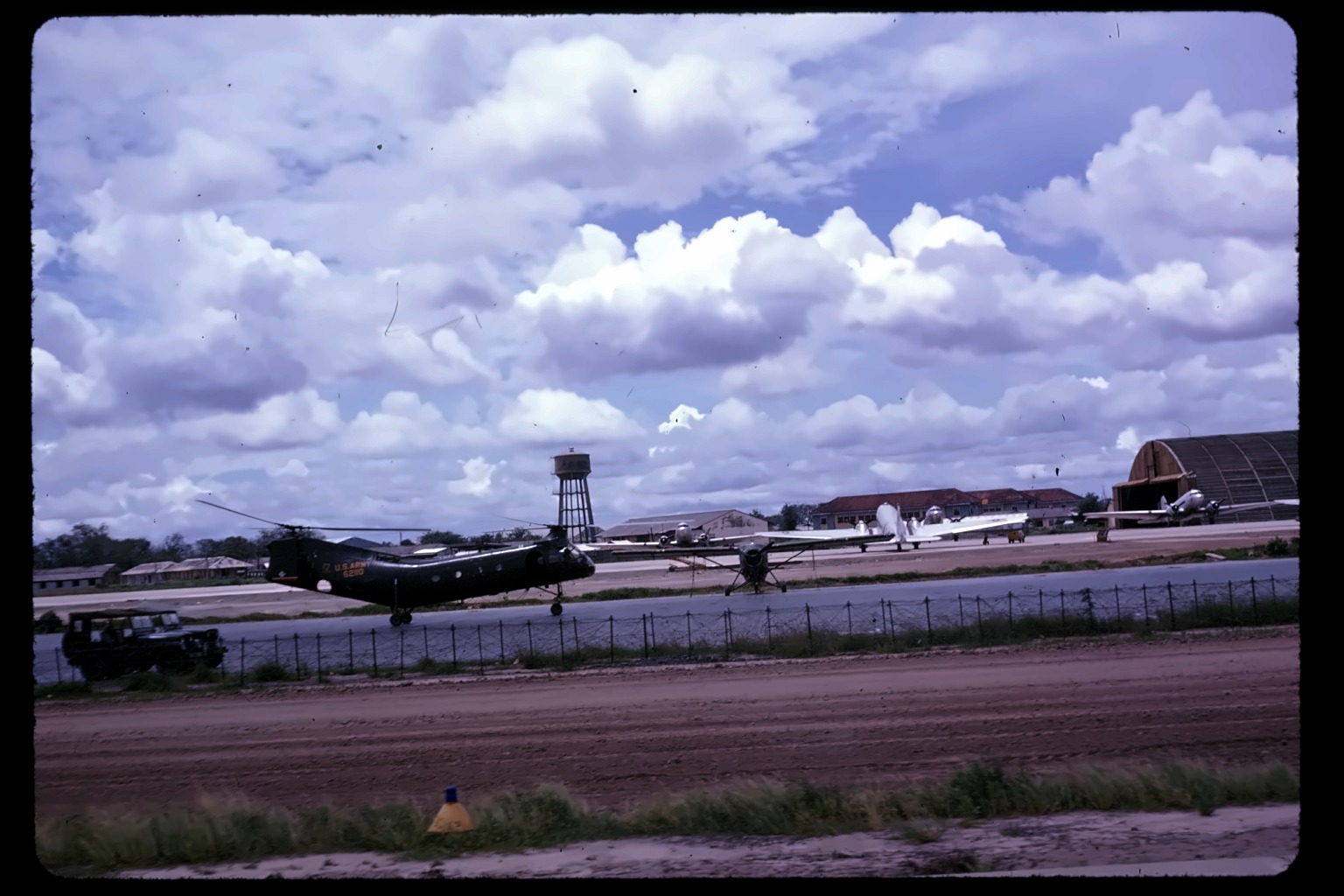
The real flight line — aircraft parked together, a CH-21 in the foreground. This title fits here better than on the previous slide, where it originally sat.
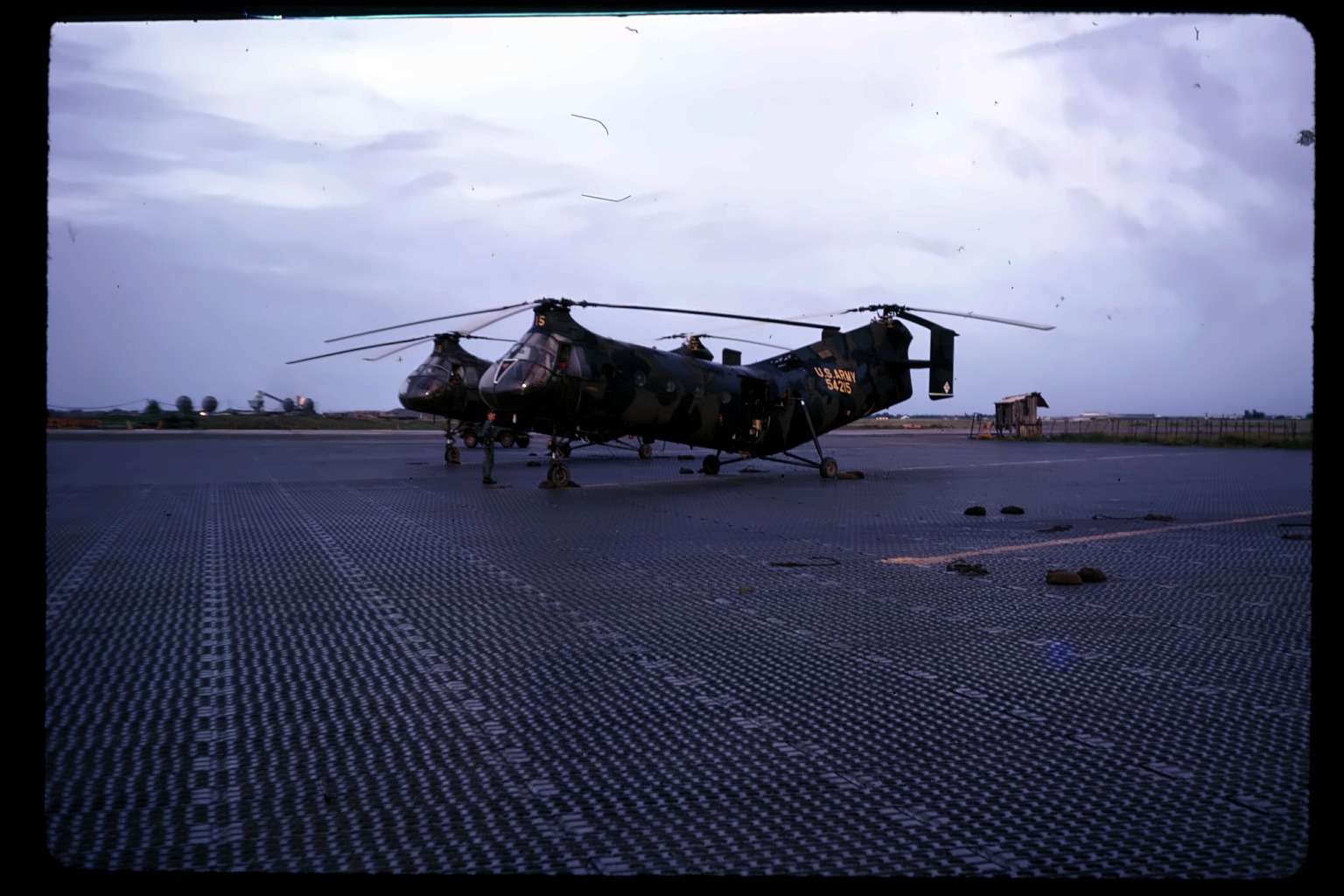
Correcting the aircraft type: this is a tandem-rotor CH-21 Shawnee, not a UH-1B — two rotor sets on one fuselage, not the single-rotor Huey shape. Tail number fully legible: "U.S. Army 54215."
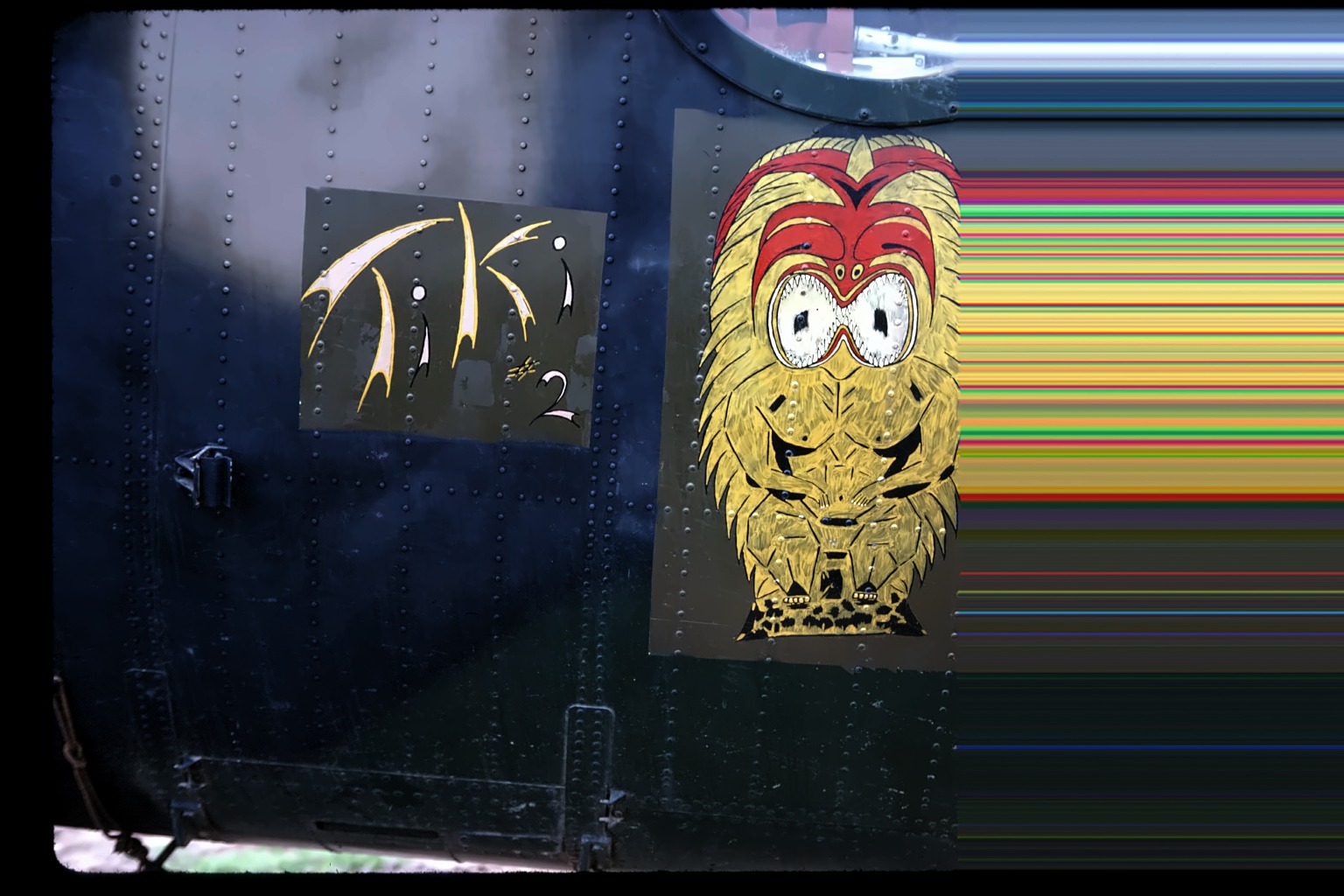
Close on a helicopter's fuselage — hand-painted cartoon nose art, another example of the personalized aircraft naming seen elsewhere in his collection.
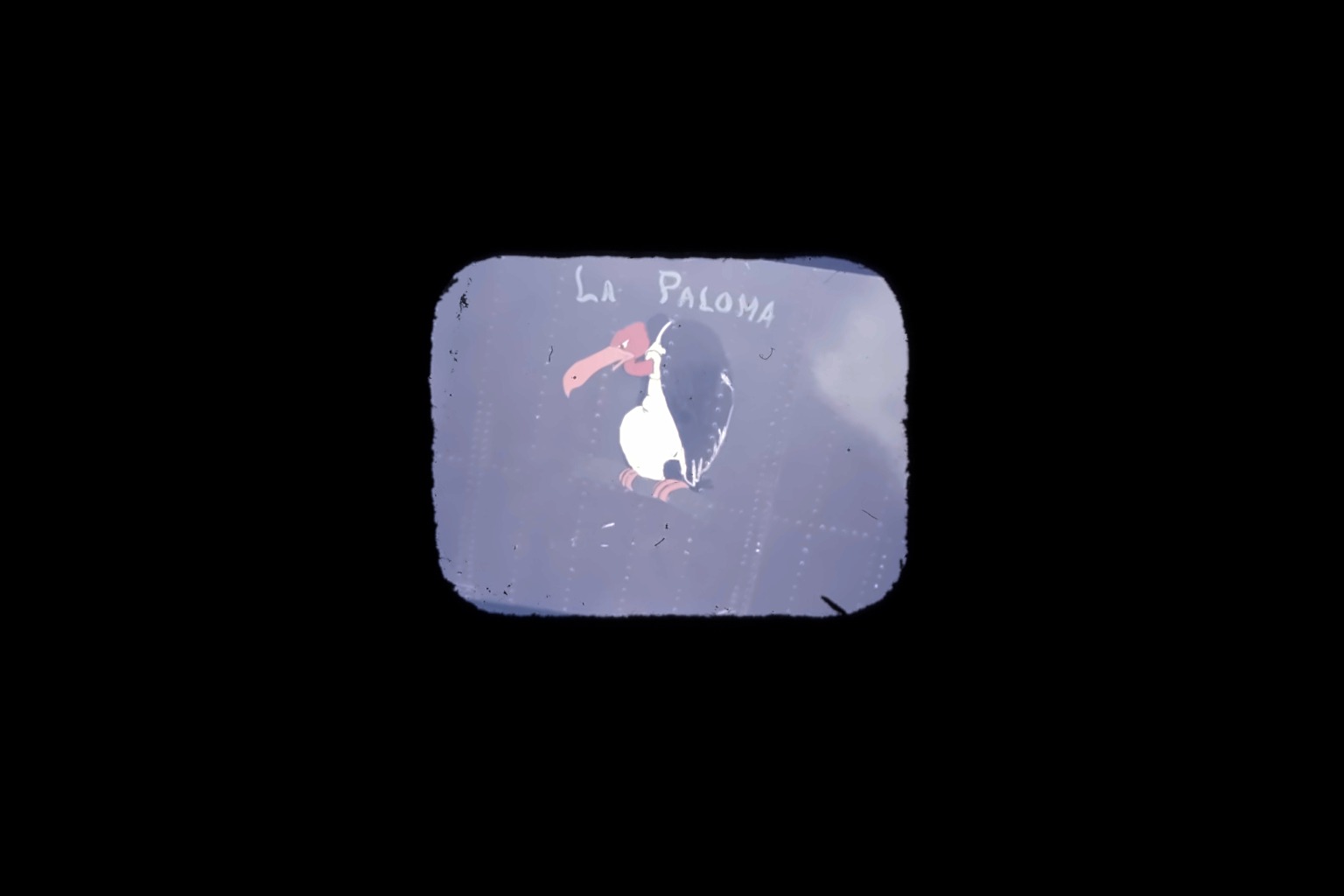
Same different-format shape as elsewhere in the collection, not an irregular print. Fully legible once seen clearly: the aircraft's hand-painted name, "La Paloma," with a cartoon vulture — real nose art, exactly matching the caption.
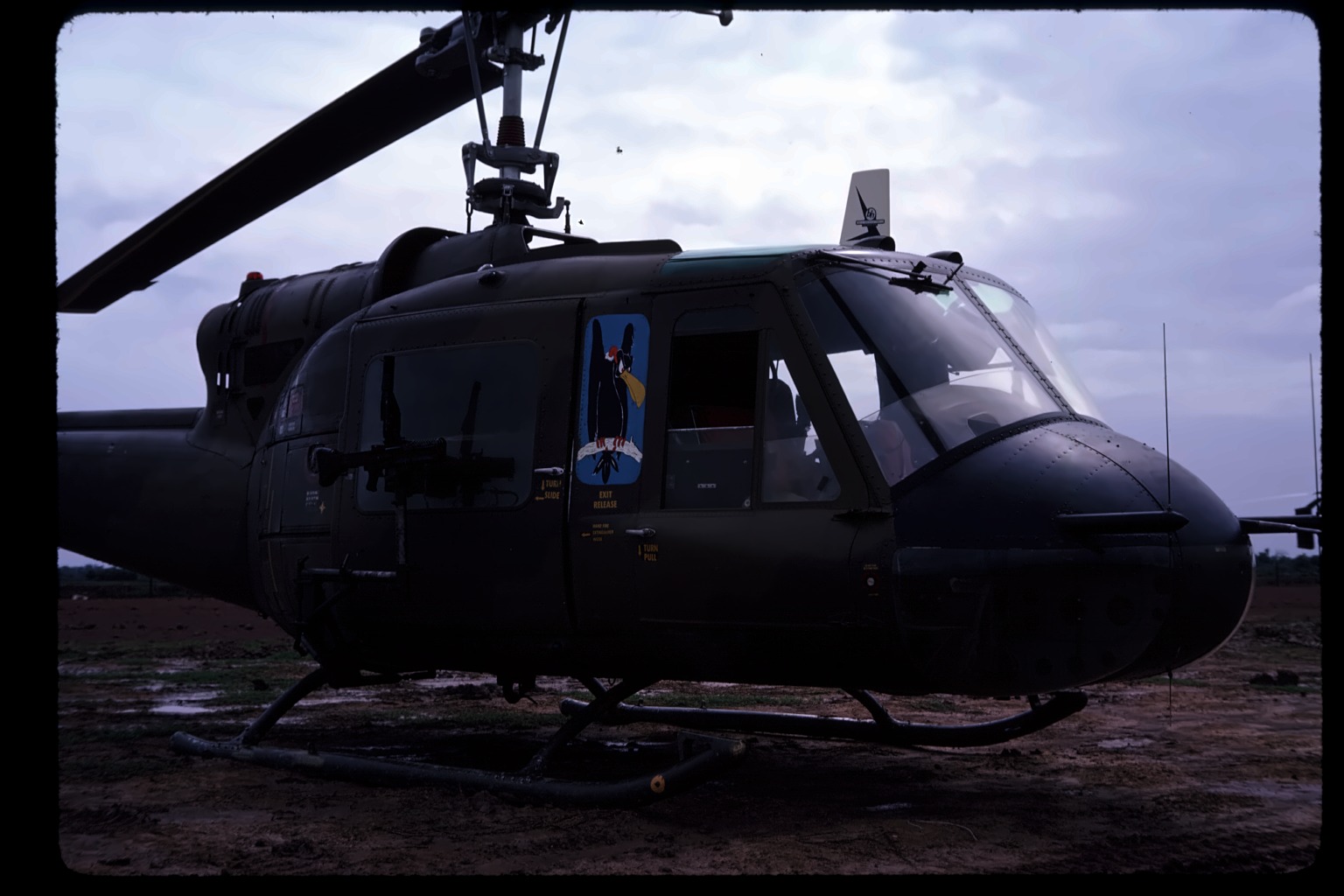
A UH-1 Huey close-up, named directly — "117," associated with Pleiku.
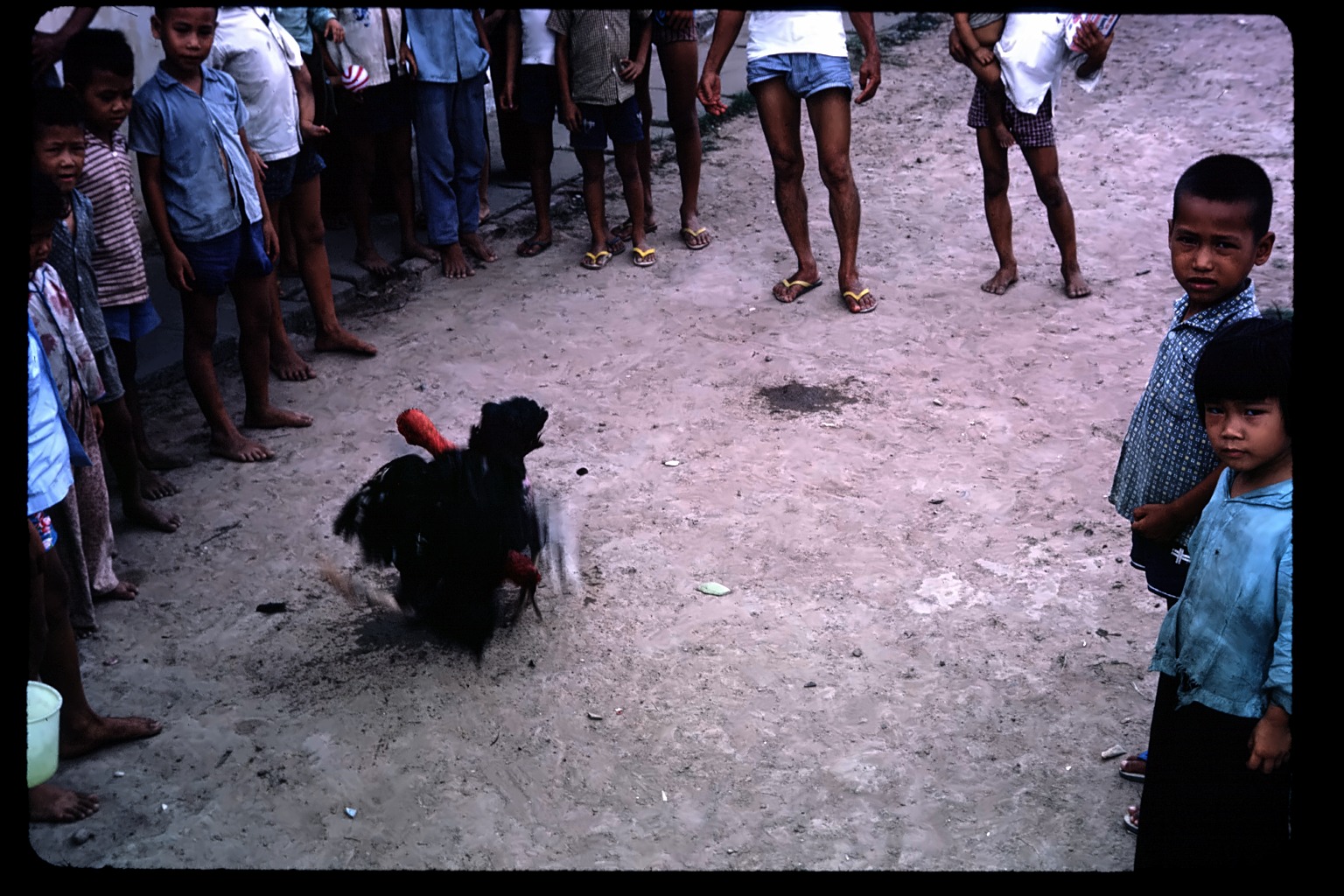
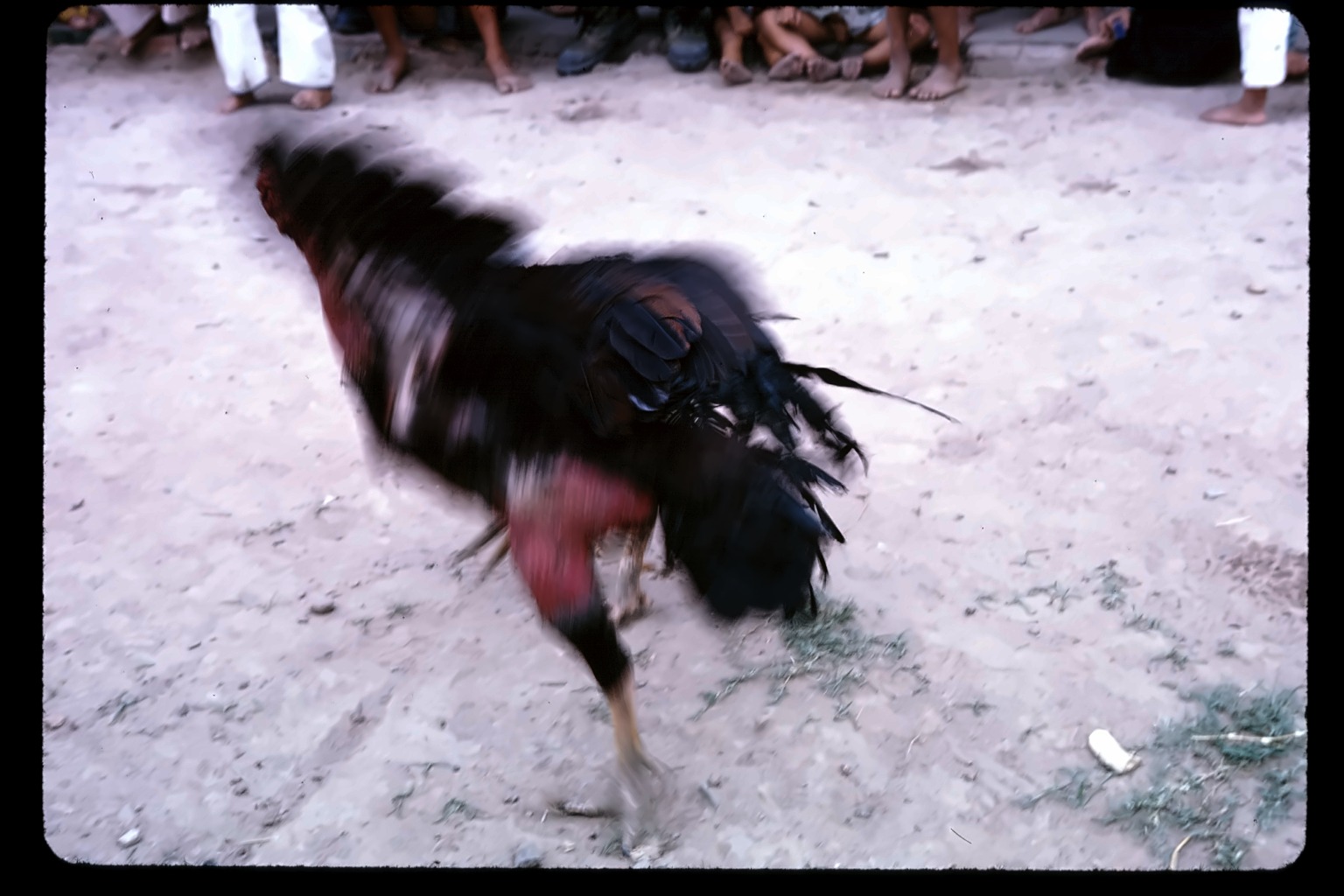
The first of twenty frames documenting a cockfight — a mixed crowd of soldiers and local Vietnamese children and adults gathered to watch. His word "Turkey" for the birds is his own; they read as fighting roosters.
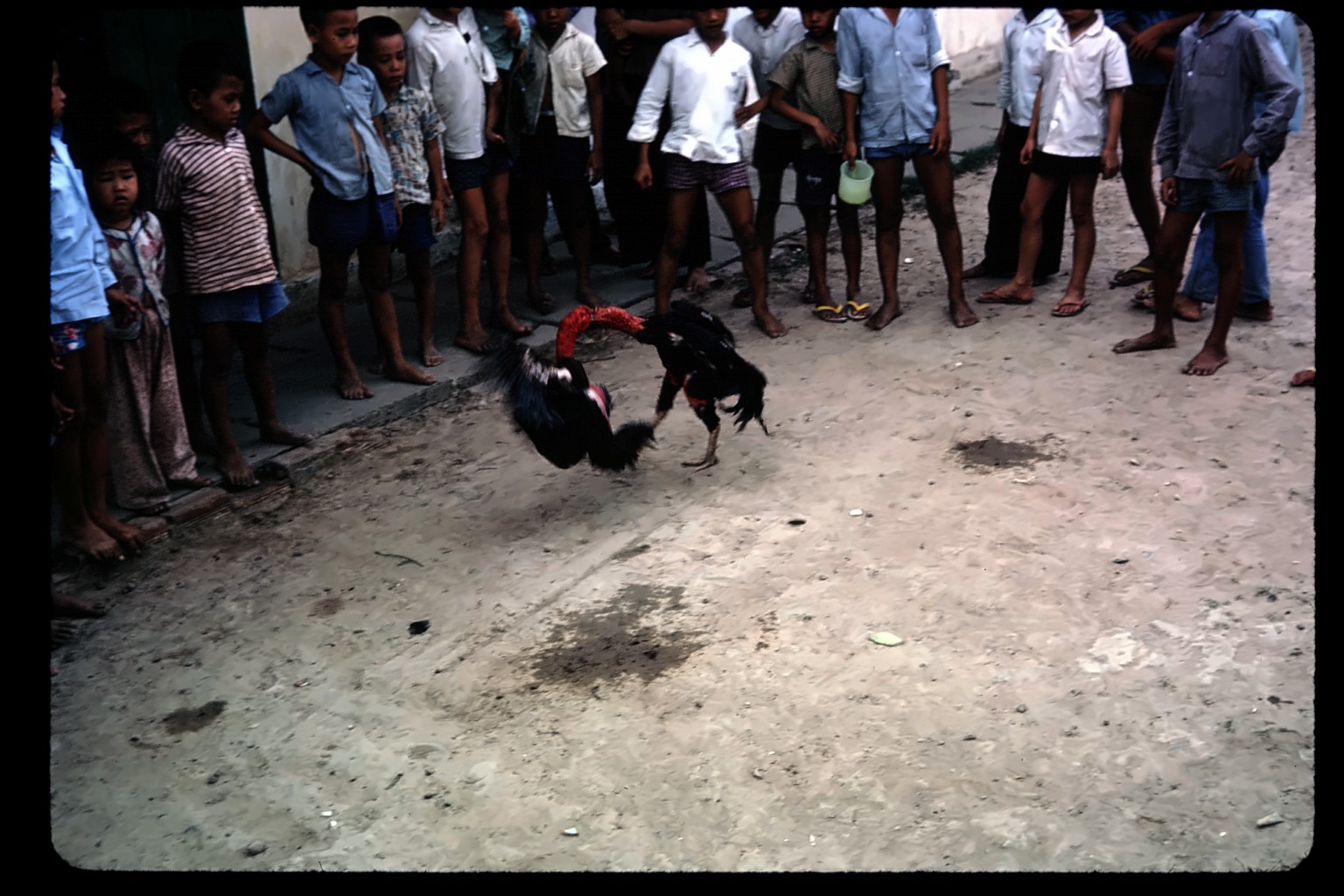
The crowd, birds facing off on the ground.
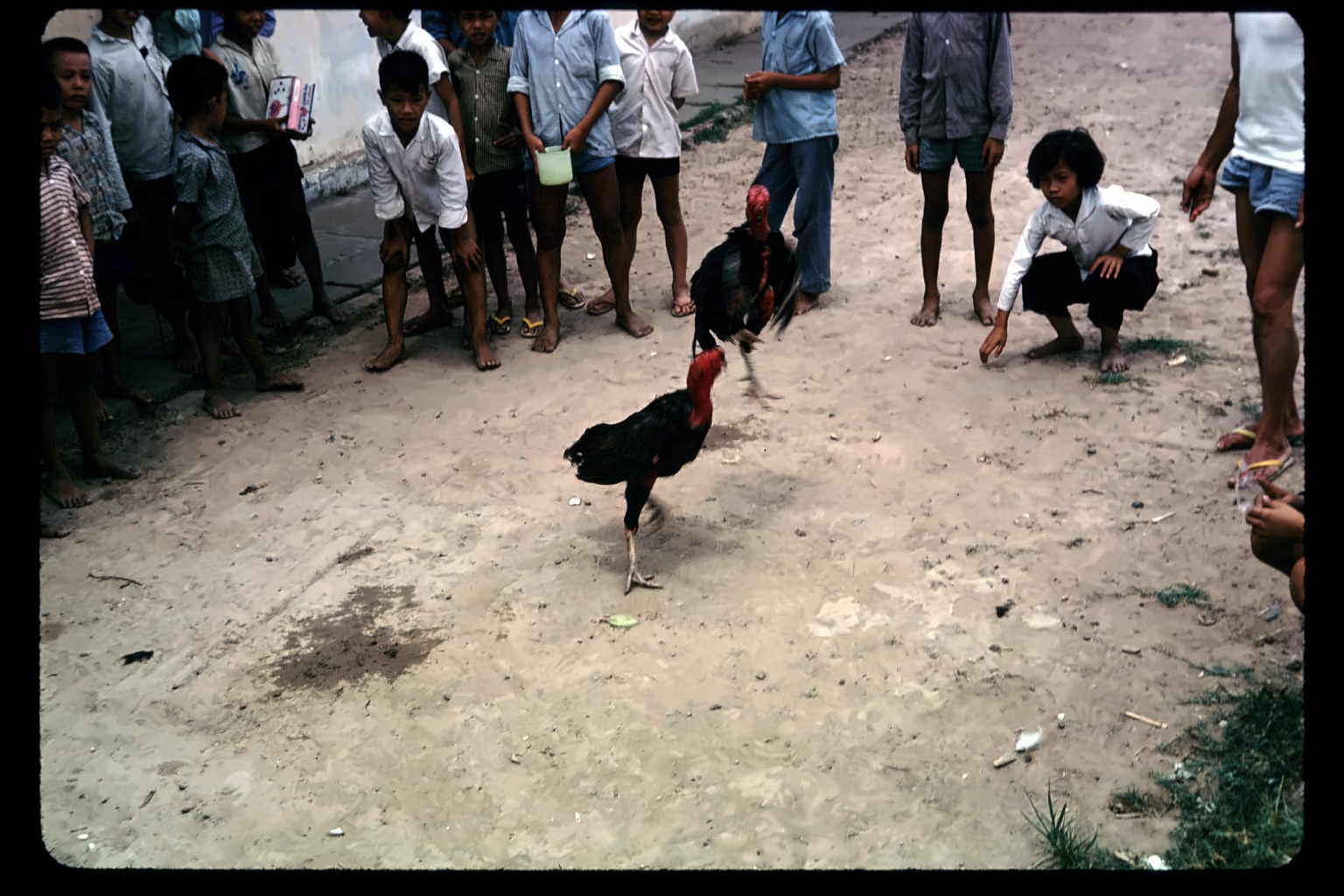
Continued.
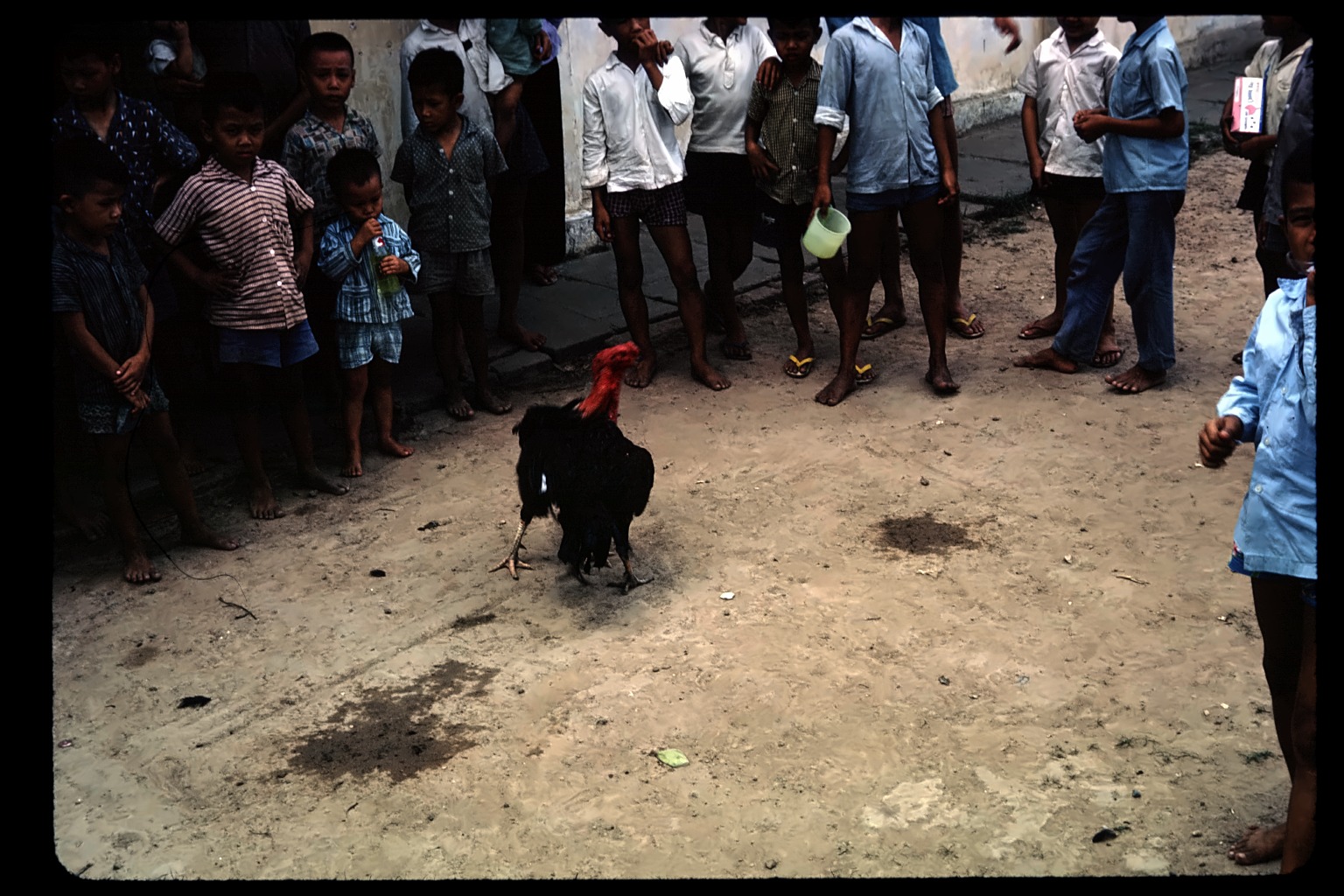
Continued.
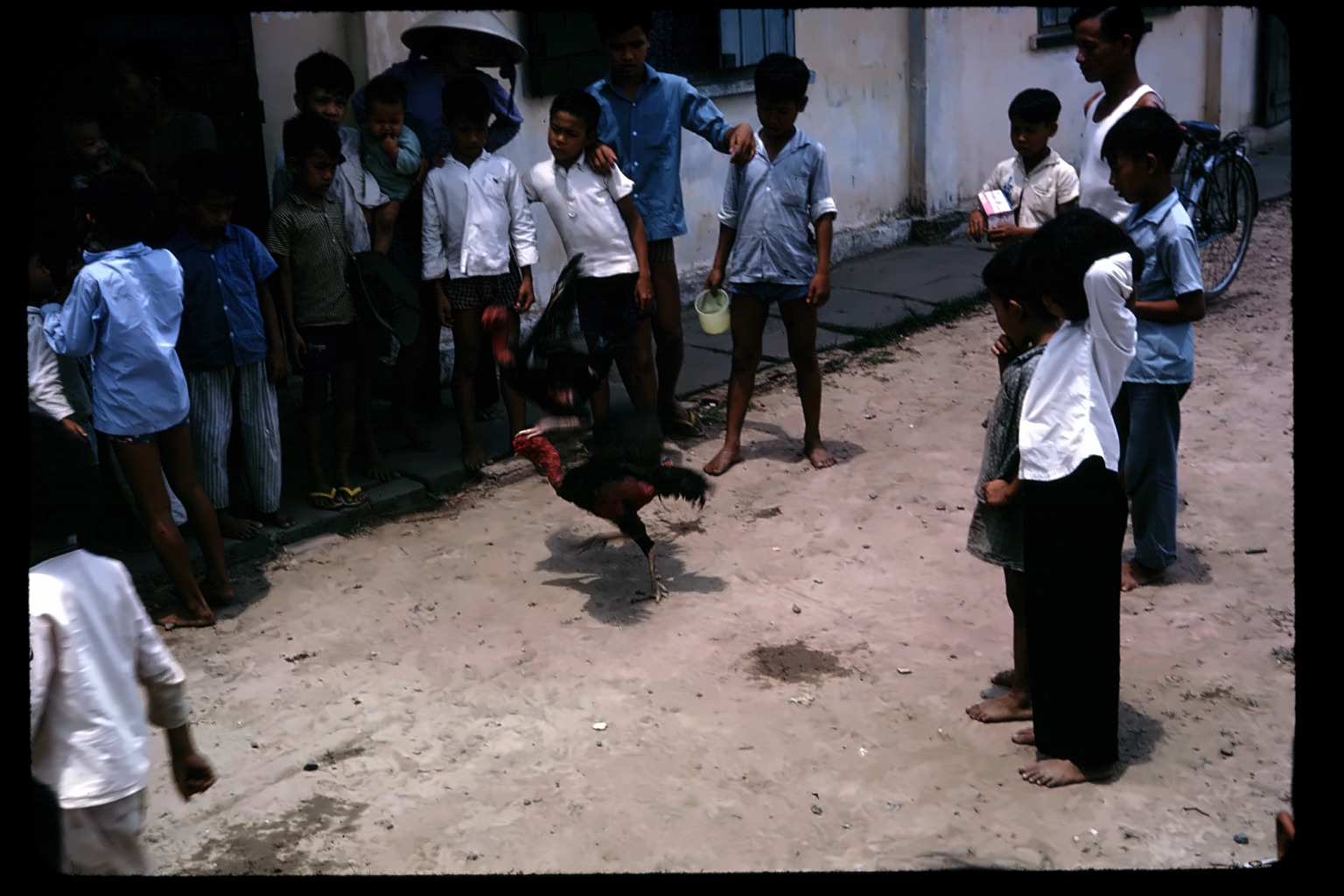
Continued, closer on the crowd.
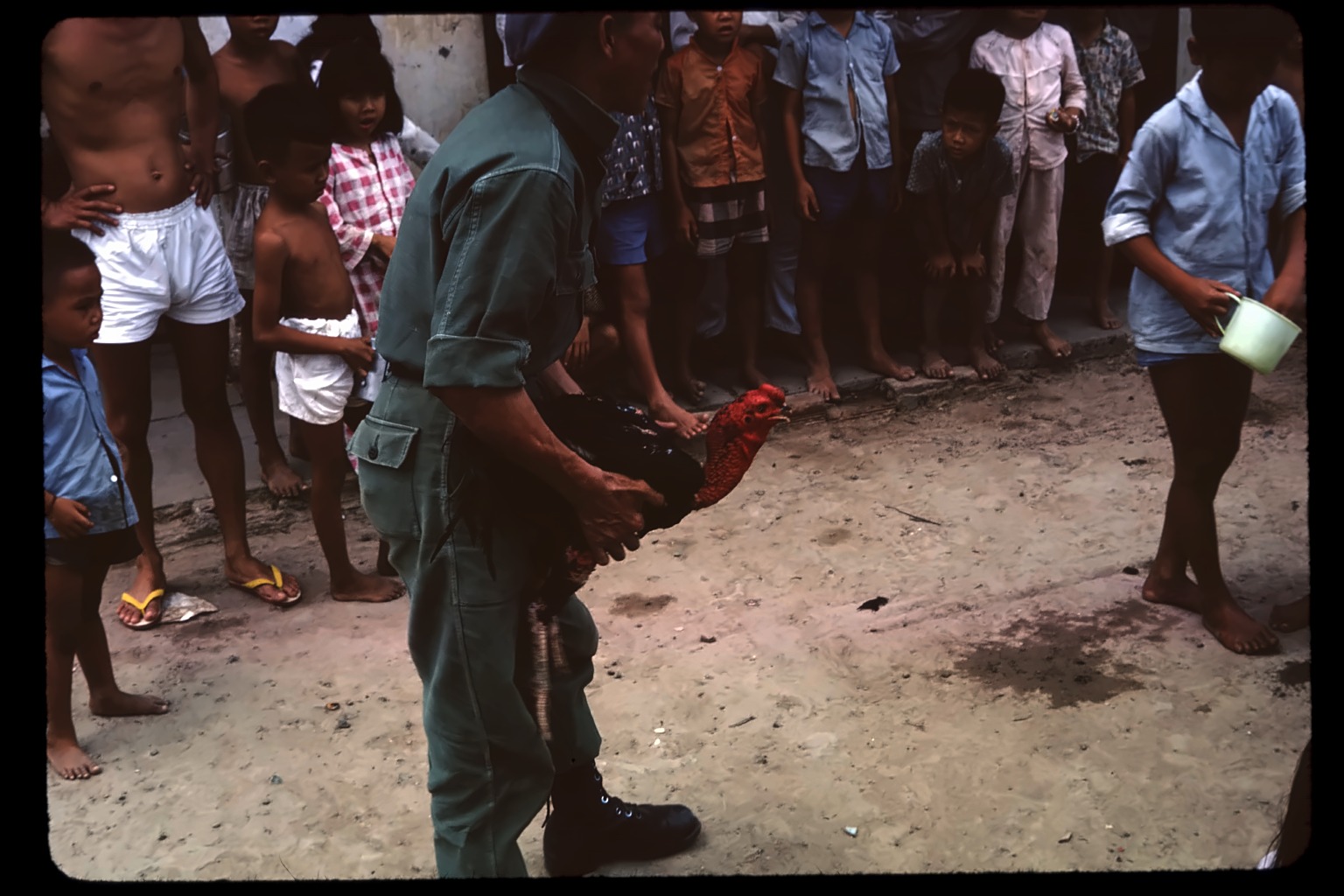
A soldier in the foreground, crowd behind him.
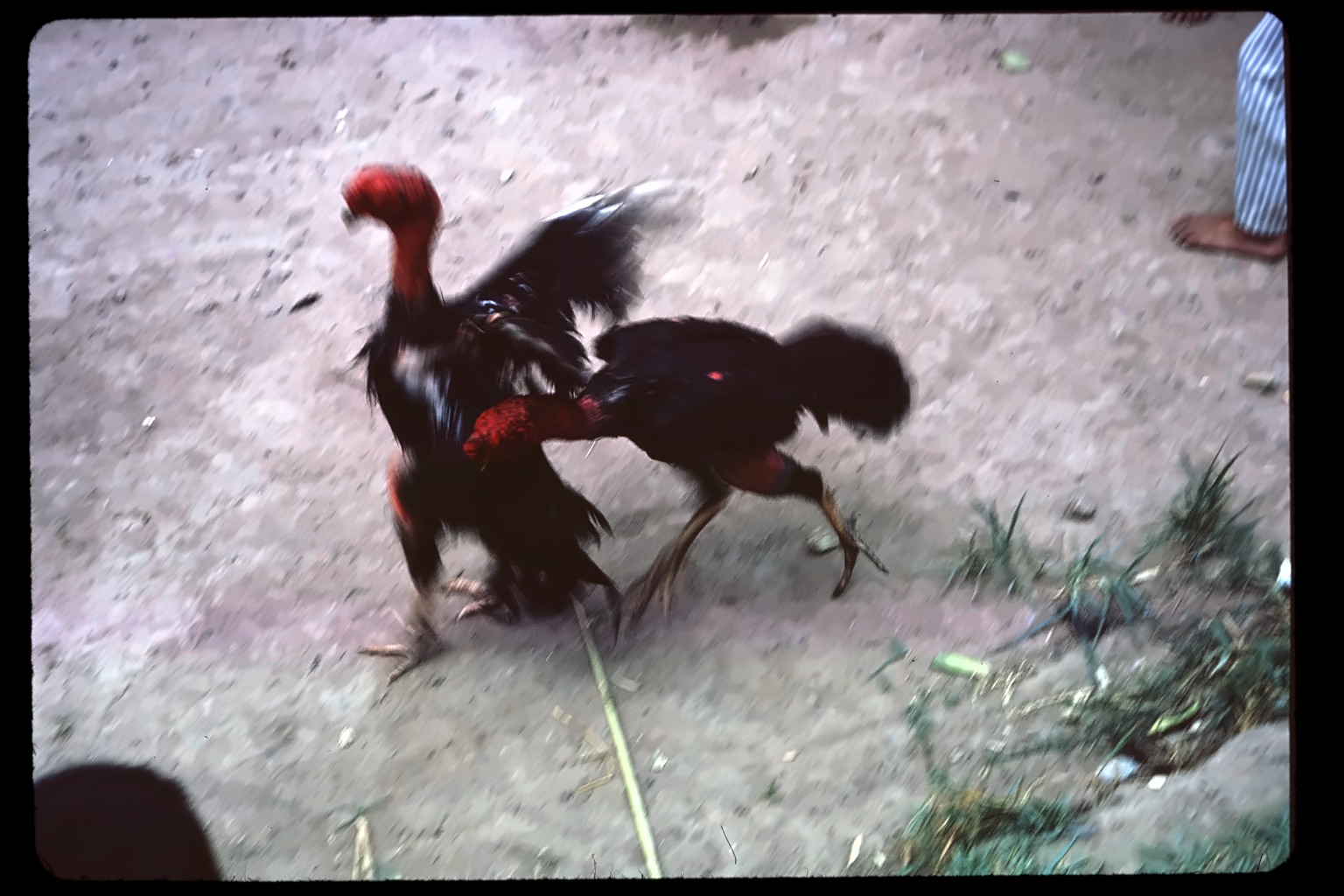
The birds mid-fight, feathers visible in motion.
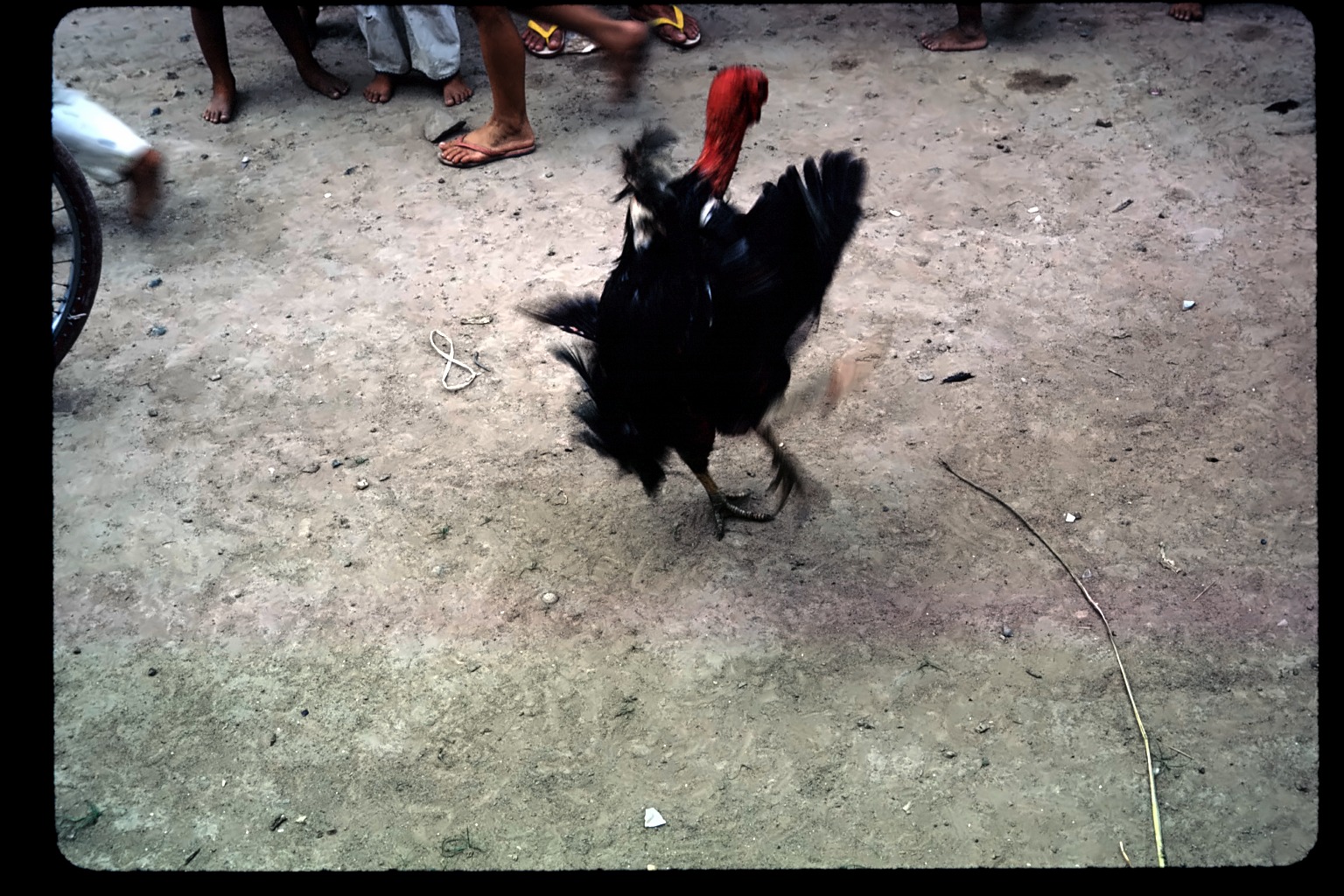
Continued.
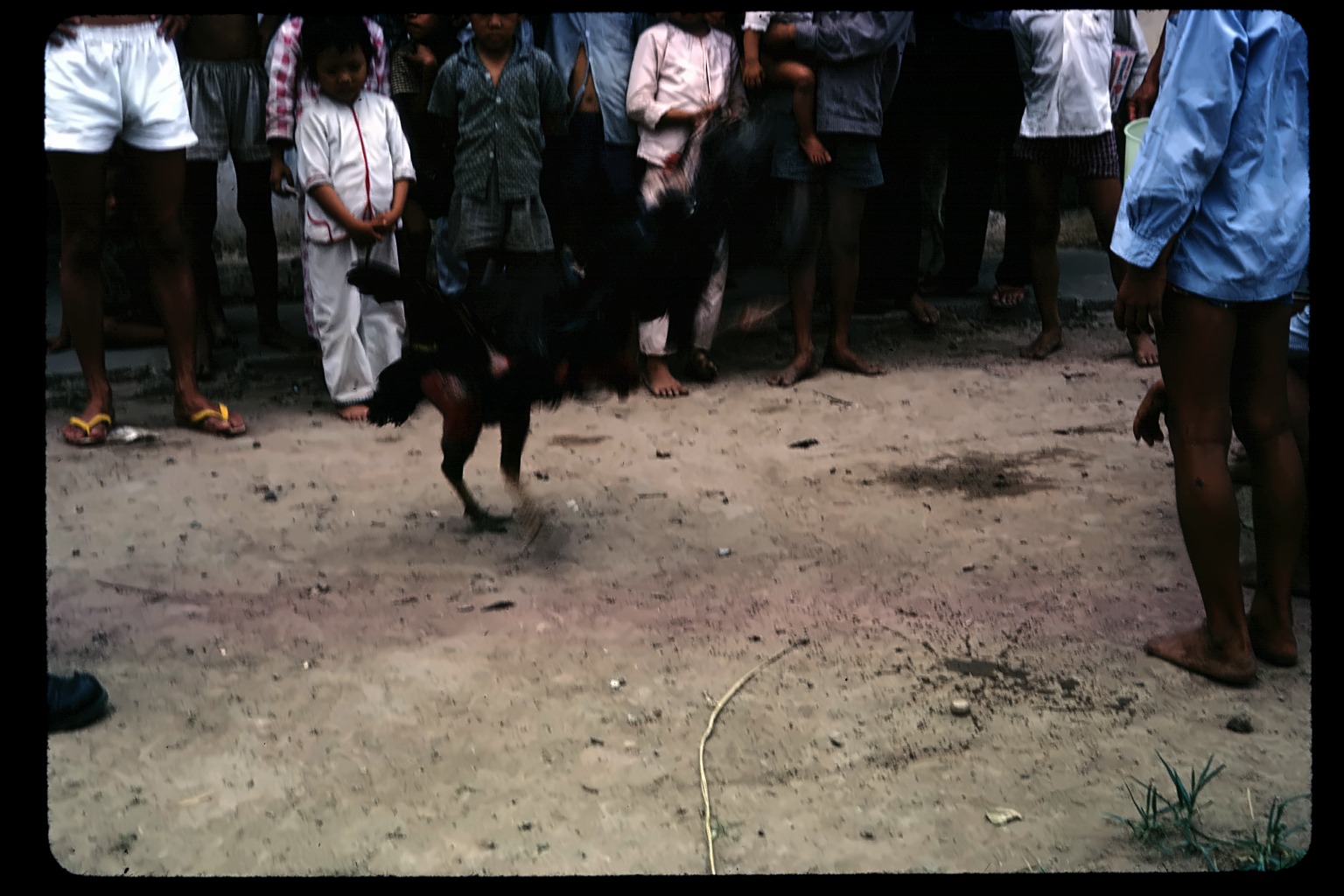
Continued.
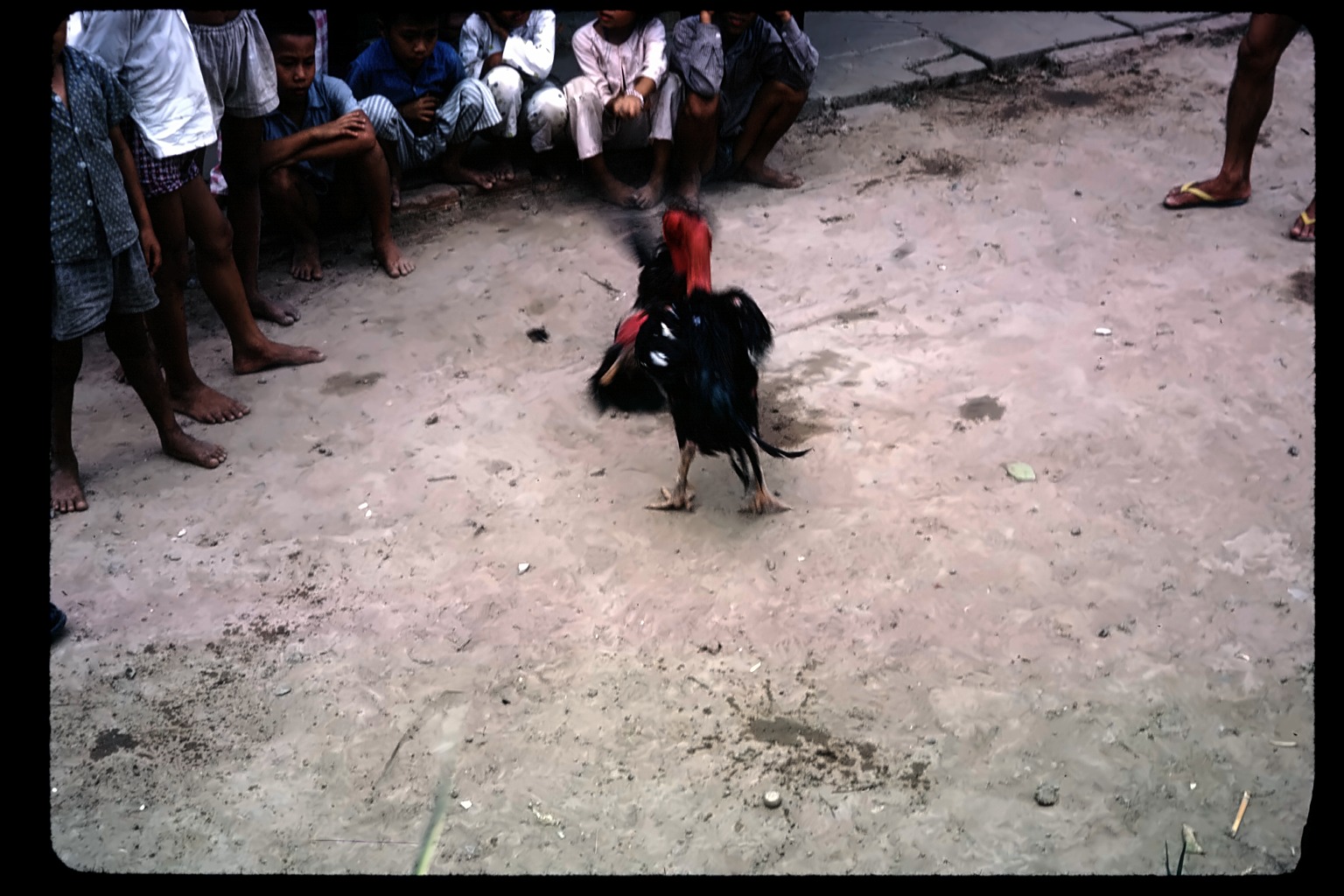
Continued.
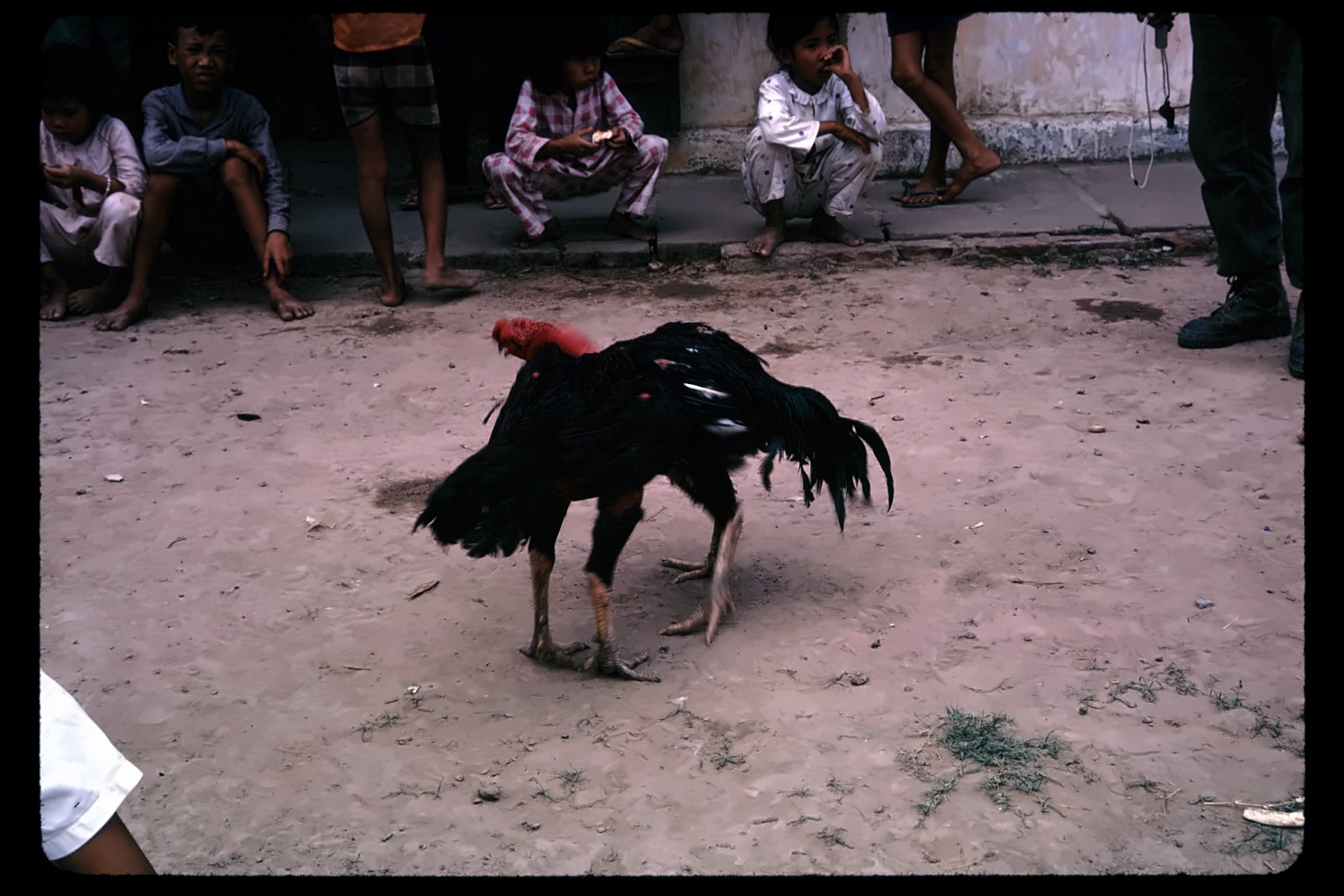
One bird up close, visibly worn from fighting.
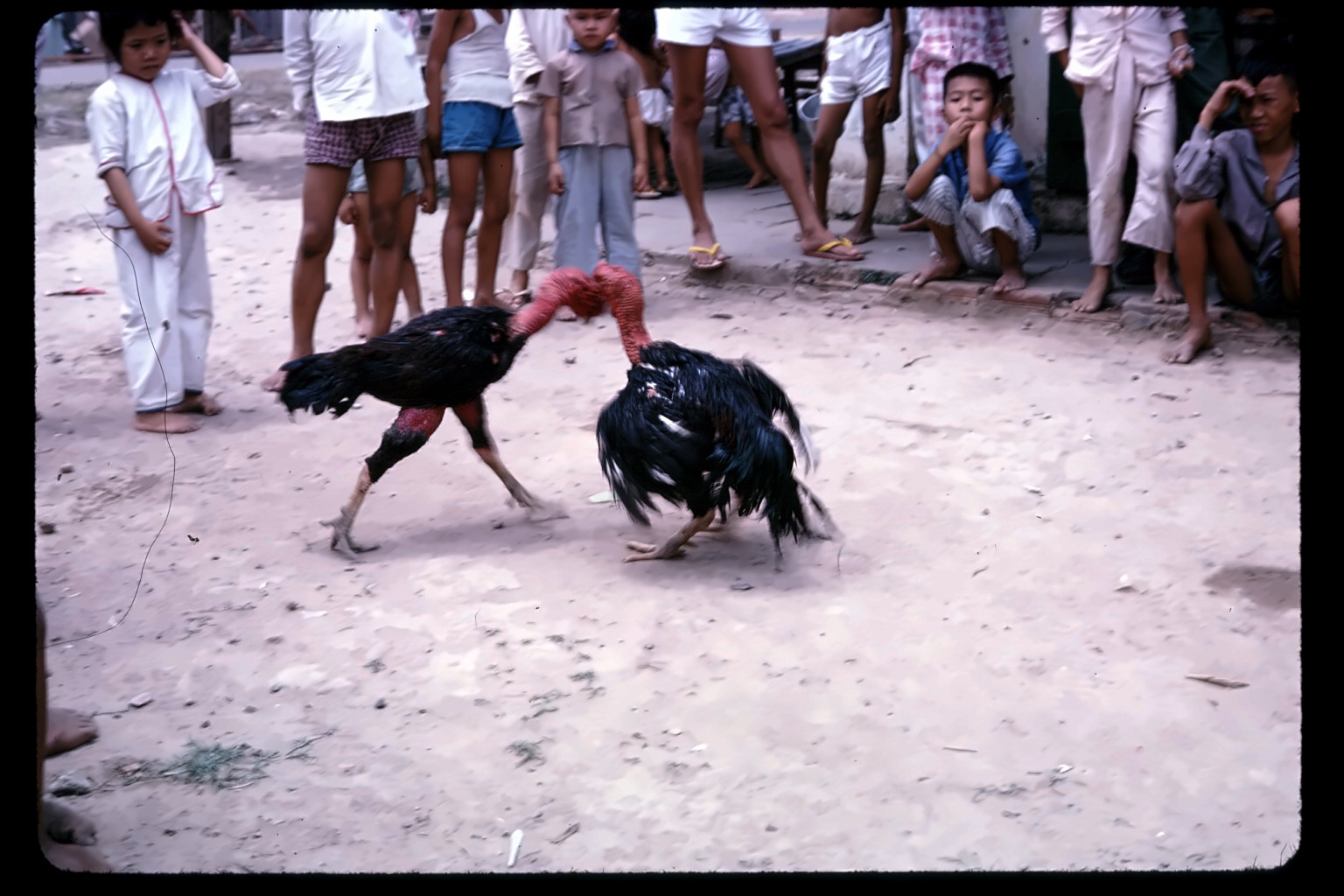
Both birds engaged directly.
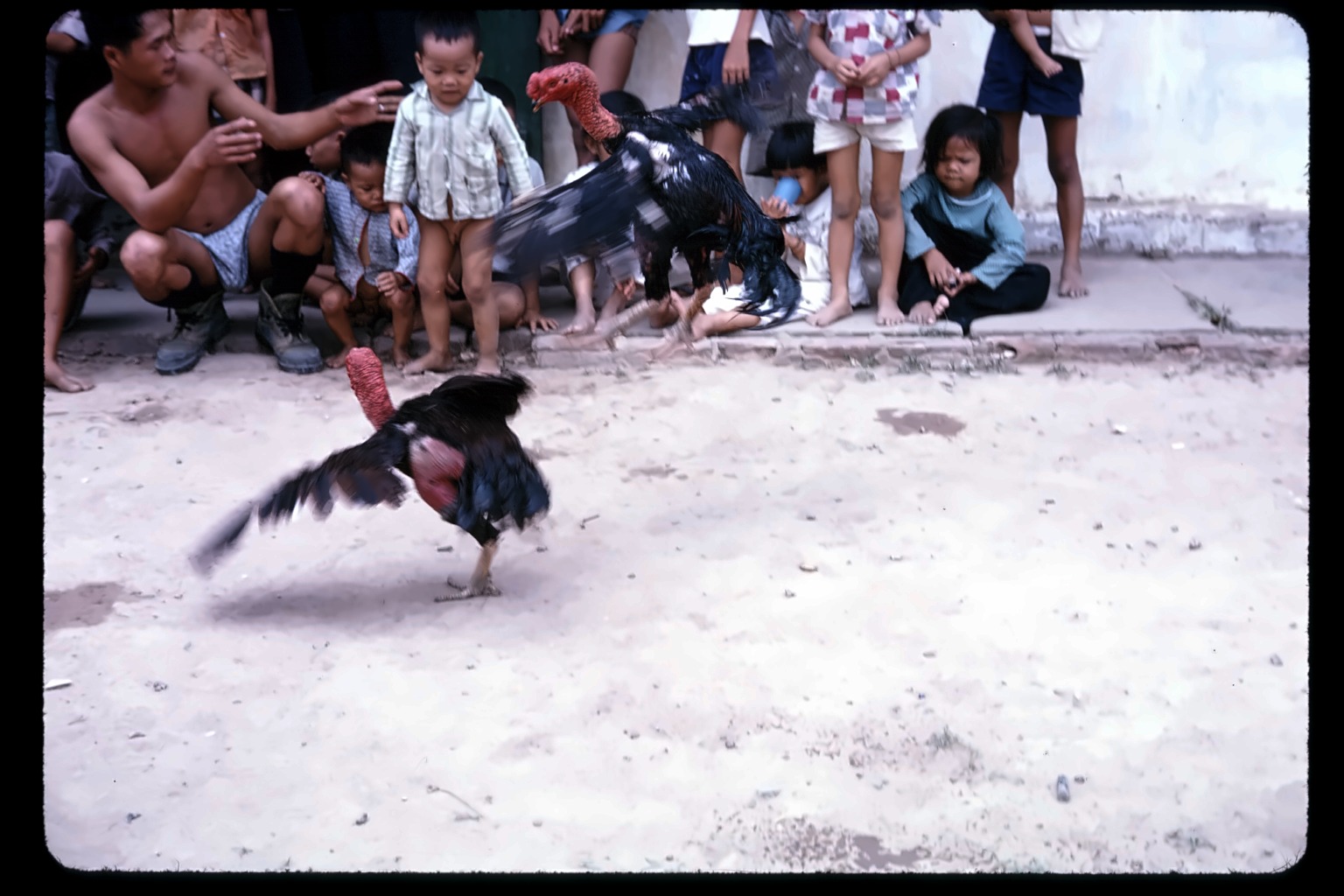
Children watching close to the action.
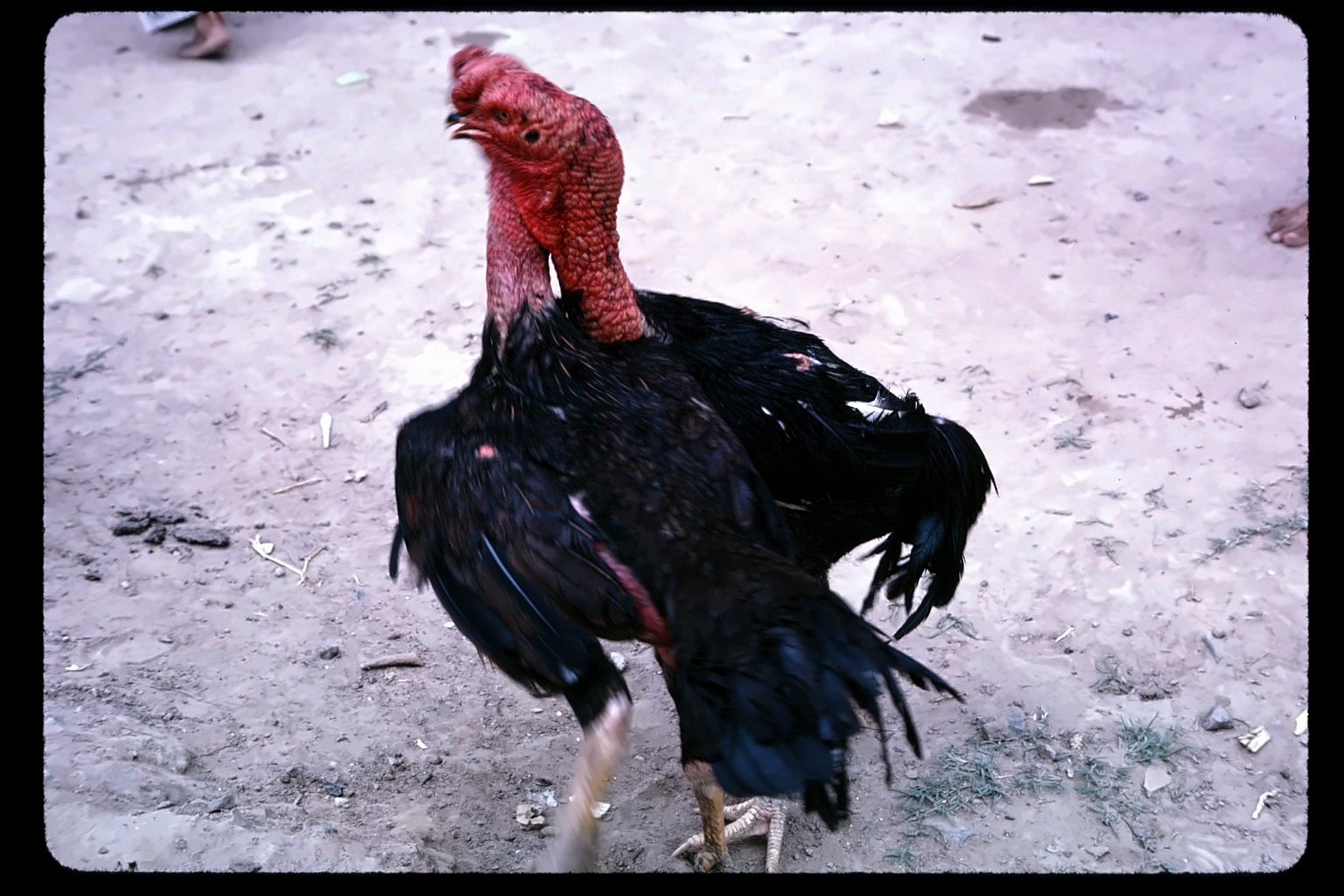
A bird close up, mid-motion.
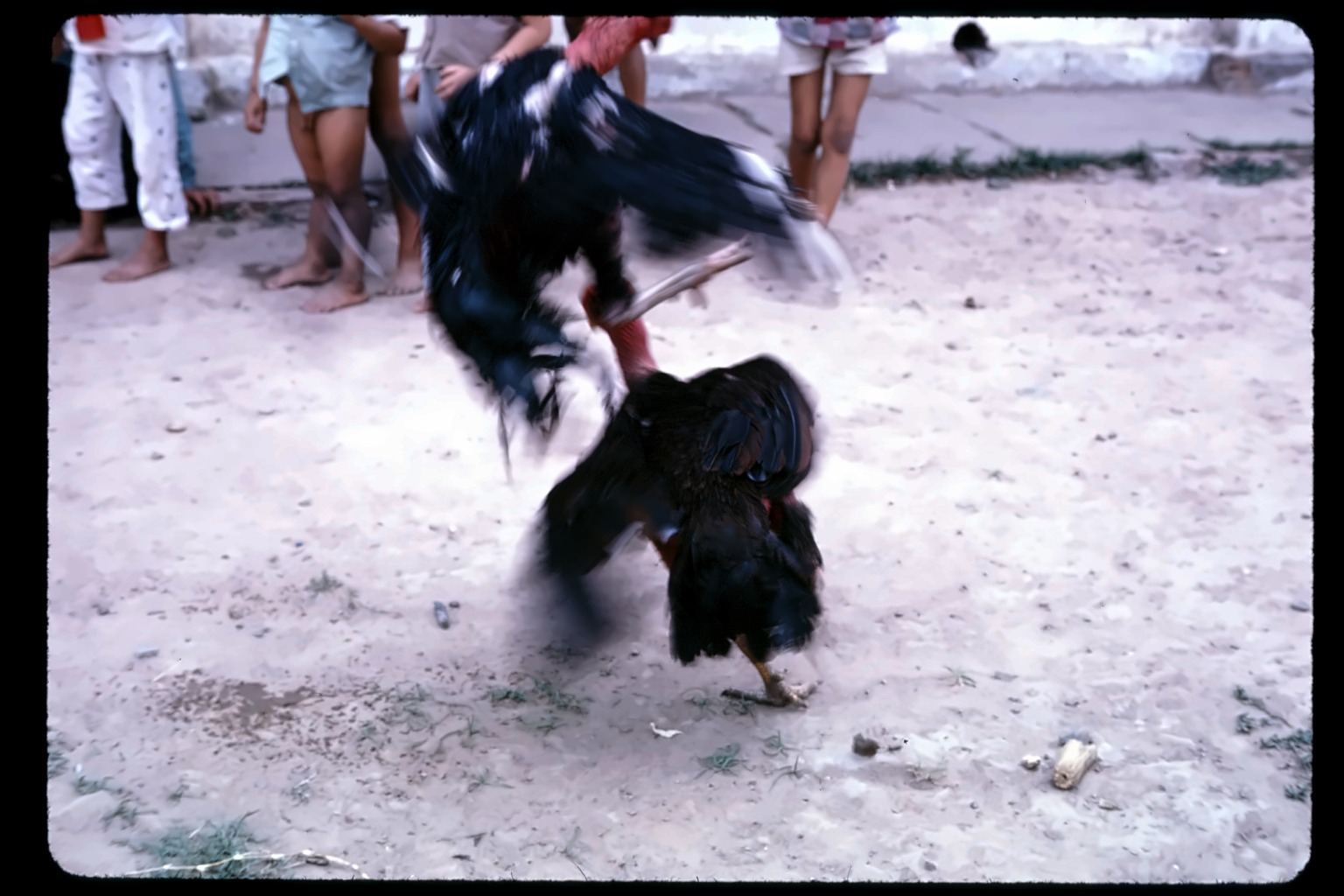
Continued.
A handler tending to a bird between rounds.
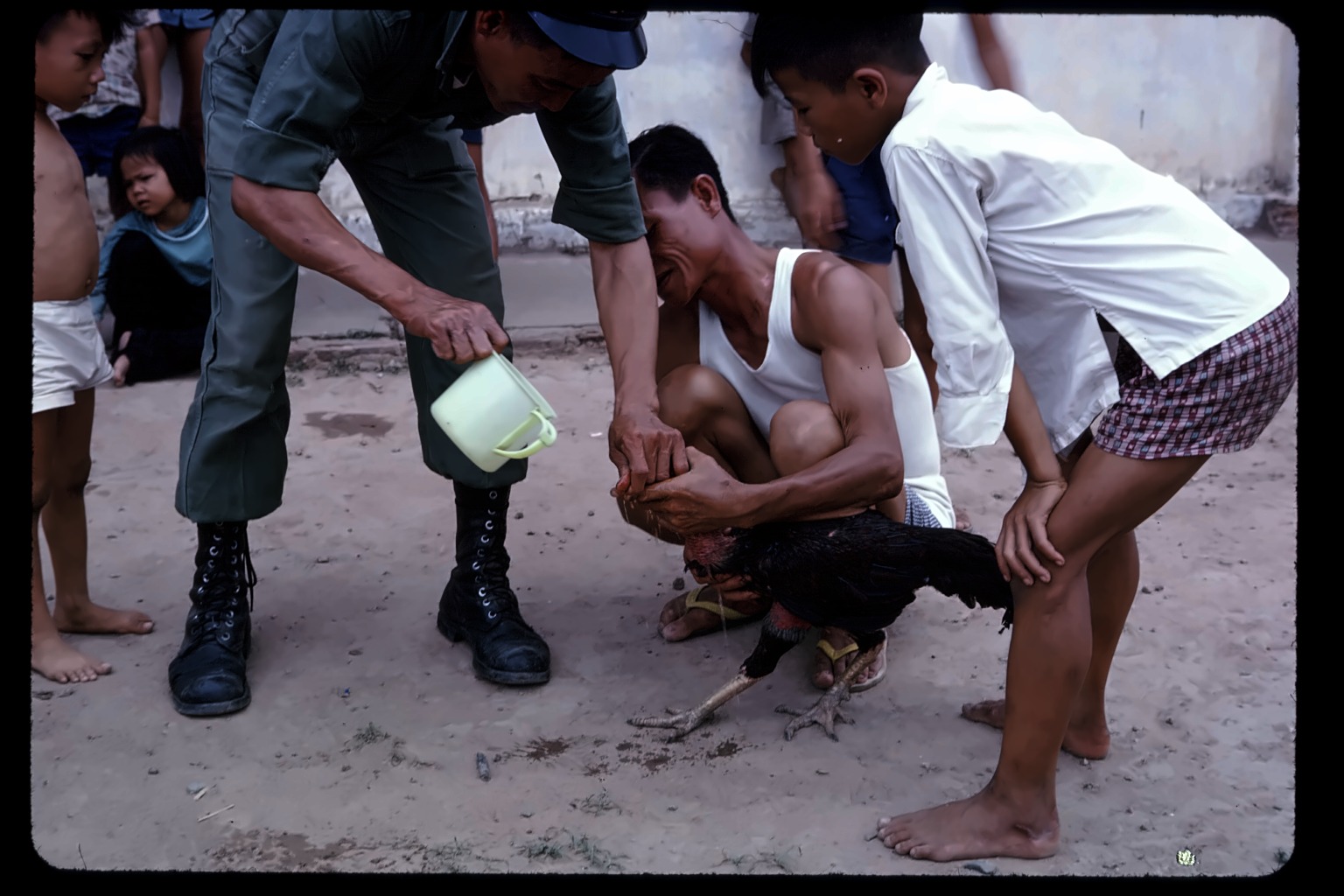
Handlers giving water to the birds.
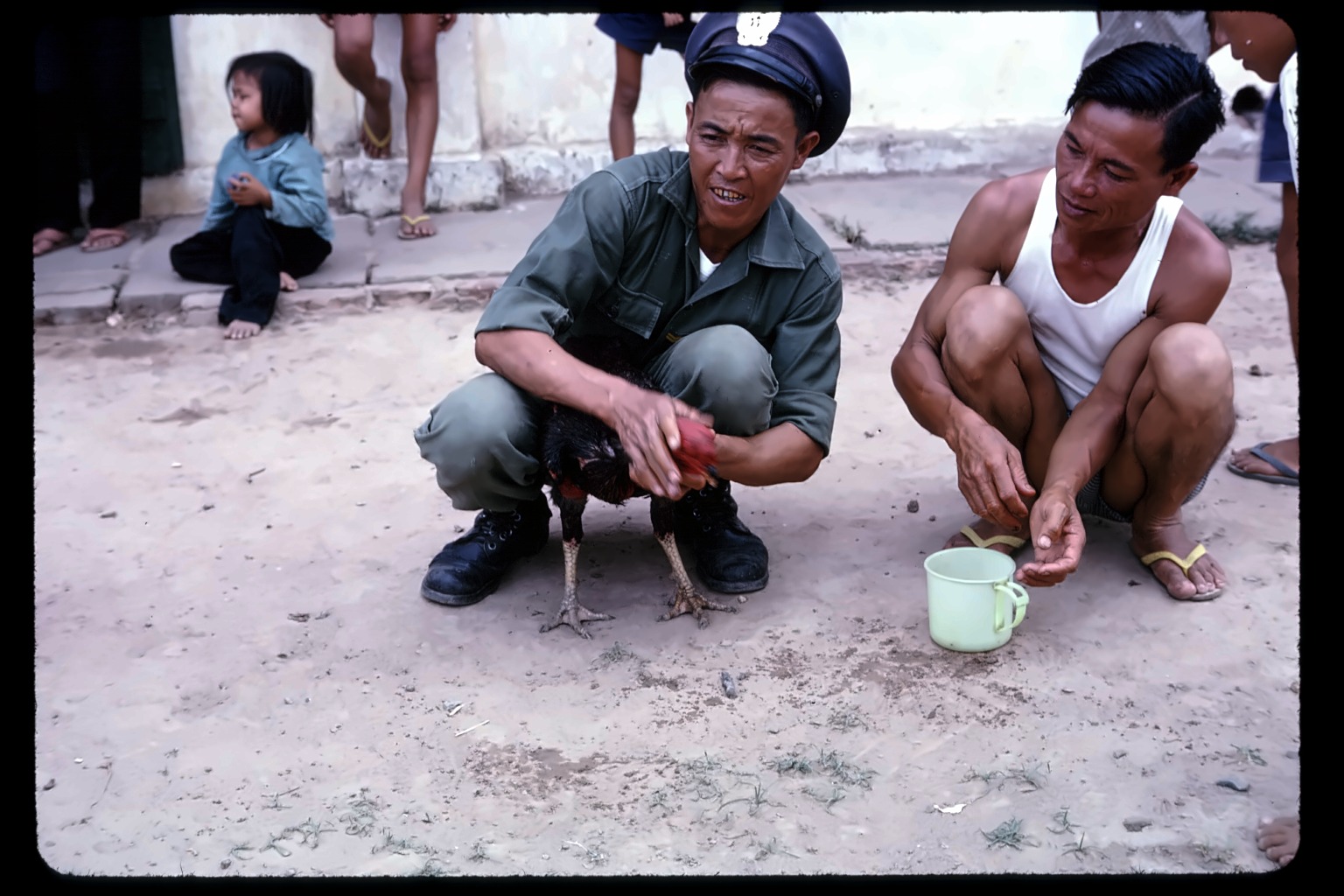
Continued, a soldier crouched with a handler.
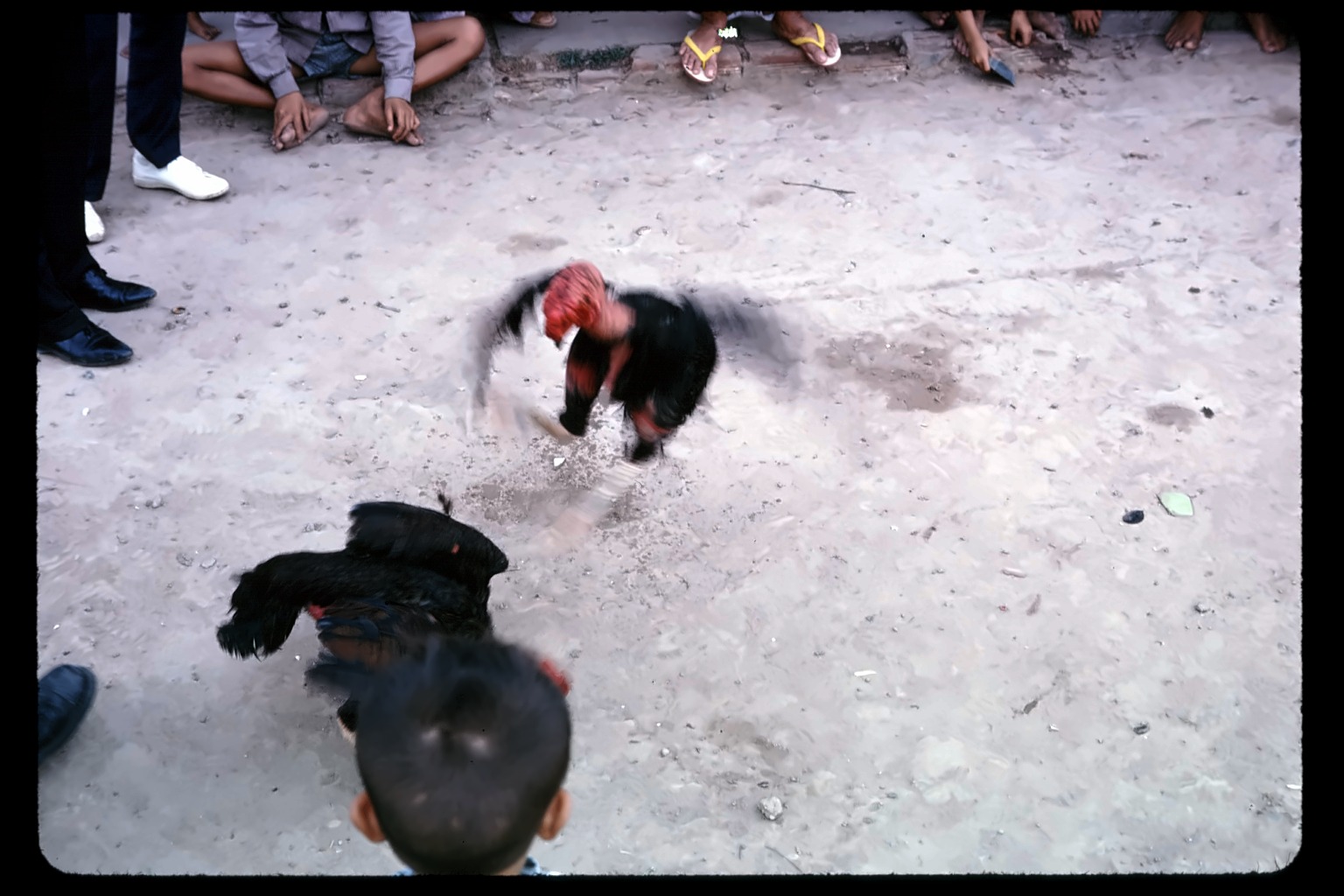
A bird in motion, low to the ground.
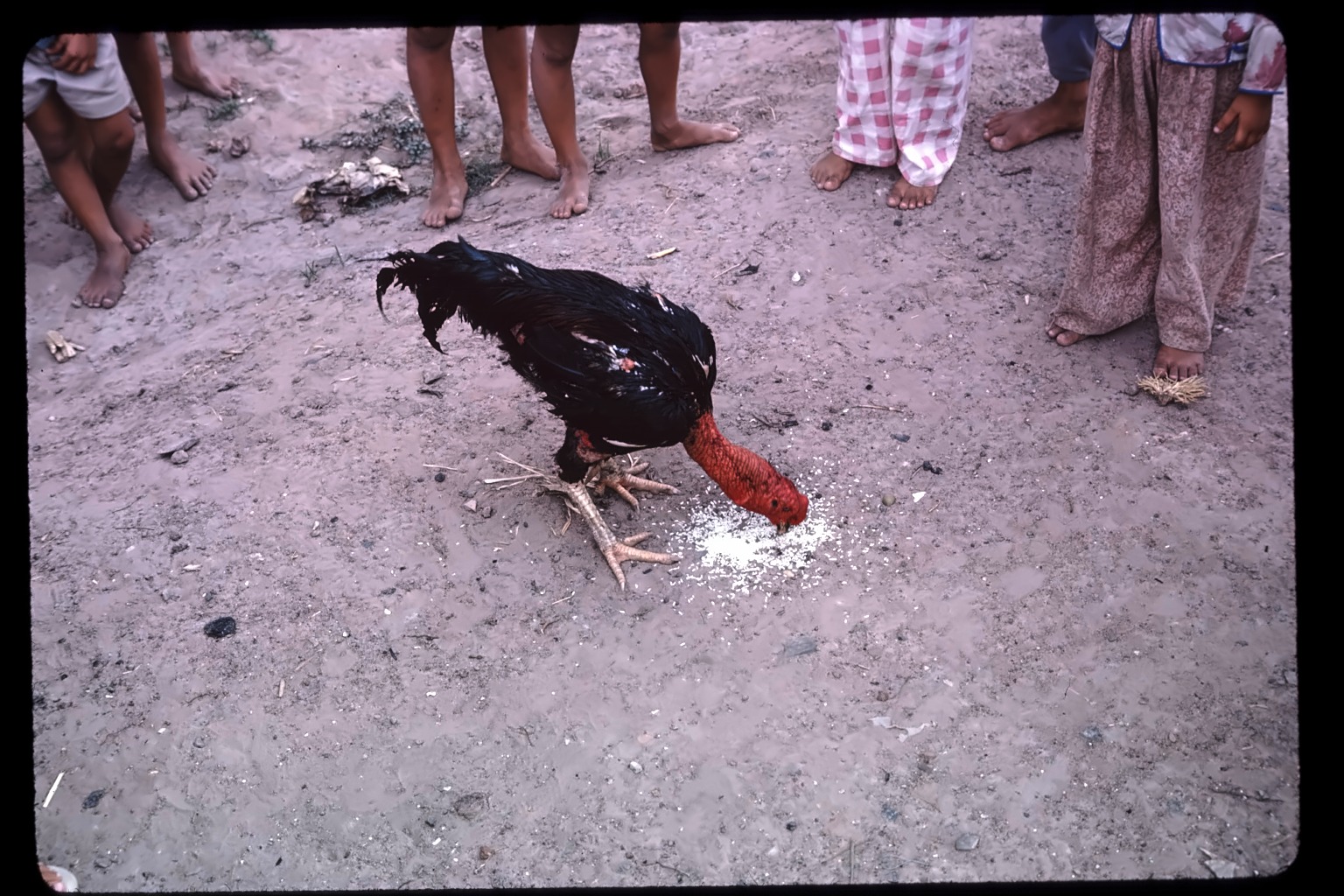
The declared winner. Closes the sequence.
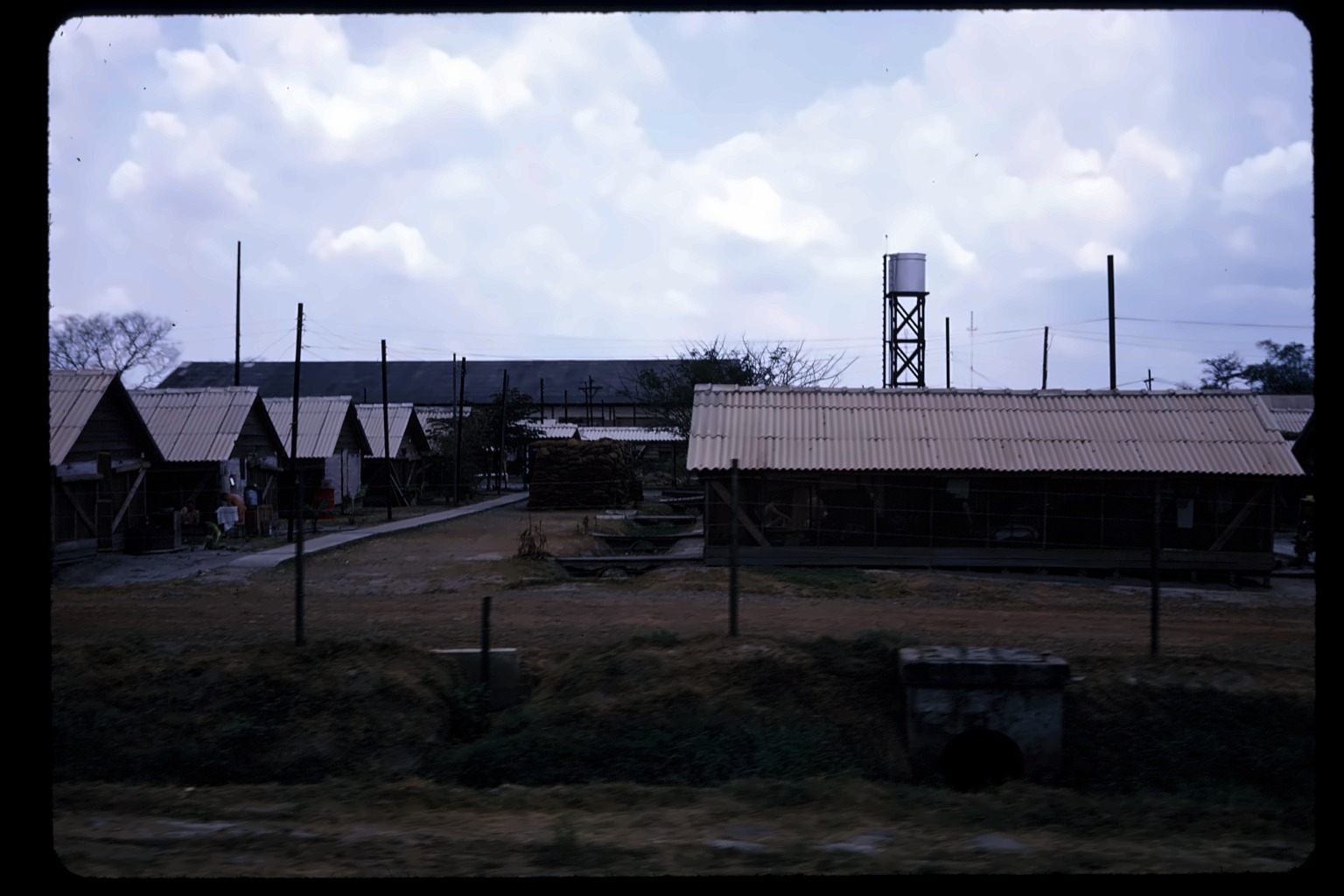
Screened huts belonging to the 39th Signal unit.
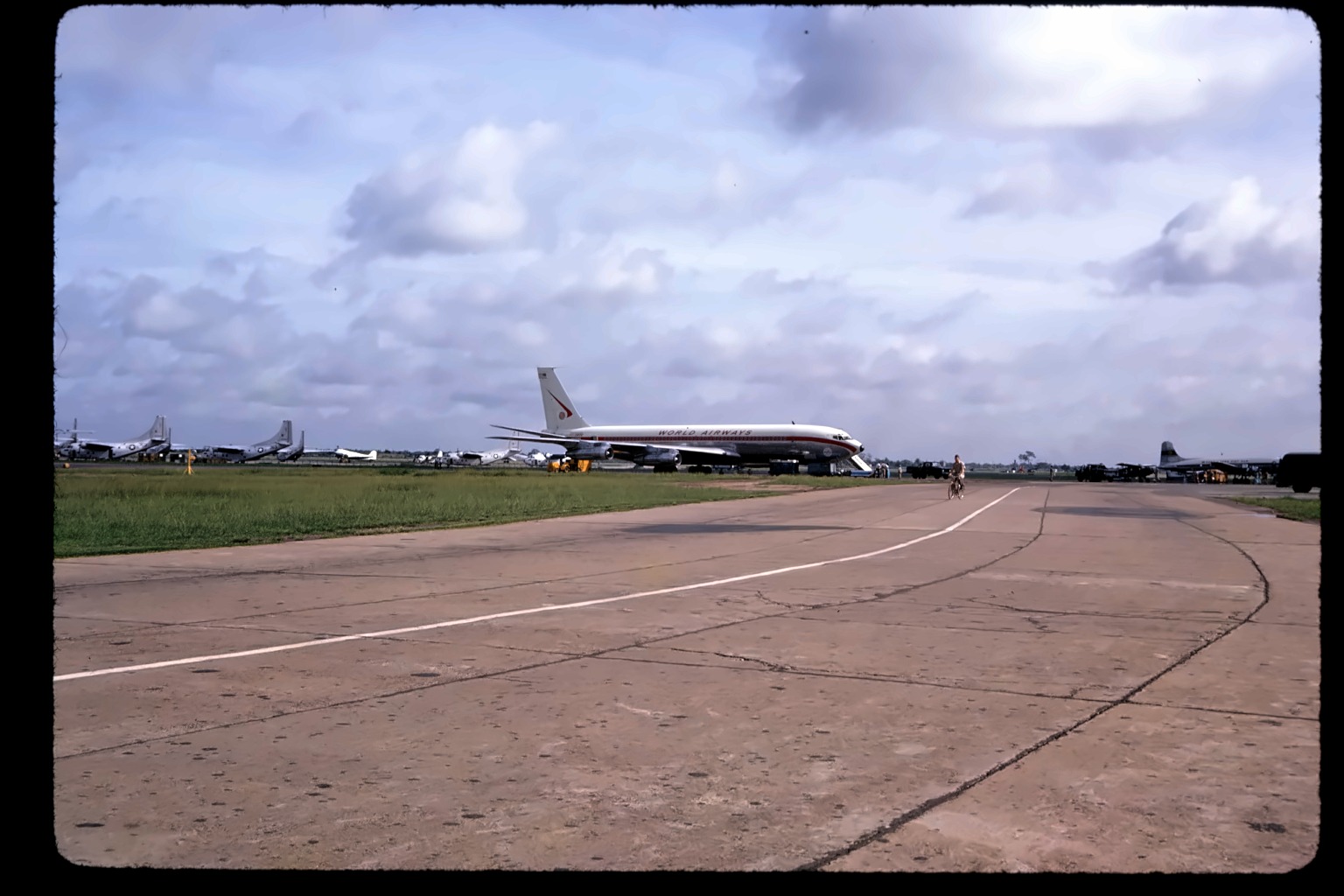
A World Airways commercial airliner on the runway — Tan Son Nhut served as a joint military and civilian airport, and World Airways was a real charter carrier flying US troops during the war.
A dusk sky over the base. Closes the tray.